Almond Crescent Cookies: Tender & Nutty
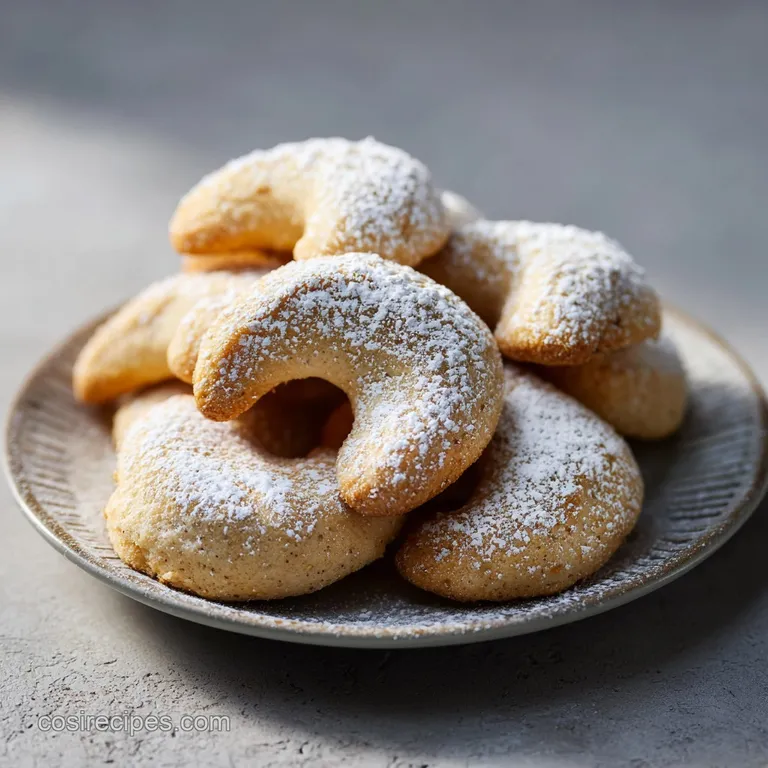
- Time: Active 15 minutes, Passive 15 minutes, Total 30 minutes
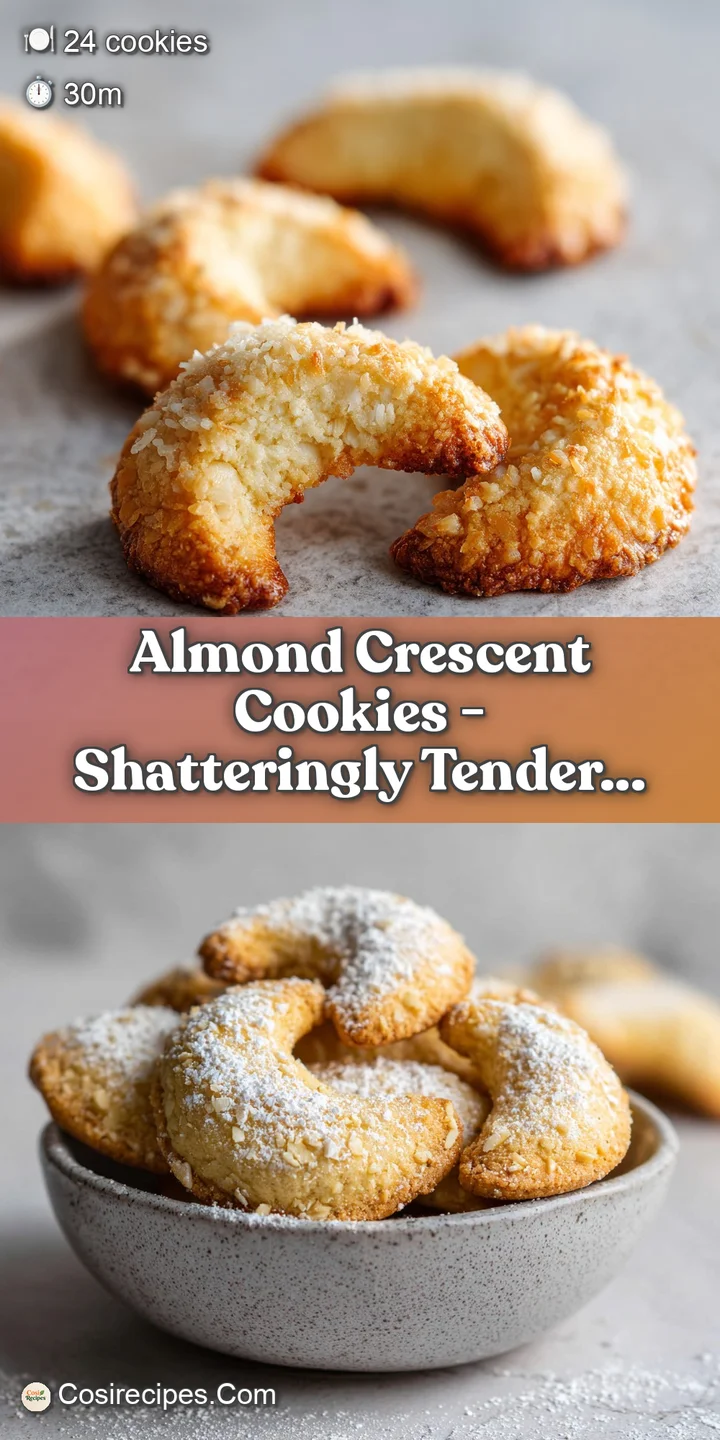
- Flavor/Texture Hook: Shatter crisp exterior with a velvety, nutty finish
- Perfect for: Holiday gift boxes, elegant tea parties, or beginner bakers
- Mastering Traditional Almond Crescent Cookies
- The History of the Crescent
- Science of the Melty Texture
- Essential Component Analysis
- Selecting Your Elements
- Required Tools for Success
- Step-by-Step Baking Guide
- Solving Common Baking Issues
- Flavor Variations and Scaling
- Storage and Freshness Tips
- Elegant Presentation Ideas
- Recipe FAQs
- 📝 Recipe Card
Mastering Traditional Almond Crescent Cookies
There is a specific kind of magic that happens in a kitchen when the scent of toasted nuts meets cold, salted butter. I remember the first time I tried to make these; I was so determined to get that perfect moon shape that I over handled the dough until it was a greasy mess.
But when I finally pulled a successful batch out of the oven, the house smelled like a high end European patisserie, and I knew I’d found a forever favorite.
The true beauty of Almond Crescent Cookies lies in the contrast between the snowy, fine powdered sugar and the golden, nutty interior. When you take a bite, the cookie doesn't just crumble; it yields gracefully.
It’s a quiet, elegant dessert that doesn't need flashy frostings or loud colors to stand out on a platter.
We've all been there trying to bake something "simple" only to have it spread into a flat puddle or turn out like a rock. I've spent years tweaking this ratios to ensure yours turn out light, airy, and masterfully shaped.
We’re going to focus on temperature and texture today, making sure every crescent is a little bite of buttery heaven.
The History of the Crescent
These cookies carry a legacy that stretches across borders, often associated with the Viennese Vanillekipferl or German Christmas traditions. They were originally created to celebrate victories or seasons, but today they represent the gold standard of "short" cookies those made with a high ratio of fat to flour and no leavening agents like baking soda.
The shape itself is iconic, mimicking a waning moon. In many households, the arrival of these treats signals the start of the festive season. While they look intimidatingly uniform in professional bakeries, I’ve found that their slight imperfections actually add to their charm.
It tells your guests that these were hand rolled with care, not popped out of a factory mold.
Interestingly, this style of baking relies on the absence of moisture. By avoiding eggs or milk, we prevent the development of gluten, which is why they have that signature melt away feel. If you’ve enjoyed my Italian Almond Cookies recipe, you'll notice these are much crispier and more delicate, leaning into the buttery side of the almond spectrum.
Science of the Melty Texture
- Starch Gelatinization: Without eggs to provide structure, the 160g of all purpose flour relies on the fat from the 170g of butter to coat each granule, preventing a tough, bready bite.
- Cold Fat Suspension: Keeping the butter cubed and cold ensures that tiny pockets of fat remain intact until they hit the oven, where they melt and create a microscopic flaky architecture.
- Almond Fat Integration: The 100g of almond flour adds natural oils that don't develop gluten, further interrupting the flour’s bond and resulting in a "shorter" crumb.
- Sugar Dehydration: Using confectioners' sugar in the dough instead of granulated sugar provides a finer structure because the cornstarch typically found in powdered sugar absorbs excess moisture from the extracts.
| Method | Time | Texture | Best For |
|---|---|---|---|
| Standard Oven | 15 minutes | Evenly golden, crisp | Large holiday batches |
| Convection Oven | 12 minutes | Shatter crisp exterior | Maximum crunch lovers |
| Air Fryer | 8 minutes | Toasted, deep brown | Small 4 cookie cravings |
The secret to these cookies isn't just the ingredients, but how they interact under heat. If you've ever made a Cherry Chip Cookies recipe, you know that sugar usually helps things spread. Here, we use just enough sugar to sweeten, but not enough to cause the cookie to lose its structural "moon" integrity.
Essential Component Analysis
| Component | Science Role | Pro Secret |
|---|---|---|
| Cold Butter (170g) | Primary fat source for "shortness" | Grate it while frozen for instant mixing |
| Almond Flour (100g) | Provides texture and protein | Toast it for 3 minutes before using |
| Almond Extract (1 tsp) | Flavor amplification | Always use "pure" not "imitation" |
| Confectioners' Sugar | Structural stabilizer | Sift it twice to avoid lumps in dough |
Selecting Your Elements
- All purpose flour (160g): Provides the necessary skeleton for the cookie.
- Substitute: 1:1 gluten-free baking blend. Why this? Keeps the structure without adding toughness to the dough.
- Super fine almond flour (100g): Adds the signature nutty richness and tender crumb.
- Substitute: Hazelnut flour for a deeper, earthier flavor. Why this? Maintains the fat to dry ratio perfectly.
- Cold unsalted butter (170g): The heart of the cookie’s flavor and texture.
- Substitute: Vegan butter sticks (not tub margarine). Why this? You need a fat that stays solid at room temperature.
- Confectioners' sugar (40g for dough): Sweetens while keeping the dough smooth.
- Substitute: Superfine caster sugar. Why this? Dissolves quickly without needing moisture from eggs.
- Almond and Vanilla Extracts: Provide the "bakery style" aroma.
- Substitute: Vanilla bean paste for the extracts. Why this? Adds beautiful black specks and intense flavor.
- Confectioners' sugar (120g for coating): The essential snowy finish.
- Substitute: Snow sugar (non melting powdered sugar). Why this? Keeps the cookies looking fresh for days.
Chef's Note: If you want to master the flavor, add a tiny pinch of vanilla bean powder to your coating sugar. It adds an elegant look that makes people think you bought these at a luxury boutique.
Required Tools for Success
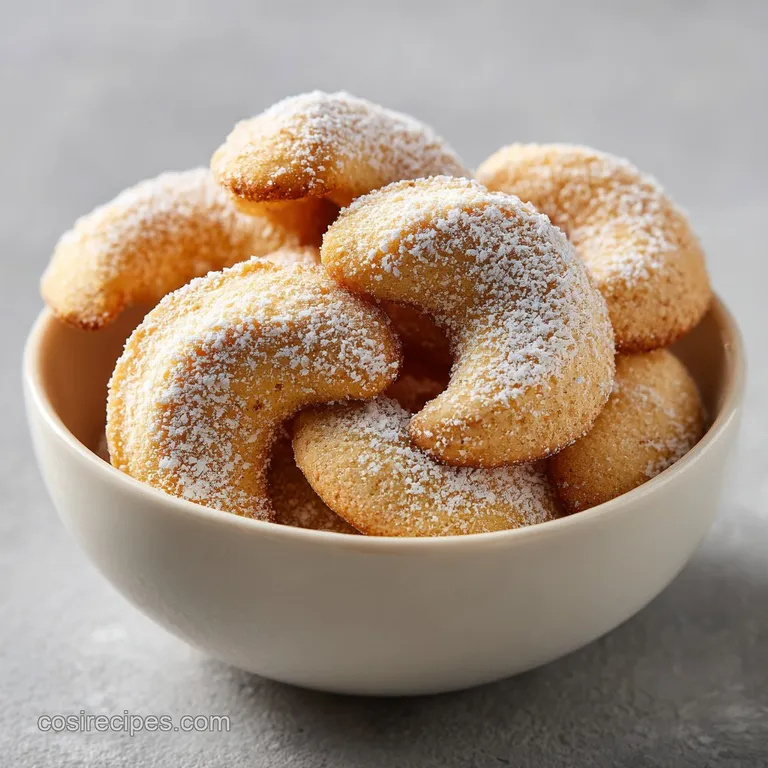
You don't need a high tech lab, but a few specific items will make your life much easier. First, a food processor is a master tool for this recipe. It allows you to pulse the cold butter into the flour without the heat from your hands melting the fat.
If you don't have one, a pastry cutter works, but you'll need to work fast.
Second, a silicone baking mat or high-quality parchment paper is non negotiable. These cookies are fragile when hot. Using a non stick surface ensures you can slide them off without the tips of the crescents snapping off.
I also recommend a small kitchen scale—baking by weight (metric) is the only way to ensure the 160g of flour doesn't accidentally become 180g, which would make the cookies dry.
Finally, have a fine mesh sieve ready. The "Double Dusting" method requires a light, even fall of sugar. Shaking sugar through a sieve prevents the "clumpy" look and ensures that velvety mouthfeel we're after.
step-by-step Baking Guide
Phase 1: The Cold Pulse Prep
- Sift your dry ingredients. Combine 160g all purpose flour, 100g almond flour, 40g confectioners' sugar, and 0.25 tsp salt in a large bowl. Note: Sifting removes lumps that would cause air pockets.
- Cut in the butter. Add 170g of cubed, cold butter to the dry mix.
- Pulse until sandy. Use a food processor or pastry blender until the mixture looks like coarse breadcrumbs with no large butter chunks.
- Add the liquids. Drizzle in 1 tsp almond extract and 0.5 tsp vanilla extract.
- Form the dough. Pulse until the dough just begins to clump together. Do not overmix!
Phase 2: Shaping the Crescents
- Chill the dough. Wrap the dough in plastic and refrigerate for 30 minutes. Note: This prevents the cookies from spreading in the oven.
- Portion the dough. Scoop about 1 tablespoon of dough and roll it into a small log about 5cm long.
- Create the moon. Taper the ends and curve it into a crescent shape on your lined baking sheet.
Phase 3: The Golden Bake
- Preheat and bake. Set your oven to 180°C (350°F) and bake for 15 minutes until the edges are just barely golden.
- Rest on the pan. Let them sit for 5 minutes. Wait until they are firm enough to touch before moving them.
Phase 4: The Signature Finish
- The first coat. While still warm, gently toss the cookies in the 120g of coating sugar.
- The final dust. Once completely cool, sift more sugar over the top for a pristine look.
Solving Common Baking Issues
Why Cookies Crumble?
If your crescents shatter the moment you touch them, the dough likely lacked hydration or the butter wasn't distributed well. This usually happens if the flour was measured by volume (cups) rather than weight, leading to a dry mix.
Another culprit is moving them while they are screaming hot patience is a master skill here.
Dough Too Dry?
If the dough won't come together and feels like sand, add a teaspoon of cold water at a time. However, check your butter first; sometimes it just needs the warmth of your hands for ten seconds to help the fats bind the flour.
Yellow Sugar Coating?
This happens when you sugar the cookies while they are too hot. The residual heat melts the sugar, creating a sticky, yellowish glaze instead of a fluffy white coat. Wait until they are warm not hot for the first coat, and stone cold for the second.
| Problem | Root Cause | Solution |
|---|---|---|
| Cookies spread flat | Butter was too soft/warm | Chill shaped cookies 15 mins before baking |
| Burnt bottoms | Dark baking sheet used | Use light colored pans or double stack pans |
| Tips are breaking | Shaping was too thin | Make the ends slightly blunted, not sharp |
Common Mistakes Checklist: ✓ Never use room temperature butter; it must be cold from the fridge. ✓ Don't skip the 30 minute chill; it's the difference between a crescent and a puddle. ✓ Handle the dough as little as possible to keep the fat cold.
✓ Avoid over baking; they should look pale, not brown. ✓ Use a scale for the 160g of flour to ensure the perfect "short" texture.
Flavor Variations and Scaling
If you're making these for a large event, scaling is straightforward. For a double batch (48 cookies), you can double all ingredients exactly, but I suggest keeping the extracts at 1.5x to avoid an overpowering alcohol scent.
When doubling, work in two separate bowls for the mixing phase to ensure the butter stays cold in the second half while you shape the first.
- If you want more crunch, add 50g of finely chopped toasted almonds to the dough at the very end.
- If you want a citrus twist, add the zest of one lemon to the flour mixture.
- If you want a chocolate version, replace 20g of the AP flour with high-quality cocoa powder.
| Servings | Flour | Butter | Almond Flour | Time |
|---|---|---|---|---|
| 12 Cookies | 80g | 85g | 50g | 12-14 mins |
| 24 Cookies | 160g | 170g | 100g | 15 mins |
| 48 Cookies | 320g | 340g | 200g | 15 mins (2 batches) |
While these cookies are masters of simplicity, they also pair beautifully with other fruit based desserts. For a complete dessert spread, consider serving these alongside an Apricot Cobbler Recipe. The tartness of the apricot cuts through the buttery richness of the almond flour beautifully.
Storage and Freshness Tips
Myths about Almond Cookies: One common myth is that you must use "almond paste" for authentic crescents. While almond paste is great for some recipes, it contains egg whites and much more sugar, which would ruin the delicate, sandy texture of a true crescent. Another myth is that they "spoil" quickly.
Actually, because they have very little moisture, they have a fantastic shelf life!
- Room Temperature
- Store in an airtight container for up to 7 days. They actually taste better on day two!
- Freezing
- You can freeze the baked cookies for up to 3 months. Let them thaw at room temperature and give them a fresh dusting of sugar before serving.
- Zero Waste
- If you have broken pieces at the bottom of the container, don't toss them! Crush them up and use them as a "master" topping for vanilla ice cream or a yogurt parfait.
Elegant Presentation Ideas
To truly master the presentation, I love using a tiered silver stand or a dark slate board. The contrast between a dark background and the white sugar is stunning. Arrange them in a circular pattern, with the curves facing inward, to create a floral or star like effect on the plate.
These are also the ultimate gift cookie. Place them in a tin lined with parchment paper, and sprinkle extra powdered sugar between the layers. It creates a "snowfall" effect when the recipient opens the box. Whether you're serving them with a cup of Earl Grey or a dark espresso, these Almond Crescent Cookies are sure to bring a touch of elegance to your table. If you're looking for something with a bit more color for your platter, my Cherry Chip Cookies recipe makes a bright, cheerful companion to these snowy crescents.
Recipe FAQs
What gives almond crescents their signature flavor?
Pure almond extract combined with toasted almond flour. The extract provides an intense, pronounced almond aroma that defines the cookie, while toasting the flour deepens the nutty base notes.
Does a commercial brand like Salerno make almond crescent cookies?
No, Salerno does not typically manufacture this specific type of cookie. These are generally considered a traditional, small batch European holiday or specialty item best made from scratch for optimal texture.
Where do almond crescent cookies originally come from?
They have roots in European, particularly Austrian and German, holiday baking traditions. They are closely related to the Austrian Vanillekipferl, though American versions often use more vanilla or different nut ratios.
What is the healthiest cookie you can eat?
Almond Crescents are relatively healthier than many alternatives due to their lack of leavening agents and high nut content. They contain no baking soda or powder, and the structure is supported by natural almond fats rather than excessive flour.
How do I prevent my almond crescents from becoming dry and brittle?
Keep the butter exceptionally cold and avoid over baking them until just light golden. This high fat, low-moisture dough requires precise temperature control; if you enjoyed mastering that precision here, see how the same principle works in our Authentic German Frikadellen recipe for temperature control.
Can I substitute the almond flour with a different nut flour?
Yes, you can substitute the almond flour, but hazelnut flour works best structurally. Hazelnuts offer a similar fat profile to almonds, creating that desirable "short" texture that crumbles easily.
What is the best way to ensure the crescent shape holds during baking?
Chill the shaped dough for at least 30 minutes before placing it in the preheated oven. This chilling period solidifies the butter pockets, preventing excessive spreading as the cookie begins to cook.
Almond Crescent Cookies Recipe
Ingredients:
Instructions:
Nutrition Facts:
| Calories | 125 kcal |
|---|---|
| Protein | 1.5 g |
| Fat | 7.8 g |
| Carbs | 12.6 g |
| Fiber | 0.6 g |
| Sugar | 6.8 g |
| Sodium | 25 mg |
