Classic Creme Brulee Recipe: Velvety Vanilla Custard
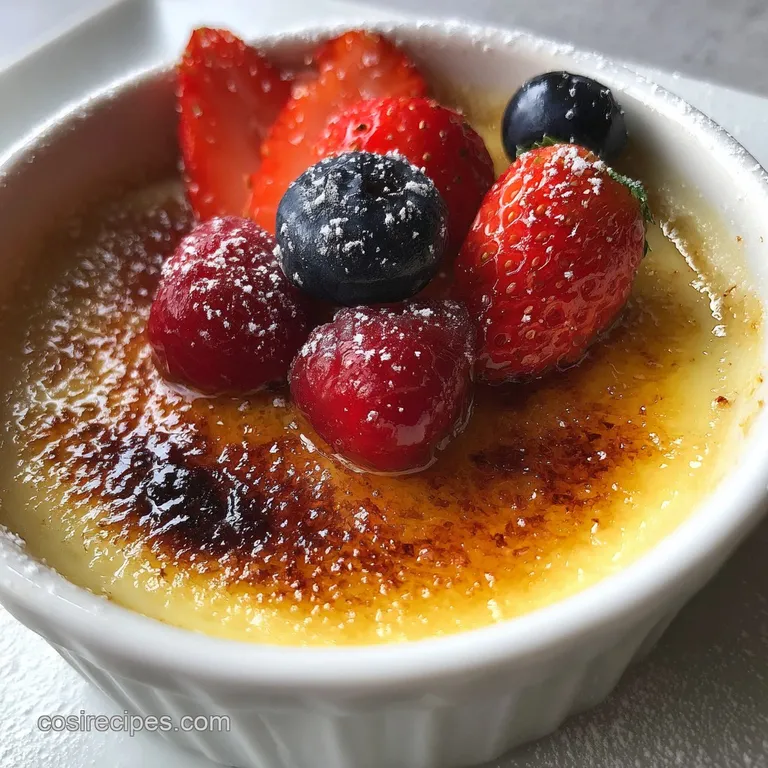
- Time: Active 15 minutes, Passive 4 hours 35 mins, Total 4 hours 50 mins
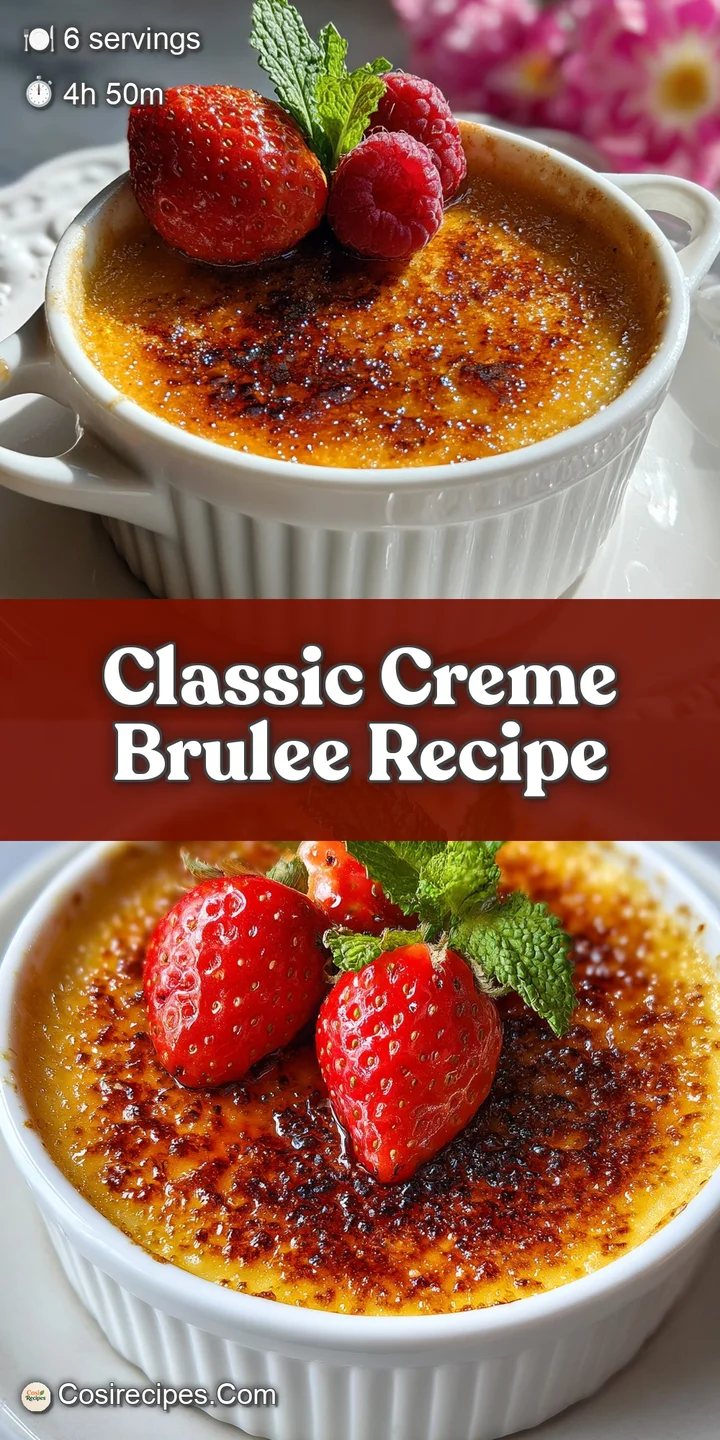
- Flavor/Texture Hook: Velvety vanilla cream with a shattering amber crust
- Perfect for: Anniversary dinners or making guests feel truly pampered
- Texture that defines dessert magic
- Precision timing for elegant results
- Selecting elements for silky custard
- Tools for a glass finish
- Steps for the perfect jiggle
- Fixing common custard mishaps
- Scaling for larger gatherings
- Dessert Myths Worth Debunking
- Keeping the sugar crust crisp
- Presentation for your next party
- Recipe FAQs
- 📝 Recipe Card
Texture that defines dessert magic
The secret to this custard isn't just the fat content, though the heavy cream does a lot of the heavy lifting. It's about how we treat the proteins. When we heat the cream and slowly introduce it to the yolks, we are performing a delicate chemical marriage. If we go too fast, the proteins tighten up and clump.
If we go slow, they create a loose, flexible web that holds moisture while feeling incredibly lush.
The Physics of the Wobble: A water bath, or bain marie, acts as a heat buffer that prevents the custard from exceeding 212°F, ensuring the eggs thicken without curdling. This indirect heat allows the yolks to reach their "set point" gently, maintaining a silky mouthfeel.
Maillard vs Caramelization: While the custard relies on gentle coagulation, the topping is all about rapid thermal decomposition. Using a torch creates a focused, high intensity heat that turns superfine sugar into a complex, bitter sweet glass before the cold custard underneath can even think about melting.
Fat Induced Stability: The 36% fat content in the heavy cream coats the egg proteins, which physically interferes with their ability to bond too tightly. This is why low-fat versions often turn out rubbery or weep liquid while this version stays stable and creamy.
Since this is a dessert built for sharing, it helps to know exactly how much you need to prepare based on your guest list. Scaling a custard requires a bit of math to ensure the baking time remains consistent across different batches.
| Servings | Ingredient Adjustments | Pan Size | Cook Time |
|---|---|---|---|
| 2 people | 1/3 batch (approx. 2/3 cup cream) | Small roasting pan | 30 mins |
| 6 people | Standard recipe (2 cups cream) | 9x13 inch pan | 35-45 mins |
| 12 people | Double recipe (4 cups cream) | Two 9x13 inch pans | 40-50 mins |
It is worth noting that baking twelve ramekins at once might require slightly more time because the total volume of water in the bath takes longer to reach temperature. Always check for the jiggle rather than relying solely on the clock.
Precision timing for elegant results
When we talk about this classic creme brulee recipe, we are dealing with a dish that lives and dies by temperature control. I used to think I could just "feel" when it was done, but then I'd end up with liquid centers. Now, I use a thermometer every single time.
If you hit 170°F, you are in the safe zone. If you go to 185°F, you are eating those scrambled eggs I mentioned earlier.
The sugar topping is the other precision point. If you use regular granulated sugar, the grains are often too large, leading to uneven melting and "burnt spots" next to "raw spots." Superfine sugar is the secret weapon here.
It liquefies almost instantly, giving you that uniform, golden brown sheet of caramel that looks like it came out of a professional pastry kitchen.
| Component | Science Role | Pro Secret |
|---|---|---|
| Heavy Cream (36% fat) | Provides the structural lipid base | Steep the vanilla bean in warm cream for 15 minutes to maximize flavor extraction. |
| Egg Yolks | Acts as the primary thickening agent | Strain the yolks through a fine mesh sieve to remove the chalazae for a smoother finish. |
| Superfine Sugar | Creates the glass like crust | Use a paper towel to dab the surface of the chilled custard dry before adding sugar. |
The pinch of kosher salt might seem optional, but it is the bridge between the heavy fat of the cream and the sweetness of the sugar. It brightens the vanilla notes and keeps the dish from feeling cloying.
Selecting elements for silky custard
The beauty of a classic creme brulee recipe is that it only requires a handful of ingredients, so the quality of each one really shines through. If you can find a real vanilla bean, use it. The tiny black specks distributed throughout the cream look beautiful and offer a depth of flavor that extract just can't touch.
- 2 cups heavy cream (36% fat content): This is the backbone. Why this? High fat prevents curdling and creates the signature mouthfeel.
- Substitute: Full fat coconut milk (Adds a distinct tropical flavor).
- 1/3 cup granulated sugar: For the custard base. Why this? Dissolves easily into the cream without altering the color.
- Substitute: Maple sugar (Adds a woody, autumnal note).
- 5 large egg yolks: The thickener. Why this? Yolks provide lecithin for emulsification and richness.
- Substitute: 4 large yolks plus 1 tablespoon heavy cream if your eggs are extra large.
- 1 vanilla bean, split and scraped: The aromatic soul. Why this? Real seeds provide superior aroma and visual appeal.
- Substitute: 1 tablespoon vanilla bean paste.
- 1 pinch kosher salt: The flavor balancer. Why this? Sharpens the sweetness and cuts through the richness.
- Substitute: Sea salt (use slightly less).
- 6 tsp superfine sugar: For the topping. Why this? Melts rapidly and evenly under a flame.
- Substitute: Regular granulated sugar (pulse in a blender for 10 seconds).
Using a real vanilla bean is a bit of a splurge, but for a special occasion, it makes a world of difference. If you're wondering whether the shortcut is worth it, here is how the fresh stuff stacks up against the pantry staple.
| Feature | Fresh Vanilla Bean | Vanilla Extract |
|---|---|---|
| Flavor Profile | Floral, complex, earthy | Sweet, singular, alcoholic |
| Visuals | Elegant black specks | Clear/brown liquid |
| Intensity | High (lingers on palate) | Moderate (fades with heat) |
Tools for a glass finish
You don't need a professional kitchen, but a few specific items make this much easier. A culinary torch is the biggest one. While some people suggest using a broiler, it often heats the custard too much, turning your cold cream into warm soup. A torch allows you to stay focused on the surface.
You will also need six 4 ounce ramekins; I prefer the shallow ones because they maximize the sugar to custard ratio.
You will also need a fine mesh strainer. This is non negotiable. Even the best whisking can leave behind a tiny bit of egg white or a clump of yolk. Straining the mixture into a pitcher before pouring it into the ramekins ensures that every single bite is perfectly uniform.
Finally, a roasting pan large enough to hold all your ramekins without them touching the sides will serve as your water bath.
Steps for the perfect jiggle
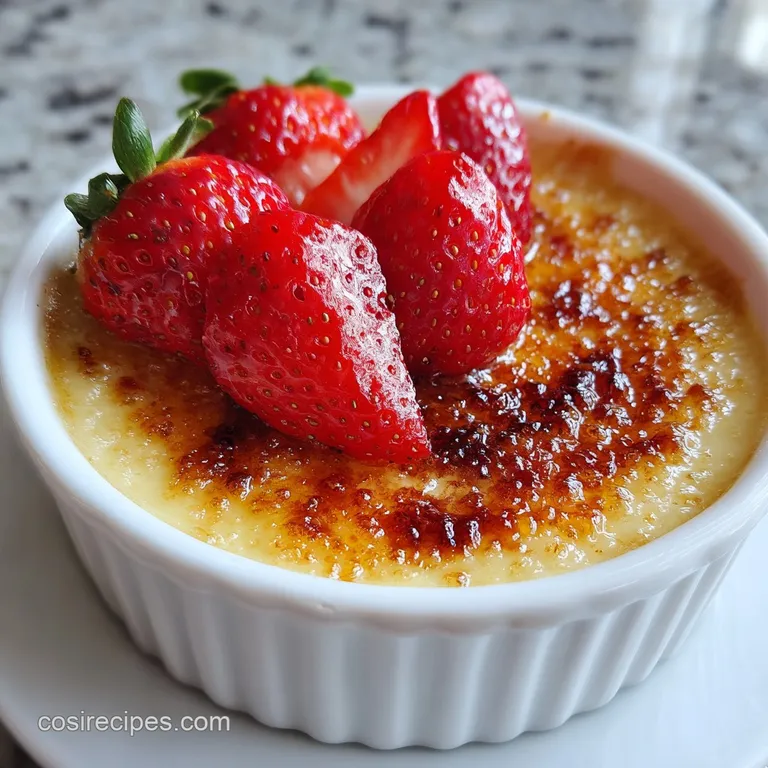
- Infuse the cream. Heat the 2 cups heavy cream, vanilla bean seeds/pod, and salt in a saucepan over medium until small bubbles form at the edges. Note: Do not let it reach a rolling boil.
- Prepare the yolks. Whisk the 5 egg yolks and 1/3 cup granulated sugar in a medium bowl until the mixture turns pale yellow.
- Temper the mixture. Slowly drizzle half of the warm cream into the yolks while whisking constantly. Note: This prevents the eggs from scrambling.
- Combine and strain. Stir in the remaining cream, then pour the mixture through a fine mesh sieve into a clean pitcher.
- Set up the bath. Place six ramekins in a roasting pan and fill each with the custard mixture.
- Add water. Pour boiling water into the roasting pan until it reaches halfway up the ramekins.
- Bake the custard. Bake at 325°F for 35-45 minutes until the edges are set but the center jiggles like jelly.
- Chill thoroughly. Remove from the water bath and cool to room temperature, then refrigerate until completely cold (at least 4 hours).
- Prepare the surface. Blot any moisture off the top of the custards with a paper towel.
- Torch the sugar. Sprinkle 1 tsp superfine sugar over each ramekin and torch until the sugar bubbles and turns deep amber.
Chef's Tip: If you see tiny bubbles on the surface of your custard before baking, quickly run the flame of your torch over them. They will pop instantly, leaving you with a smooth, glass like surface.
Fixing common custard mishaps
One of the most frustrating things is pulling your ramekins out of the oven only to find they look grainy or have "bubbles" all over the top. Usually, this is a sign that the oven was too hot or the water bath wasn't deep enough.
If the custard isn't insulated by water, the outside cooks at the oven temperature (325°F) while the inside is still trying to catch up, leading to a rubbery exterior.
Achieving a Velvet Consistency
If your custard feels more like a firm flan than a creamy brulee, it's likely overbaked. The "carryover cooking" is real here. The custard will continue to set as it cools, so you must pull it out while it still looks slightly "underdone" in the very center. If it looks solid across the top, you've gone too far.
| Problem | Root Cause | Solution |
|---|---|---|
| Custard is grainy | Eggs curdled from high heat | Always use a water bath and keep temp at 325°F or lower. |
| Surface is pitted | Air bubbles in the mix | Pour slowly and pop surface bubbles with a torch before baking. |
| Sugar is soft | Moisture from the fridge | Blot the custard dry before torching and serve within 30 minutes. |
Common Mistakes Checklist
- ✓ Don't skip the straining step; it removes the "bits" you can't see but will definitely feel.
- ✓ Ensure the water bath is hot (boiling) when you pour it in, not lukewarm.
- ✓ Use shallow ramekins to ensure the custard cooks evenly and gives you more "crust" area.
- ✓ Never torch the sugar more than an hour before serving, or the sugar will pull moisture from the custard and turn into syrup.
- ✓ Let the custards reach room temperature before putting them in the fridge to prevent condensation.
Scaling for larger gatherings
If you are hosting a big party and need to double this classic creme brulee recipe, the chemistry remains the same, but the logistics change. When doubling the liquids, I find it's best to reduce the total liquid volume by about 10% to ensure the set remains firm in a larger batch.
For this recipe, if you go to 4 cups of cream, use 9 yolks instead of 10. This prevents the custard from becoming too "eggy" in flavor while maintaining that luxurious texture.
For smaller portions (half batch), use a smaller roasting pan. If the pan is too large for the number of ramekins, the water bath will evaporate too quickly. You might need to reduce the baking time by about 5-8 minutes, so start checking the jiggle at the 25 minute mark.
If you're downscaling and only have 2 or 3 yolks, you can beat one extra yolk and use half of it to get the measurement exact.
Dessert Myths Worth Debunking
There is a common belief that you must heat the cream to a full boil to "infuse" the vanilla. This is actually counterproductive. Boiling the cream can change the structure of the fats and may even cause it to separate later.
A gentle "scald" (where tiny bubbles appear at the edges) is more than enough to pull the flavor from the vanilla bean while keeping the cream stable.
Another myth is that you can't use a broiler to finish the top. Technically, you can, but it's a gamble. A broiler heats the entire dish, which means by the time your sugar is caramelized, the cold custard you worked so hard on is now lukewarm.
If you absolutely must use a broiler, place the ramekins in an ice bath while they are under the heating element to keep the cream chilled. Honestly, just buy the $20 torch; it's worth it for the control alone.
Keeping the sugar crust crisp
Creme brulee is the ultimate make-ahead dessert, but only up to a point. You can bake the custards, cover them tightly with plastic wrap (ensure it doesn't touch the surface), and keep them in the fridge for up to 3 days. This makes them perfect for dinner parties.
However, the torching must happen at the very last minute. The sugar crust is hygroscopic, meaning it literally sucks moisture out of the air and the custard. Within 30 to 60 minutes, that glass like shell will start to soften into a sticky syrup.
If you find yourself with leftover custard (lucky you!), keep it in the fridge. While the sugar top won't stay crunchy, the custard itself is still delicious. You can actually scrape off the soft sugar and "re torch" a fresh layer if you really want that crunch back.
For a zero waste tip, if you have leftover egg whites from the 5 yolks used here, store them in a sealed container. They freeze beautifully for up to 3 months and can be used later for meringues or a healthy breakfast omelet.
Presentation for your next party
When you are ready to serve, don't just hand over a ramekin. Part of the joy of a classic creme brulee recipe is the presentation. I like to serve mine on a small saucer with a single fresh raspberry or a tiny sprig of mint on the side. It adds a pop of color to the amber and cream palette.
If you want to go the extra mile, serve it with a long, thin biscuit or a piece of shortbread for dipping into the custard.
For a truly "occasion ready" feel, torch the sugar right at the table in front of your guests. The smell of caramelizing sugar is intoxicating and adds a bit of theatrical flair to the evening. Just make sure you warn everyone that the ramekins will be hot!
Let them sit for about 3 minutes after torching. This gives the sugar time to harden into that signature "window pane" texture while the ramekin cools down enough to handle safely.
If you want a deeper flavor, do this:
- Add 1 tablespoon of bourbon to the cream after tempering for an adult, smoky finish.
- Infuse the cream with orange zest instead of vanilla for a bright, citrusy "Crema Catalana" style.
- Replace 1/4 cup of the heavy cream with very strong espresso to create a coffee flavored masterpiece.
Making this dish is about more than just following steps; it is about paying attention to the details. The way the cream smells as it warms, the resistance of the sugar under the torch, and that final, satisfying shatter. It’s a classic for a reason.
Once you master the technique, you’ll realize that the most elegant desserts are often the simplest ones, provided you treat the ingredients with the respect they deserve. Happy baking, and I hope your first crack is as satisfying as mine always is!
Recipe FAQs
What temperature should the custard reach before I remove it from the oven?
170°F is the safe zone. If you hit 170°F, the eggs have thickened without curdling, but pull it slightly sooner if you prefer a very soft center.
Is it true I should use superfine sugar for the topping instead of regular granulated sugar?
Yes, superfine sugar is highly recommended. The smaller grains liquefy almost instantly, ensuring a uniform, even caramel crust without burnt spots.
How to prevent the custard from scrambling while heating the egg yolks?
Slowly drizzle half of the warm cream into the yolks while whisking constantly. This tempering process gradually brings the temperature of the yolks up without shocking the proteins.
Should I skip the water bath (bain marie) to save time on this recipe?
No, do not skip the water bath. The bath acts as a heat buffer, preventing the edges from exceeding 212°F and curdling before the center sets properly.
How long can I make the custard ahead of time before torching the sugar?
Prepare the custard up to 48 hours ahead of serving. Keep it tightly wrapped in the refrigerator until you are ready to blot and torch the surface immediately before eating.
How do I ensure the final custard texture is perfectly smooth and velvety?
Strain the entire custard mixture through a fine mesh sieve. This step removes any chalazae or tiny bits of scrambled egg that cause graininess.
How long should I chill the custards before applying the caramelized sugar topping?
Chill until completely cold, which takes at least 4 hours. A cold surface is essential because it allows the torch flame to melt and harden the sugar without melting the cream underneath.
Classic Creme Brulee Recipe
Ingredients:
Instructions:
Nutrition Facts:
| Calories | 376 kcal |
|---|---|
| Protein | 4.5g |
| Fat | 32.6g |
| Carbs | 17.7g |
| Fiber | 0g |
| Sugar | 15.5g |
| Sodium | 45mg |
