Cloud-Soft Cinnamon Rolls with Cream Cheese Frosting
- Time: Active 70 minutes, Passive 20 minutes, Total 90 minutes
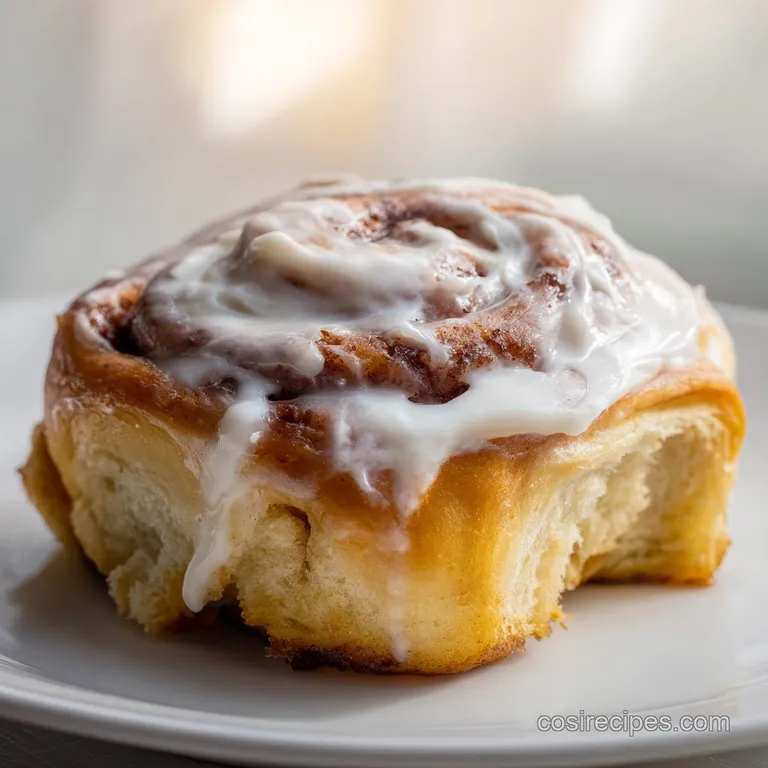
- Flavor/Texture Hook: Velvety cream cheese over soft, buttery spirals
- Perfect for: Slow Sunday mornings or a standout holiday brunch
- Why This Dough Stays Soft
- Key Metrics for Perfect Baking
- Essential Components for Sweet Success
- Tools for a Seamless Bake
- Step-by-Step Guide to Pillowy Rolls
- Fixing Common Baking Stumbles
- Adapting Your Batch Size
- Preserving Freshness and Flavor
- Garnish Secrets for Stunning Rolls
- Recipe FAQs
- 📝 Recipe Card
We’ve all been there. You spend all morning kneading, proofing, and waiting, only to pull a tray of "sad beige bricks" out of the oven. They look fine, but one bite reveals a texture closer to a dense dinner roll than a pastry.
It’s heart breaking when that center spiral is dry and the edges are tough enough to require a steak knife. I used to think the secret was just more butter, but even then, my rolls would turn into rocks the moment they cooled down.
The real culprit is usually a lack of moisture retaining ingredients and over handling the dough. Most classic recipes rely on heavy amounts of white sugar and flour which, while tasty, don't actually hold onto hydration very well. The result is a roll that's only good for the first ten minutes.
After that, you're basically eating sweet cardboard. I wanted a roll that felt like a cloud, even if I snagged one from the counter three hours later.
That's where this Greek yogurt method changed my entire breakfast game. By introducing yogurt and honey into the mix, we create a dough that is naturally more "hygroscopic" basically a fancy way of saying it grabs onto water and doesn't let go.
You get that signature pull apart texture and a velvety crumb that melts. No more dry bricks. Just soft, swirling magic that smells like a warm hug.
Why This Dough Stays Soft
Many people struggle with yeast breads because they treat the dough like a chore rather than a living thing. The ingredients we choose here aren't just for flavor; they are functional tools that fix the structural issues of traditional baking.
If you’ve ever wondered why some bakery rolls stay so soft while yours get crusty, it’s all down to the hydration management and the acidity in the dough.
- Acidity and Gluten: The lactic acid in the 120g of Greek yogurt acts as a natural dough conditioner, weakening the gluten bonds just enough to ensure the final product is tender rather than chewy.
- Hygroscopic Sweetening: Using 50g of honey instead of granulated sugar in the dough provides a humectant effect, which means the rolls stay moist for significantly longer after they leave the oven.
- Fat Distribution: Incorporating 45g of melted butter directly into the wet ingredients ensures every flour particle is coated, preventing the formation of long, tough gluten strands.
- Controlled Fermentation: A 45 minute proofing window allows the instant yeast to create tiny gas pockets that expand rapidly during the 20 minutes of baking, leading to a light, airy structure.
| Thickness | Internal Temp | Rest Time | Visual Cue |
|---|---|---|---|
| 3 cm (raw) | 88°C (190°F) | 10 minutes | Pale gold with bubbling edges |
| 4 cm (raw) | 90°C (195°F) | 15 minutes | Deep amber swirls on top |
| 2 cm (raw) | 85°C (185°F) | 5 minutes | Lightly browned and soft touch |
When you are aiming for that professional look, remember that the "doneness" isn't just about the timer. If you pull them too early, the center will be gummy; too late, and the sugar burns.
Aiming for that 88°C internal temperature is the best way to ensure they are fully set without losing that signature softness. This precision is what separates a hobbyist from someone who has truly mastered the craft.
Key Metrics for Perfect Baking
Understanding the "why" behind your ingredients makes you a more confident cook. When you look at the 480g of all purpose flour in this recipe, it’s not just bulk; it’s the canvas. I’ve found that using a kitchen scale for these measurements is the only way to get consistent results every single time.
A "cup" of flour can vary by as much as 30 grams depending on how you scoop it, which is the difference between a cloud and a cracker.
| Component | Role | Pro Secret |
|---|---|---|
| Greek Yogurt | Moisture & Tang | Use full fat for the most velvety crumb |
| Instant Yeast | Rapid Leavening | Ensure milk is exactly 43°C (110°F) |
| Coconut Sugar | Deep Caramel Flavor | Pairs perfectly with cinnamon for a dark swirl |
| Cream Cheese | Rich Garnish | Whisk until completely smooth before adding syrup |
The interaction between the 180ml of warm milk and the 7g of instant yeast is the most critical stage. If your milk is too hot, you’ll kill the yeast and end up with a flat slab. If it’s too cold, the yeast will stay dormant and your 45 minute proofing will do absolutely nothing. I always use the "inner wrist" test it should feel like warm bath water, never hot. If you're interested in other ways to use yogurt in your morning routine, you might love my Apple Cinnamon Yogurt Muffins, which use a similar science to stay moist.
Essential Components for Sweet Success
Gathering your ingredients is the first step toward a successful bake. Don't try to shortcut the temperatures here; having your egg at room temperature and your butter properly melted (but not boiling) makes the emulsification process much smoother.
When everything is at a similar temperature, the dough comes together without "breaking" or becoming lumpy.
- 480g All purpose flour: Provides the structure. Why this? AP flour gives a softer bite than high protein bread flour.
- 180ml Warm whole milk: Activates the yeast. Why this? Whole milk fat creates a richer, more tender dough.
- 7g Instant yeast: The rising agent. Why this? Instant yeast doesn't require long blooming and works faster.
- 120g Plain Greek yogurt: Adds moisture. Why this? The acidity tenderizes the gluten for a pillowy texture.
- 50g Honey: A natural sweetener. Why this? Honey keeps the rolls soft for days by retaining moisture.
- 1 Large egg: Binding and richness. Why this? Adds structure and a beautiful golden hue to the dough.
- 45g Unsalted butter (melted): Fat for the dough. Why this? Melted butter incorporates more evenly than softened butter here.
- 1 tsp Salt: Flavor enhancer. Why this? Salt balances the sweetness and strengthens the dough.
- 100g Coconut sugar: For the filling. Why this? Adds a molasses like depth that white sugar lacks.
- 2 tbsp Ground cinnamon: The star spice. Why this? Use high-quality Ceylon cinnamon for a floral, spicy kick.
- 30g Unsalted butter (softened): Filling base. Why this? Softened butter acts as the "glue" for the cinnamon sugar.
- 115g Reduced fat cream cheese: For the icing. Why this? Provides the classic tangy counterpoint to the sweet rolls.
- 2 tbsp Maple syrup: Icing sweetener. Why this? Adds a complex, woody sweetness to the frosting.
- 1 tsp Vanilla extract: Flavoring. Why this? Rounds out the flavors of the cream cheese and maple.
- 60g Powdered sugar: Icing structure. Why this? Creates a smooth, spreadable consistency that sets slightly.
- 2 tsp Milk: To thin the icing. Why this? Allows you to reach the perfect "drizzle able" texture.
Before you start mixing, make sure your Greek yogurt is at room temperature. If you add cold yogurt to your warm milk and yeast, it will drop the temperature too quickly and stall the yeast's activity. Just set it out on the counter about 30 minutes before you plan to start.
It’s a small detail, but it’s the difference between a 45 minute rise and a two hour wait.
Tools for a Seamless Bake
You don't need a professional bakery to make these, but a few specific tools will make your life significantly easier. Using a stand mixer with a dough hook takes the physical labor out of the 5-7 minute kneading process, ensuring the dough is supple without you breaking a sweat.
If you are doing this by hand, expect to double the kneading time.
I also highly recommend using unflavored dental floss for slicing. When you use a knife even a very sharp one you inevitably squash the delicate layers of the dough as you press down.
Floss allows you to cut from the "inside out" by crossing it over the top and pulling, which keeps those spirals perfectly circular and beautiful.
- Stand Mixer: Essential for developing the gluten without overworking yourself.
- 9x13 inch Baking Dish: The standard size for 12 large, fluffy rolls.
- Rolling Pin: Helps you achieve that precise 12x18 inch rectangle.
- Digital Thermometer: To check the milk temperature and the final bake.
- Dental Floss: The secret to clean, un squashed slices.
- Kitchen Scale: To measure the 480g of flour accurately.
step-by-step Guide to Pillowy Rolls
- Activate Yeast: Combine 180ml warm milk, 7g yeast, and 50g honey in your stand mixer bowl. Note: Let it sit for 5 minutes until a thick foam forms on the surface.
- Mix Wet Ingredients: Add 120g Greek yogurt, the egg, and 45g melted butter to the foamy yeast. Note: Whisk gently just to break the egg yolk before adding flour.
- Knead Dough: Gradually add 480g flour and 1 tsp salt while using the dough hook on medium low for 5–7 minutes. Note: Stop until the dough pulls away from the sides and feels supple.
- First Rise: Place the dough in a greased bowl and cover with a damp cloth. Note: Proof in a warm spot for 45 minutes until the volume has visibly doubled.
- Shape Rectangle: Turn dough onto a floured surface and roll into a 12x18 inch rectangle. Note: Try to keep the edges as straight as possible for even rolls.
- Apply Filling: Spread 30g softened butter over the dough, then sprinkle evenly with 100g coconut sugar and 2 tbsp cinnamon. Note: Leave a 1cm border at the top to help the roll seal.
- Roll and Slice: Roll tightly into a log starting from the long edge. Use dental floss to slice into 12 even pieces. Note: Cut the log in half, then halves into thirds for perfect sizing.
- Bake Rolls: Place in a greased 9x13 inch dish. Bake at 175°C (350°F) for 20 minutes. Note: Bake until the tops are lightly golden brown and fragrant.
- Prepare Icing: Whisk 115g cream cheese, 2 tbsp maple syrup, 1 tsp vanilla, and 60g powdered sugar. Note: Add milk 1 tsp at a time until the icing is smooth and glossy.
- Frost and Serve: Spread the icing over the rolls while they are still warm. Note: The warmth helps the icing melt slightly into the center spirals.
Fixing Common Baking Stumbles
If things don't go perfectly the first time, don't panic. Baking is as much about troubleshooting as it is about following instructions. One common issue is the "Center Pop Up," where the middle of the roll pushes up like a volcano during baking.
This usually happens because the rolls were packed too tightly in the pan, or the dough was rolled too loosely, leaving air pockets that expand too fast.
Why Your Rolls Are Dry
A dry roll is usually the result of adding too much flour during the kneading process. If the dough feels sticky, our instinct is to keep throwing flour at it. Resist! A slightly tacky dough is a happy dough. More flour equals more starch, which absorbs all the moisture and leaves you with a crumb that feels like sand.
Stick to the 480g measurement and trust the kneading process to smooth it out.
| Problem | Root Cause | Solution |
|---|---|---|
| Dough won't rise | Yeast was killed by hot milk | Ensure milk is 43°C (110°F) before adding yeast. |
| Rolls are tough | Over kneaded the dough | Stop mixing as soon as the dough is supple and smooth. |
| Filling leaks out | Butter was too melted | Use truly "softened" butter, not liquid, for the filling. |
Another frequent headache is the "gummy center." This happens when the oven is too hot, browning the outside before the inside is set. If you notice them getting dark at the 15 minute mark, tent the pan with foil for the final 5 minutes.
This protects the top while the residual heat finishes the internal structure.
- ✓ Always weigh your flour with a scale to avoid a dry, heavy crumb.
- ✓ Proof your dough in a "cold" oven with the light turned on for a perfect 25-28°C environment.
- ✓ Don't skip the 10 minute rest before frosting; it prevents the icing from completely melting away.
- ✓ Use unflavored dental floss for cutting to keep the spiral shape intact.
- ✓ Ensure your cream cheese is at room temperature to avoid a lumpy frosting.
Adapting Your Batch Size
Sometimes you're hosting a huge brunch, and other times it's just a quiet Saturday for two. If you need to scale down the recipe to 6 rolls, use half of everything, but be careful with the egg. Beat one large egg in a small bowl and use exactly half by weight.
For the pan, a 20cm (8 inch) round cake pan works perfectly for a half batch. Reduce the baking time by about 3-4 minutes since there is less thermal mass in the oven.
If you are scaling up to 24 rolls, don't just double everything blindly. Use two separate 9x13 inch pans rather than one giant one to ensure even heat distribution.
For spices and salt, I recommend only increasing them to 1.5x the original amount; sometimes doubling salt can inhibit the yeast too much in larger batches. You’ll also want to work in batches with your stand mixer, as 960g of flour might overwhelm a standard home KitchenAid.
When you're making a big batch for a crowd, you might want to offer different breakfast options. If someone isn't a fan of cinnamon, my Fluffy dairy-free Pancakes are a great alternative that uses a similar philosophy of keeping things light and airy without traditional dairy.
| Method | Time | Texture | Best For |
|---|---|---|---|
| Fresh Bake | 90 mins | Ultimate fluff | Special mornings |
| Overnight | 12 hours | More developed tang | Zero stress mornings |
| Air Fryer | 12 mins | Crispy edges | Single servings |
Preserving Freshness and Flavor
To keep these rolls at their peak, storage is key. Because of the Greek yogurt and honey, they actually hold up much better than standard rolls. Leave them in the baking dish and cover tightly with plastic wrap or aluminum foil. They will stay soft at room temperature for up to 2 days.
If you need them to last longer, the fridge is an option, but it tends to dry out the bread structure, so I'd only do that if your kitchen is very warm.
For Zero Waste, don't toss the scraps! If you have the small "end pieces" from the dough log that aren't pretty enough for the pan, bake them in a muffin tin. If you have leftover frosting, it makes an incredible spread for toast or a dip for apple slices. Any stale rolls can be chopped up and turned into a world class bread pudding or even used as a base for a Brioche French Toast Casserole variation.
If you want to freeze them, do it after they are baked but before you frost them. Wrap each roll individually in plastic wrap and then place them in a freezer bag. They’ll stay fresh for up to 3 months.
When the craving hits, thaw at room temperature and warm them in the oven at 150°C for 10 minutes before applying fresh icing.
Garnish Secrets for Stunning Rolls
The presentation of your Cinnamon Rolls is where you can really show off. While the cream cheese frosting is classic, the way you apply it changes the entire look. For a "rustic" look, dollop the icing on while the rolls are quite hot so it melts into every crevice.
For a "bakery" look, wait 10 minutes, then use a piping bag to create elegant zig zags across the tops.
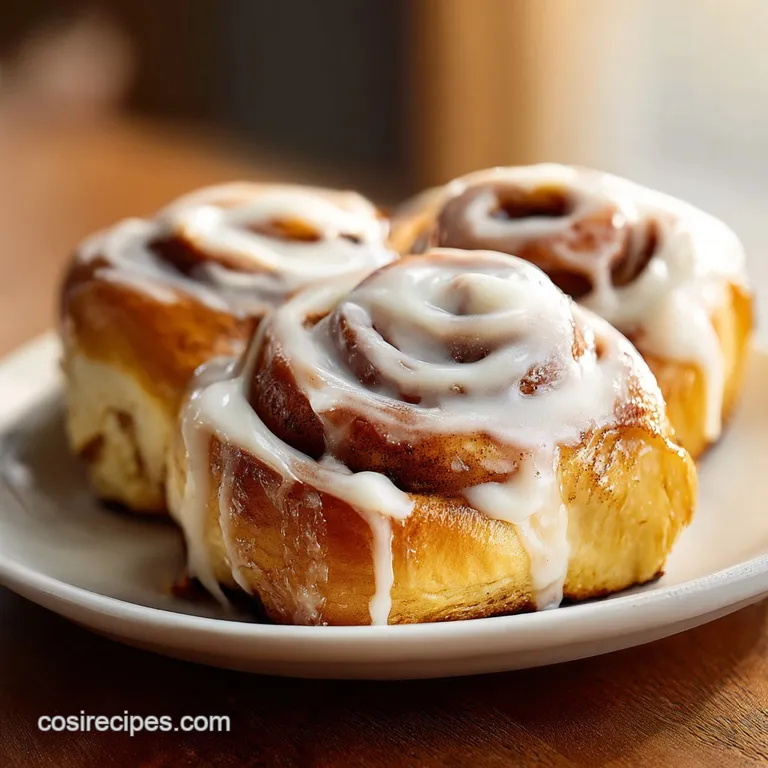
To master the color balance of this dish, I use a three accent strategy. First, the Deep Gold of the baked dough provides the warm base. Second, the Snow White of the cream cheese frosting offers a bright contrast. Finally, I like to add a third "pop" of color right before serving.
- Ruby Red: A few fresh raspberries or pomegranate seeds scattered over the white frosting. Add these just before serving to prevent the juice from bleeding into the icing.
- Emerald Green: A tiny pinch of finely minced fresh mint or even a dusting of pistachio flour. This adds a sophisticated, earthy note that cuts through the sugar.
- Amber Glow: A final drizzle of warm maple syrup or a sprinkle of toasted pecans. Add this over the frosting to give the rolls a professional, glistening finish.
The contrast between the dark coconut sugar swirls and the bright white frosting is already beautiful, but these small garnishes make the dish feel like a celebration. Whether you're serving them on a large wooden board for a family style brunch or on individual white plates, that extra touch of color makes people stop and take a photo before they dive in.
It's that little bit of magic that makes home baking feel truly special.

Recipe FAQs
What's the best icing for cinnamon rolls?
A cream cheese based icing is the superior choice. By whisking 115g reduced fat cream cheese with maple syrup, vanilla, and powdered sugar, you achieve a tangy, balanced flavor that cuts through the richness of the dough.
What is the Cinnabon secret ingredient?
The secret is high fat dairy. While many focus on the sugar, the use of Greek yogurt in the dough ensures a tender crumb, while the cream cheese in the frosting provides that signature professional richness.
Do I need to refrigerate cinnamon rolls with cream cheese frosting?
Yes, keep them chilled. Because the frosting contains cream cheese and milk, it is perishable and should be stored in the refrigerator to maintain food safety after the rolls have cooled.
What does pouring heavy cream on cinnamon rolls do?
It creates a gooey, caramel like sauce during baking. The fat and milk solids interact with the coconut sugar and butter to prevent the dough from drying out, resulting in a much softer, more indulgent texture.
How to ensure the rolls are perfectly soft?
Proof the dough until it has exactly doubled in size. If you enjoyed learning to handle this soft, high hydration dough, you can apply similar handling techniques to ensure success with other delicate baked goods.
How to get clean slices without squishing the dough?
Use dental floss to slice the log. Slide the floss underneath the roll, cross the ends over the top, and pull quickly to create a clean, professional cut without flattening the delicate layers.
Is it true you can bake these at a higher temperature to save time?
No, this is a common misconception. You must stick to the 350°F (175°C) setting for 20 minutes; baking at higher heat will cause the exterior to burn while leaving the center of the roll raw and doughy.
Cloud Soft Cinnamon Rolls
Ingredients:
Instructions:
Nutrition Facts:
| Calories | 316 kcal |
|---|---|
| Protein | 7.6 g |
| Fat | 8.4 g |
| Carbs | 53.2 g |
| Fiber | 1.8 g |
| Sugar | 21.5 g |
| Sodium | 224 mg |
