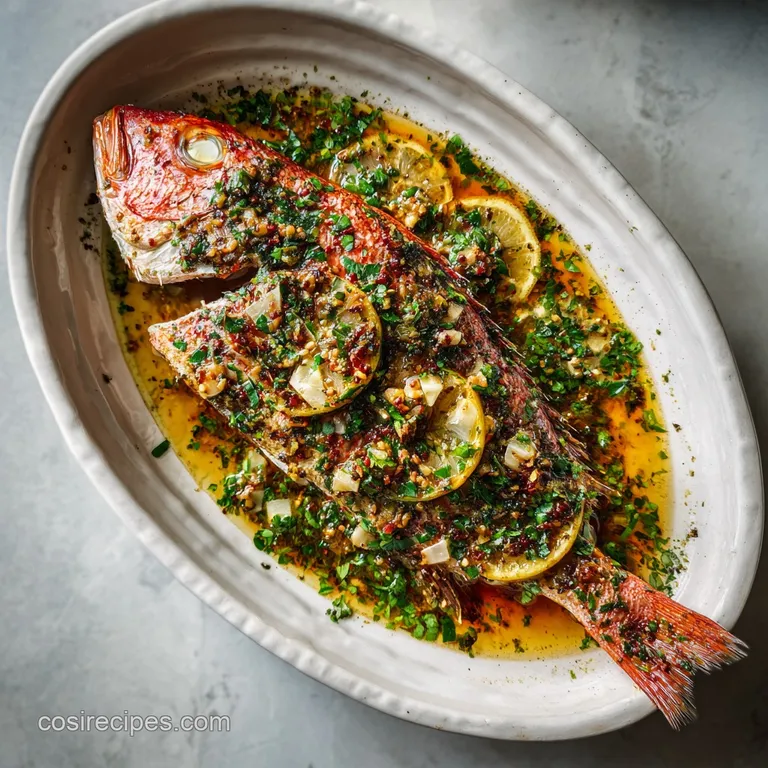
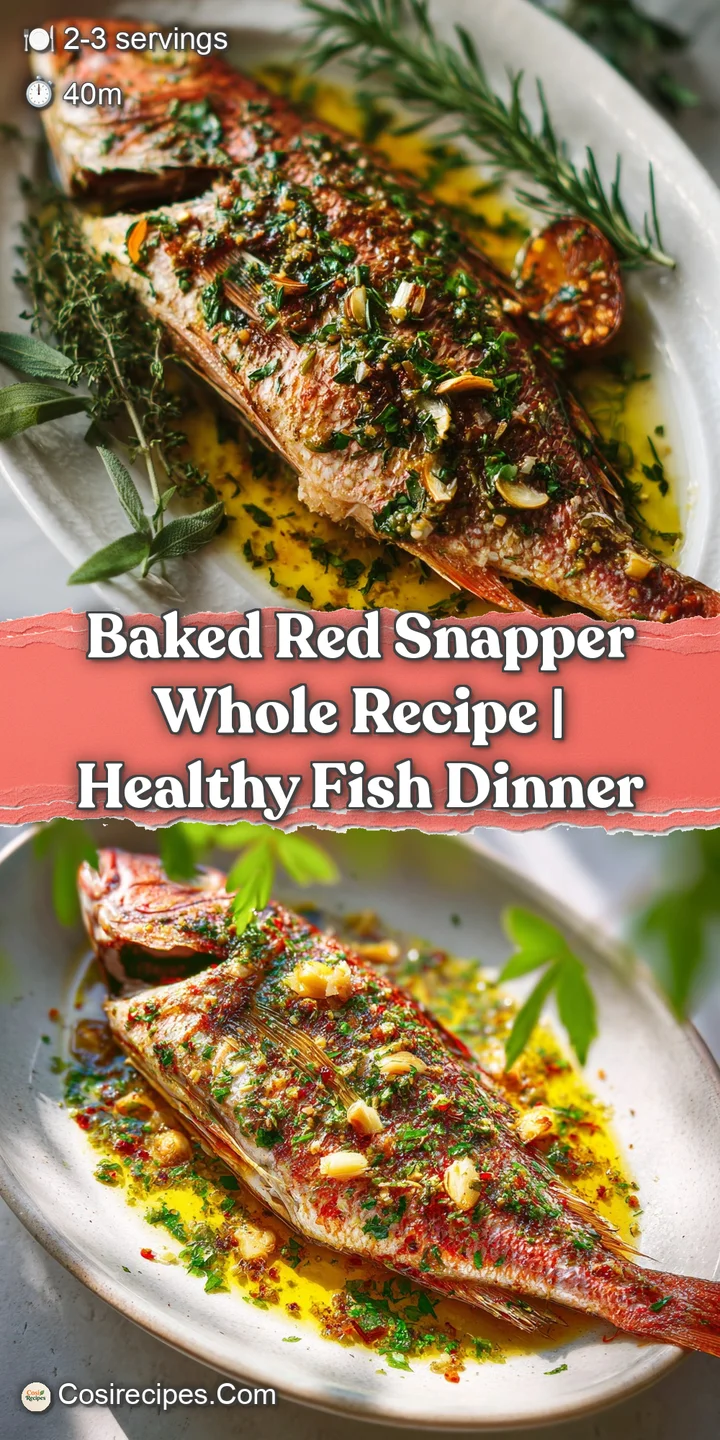
Baked Whole Red Snapper with Garlic
- Time: Active 15 minutes, Passive 25 mins, Total 40 mins
- Flavor/Texture Hook: Crispy, salt kissed skin hiding silky, lemon infused white meat.
- Perfect for: A Mediterranean style Sunday lunch or an impressive but simple date night dinner.
- Achieve a Crispy Baked Red Snapper Whole
- Precision Details for the Perfect Snapper Result
- Analyzing the Elements for Successful Roasting
- The Simple Elements Needed for This Recipe
- Essential Kitchen Tools for Fish Roasting
- Step by Step Execution of the Roast
- Avoiding Common Roasting Mistakes
- Adjusting the Recipe for Different Needs
- Flavor Variations to Explore
- Debunking Fish Cooking Myths
- Handling Leftovers and Zero Waste
- How to Serve and Enjoy
- Very High in Sodium
- Recipe FAQs
- 📝 Recipe Card
Achieve a Crispy Baked Red Snapper Whole
The first time I tried to bake a whole fish, I was honestly terrified of the "face." I felt like it was judging my knife skills from the cutting board. But then I heard that first sizzle as the olive oil hit the hot skin, and the aroma of roasting garlic and oregano started wafting through my kitchen.
That scent changed everything. It smelled like a seaside taverna in Greece, and suddenly, the "scary" part didn't matter anymore because I knew something special was happening in that oven.
When I finally pulled it out, the skin made a faint crackling sound as it hit the cool air. We sat down, peeled back that crispy exterior, and found the most tender, moist meat I’ve ever cooked at home.
It’s the contrast that gets you - the bright, zingy lemon cutting through the rich, buttery flavor of the snapper. Since then, I’ve realized that cooking a baked red snapper whole is actually the "cheat code" to a perfect seafood dinner because the bones do all the hard work of keeping the flavor locked inside.
Precision Details for the Perfect Snapper Result
Cooking whole fish isn't about guesswork, it's about watching for specific cues that tell you the heat has done its job. We want the meat to reach a point where it just barely flakes away from the bone, staying juicy rather than turning into sawdust.
- Thermal Mass Benefit: Keeping the fish whole allows the central bone to act as a heat conductor, cooking the meat from the inside out while the oven roasts it from the outside in.
- Collagen Breakdown: As the fish reaches 63°C (145°F), the connective tissues melt into a silky liquid, which provides that velvety mouthfeel you can't get with skinless fillets.
- The Maillard Effect: Scoring the skin increases the surface area for the olive oil and salt to react with heat, creating a savory, brown crust that shatters when you bite into it.
- Aromatic Steaming: Stuffing the cavity with lemon rounds and oregano creates a localized "steam chamber," infusing the thickest part of the meat with citrus notes before the heat can dry it out.
| Thickness of Fish | Internal Temp | Rest Time | Visual Cue |
|---|---|---|---|
| 1.5 inches (4 cm) | 63°C (145°F) | 3 mins | Eyes turn white and opaque |
| 2.5 inches (6 cm) | 63°C (145°F) | 5 mins | Skin pulls back slightly from the tail |
| 3+ inches (8 cm) | 63°C (145°F) | 7 mins | Dorsal fin pulls out easily with no resistance |
Finding a high-quality fish is the most important step here. If you can't find red snapper, don't worry. You can easily adapt this by using the techniques found in my Mediterranean Whole Roasted recipe which works beautifully for similar white fish.
Analyzing the Elements for Successful Roasting
Every ingredient in this list serves a functional purpose beyond just flavor. We are looking for a balance of fat, acid, and heat to make the snapper shine.
| Ingredient | Science Role | Pro Secret |
|---|---|---|
| Extra Virgin Olive Oil | Heat conductor | Use a high-quality oil; it becomes part of the "sauce" on the plate. |
| Flaky Sea Salt | Moisture drawer | It draws out surface moisture to help the skin crisp up faster. |
| Lemon Slices | Acidic buffer | They protect the delicate cavity meat from direct, harsh heat. |
| Thinly Sliced Garlic | Flavor infusion | Slicing thin ensures they soften and sweeten without burning in the high heat. |
- - Crispy & Salty
- The exterior skin.
- - Tender & Sweet
- The white inner flesh.
- - Bright & Acidic
- The lemon juice finish.
The Simple Elements Needed for This Recipe
You don't need a pantry full of stuff for this. We are focusing on fresh, vibrant ingredients that let the fish be the star of the show.
- 1 whole Red Snapper (2.5 lbs / 1.13 kg): Make sure it's scaled and gutted. Why this? Snapper has a firm texture and a naturally sweet, nutty flavor profile.
- 2 tbsp Extra Virgin Olive Oil: To coat the skin. Why this? Provides the fat needed for the skin to "fry" in the oven's heat.
- 1.5 tsp Flaky Sea Salt: For seasoning. (Substitute: Kosher salt).
- 1 tsp Cracked Black Pepper: For a bit of bite.
- 4 cloves Garlic: Thinly sliced. (Substitute: 1 tsp garlic powder, but fresh is much better).
- 1 large Lemon: Half sliced, half juiced. Why this? The slices protect the inside, while the juice brightens the final dish.
- 0.5 cup Fresh Parsley: Roughly chopped. (Substitute: Fresh cilantro for a different vibe).
- 2 sprigs Fresh Oregano: For the cavity. (Substitute: Fresh thyme).
- 1 tsp Dried Oregano: For the skin rub. Why this? Dried herbs have a more concentrated flavor that survives the high roasting heat.
If you're wondering how this compares to using pre cut portions, take a look at the difference between starting from scratch versus using shortcuts.
| Feature | Fresh Whole Snapper | Frozen Fillets (Shortcut) |
|---|---|---|
| Moisture Level | High (bones protect the meat) | Lower (prone to drying out) |
| Flavor Profile | Deep, rich, and sweet | Mild and often muted |
| Presentation | Rustic and impressive | Basic and functional |
Essential Kitchen Tools for Fish Roasting
You don't need a professional kitchen, but having a few specific items will make the process much smoother and prevent any "skin sticking" tragedies.
- Large Rimmed Baking Sheet: Like a half sheet pan. It needs to be large enough so the fish doesn't hang over the edges.
- Parchment Paper: Trust me, don't skip this. It's the difference between a whole fish and a fish that leaves half its skin stuck to the metal.
- Sharp Chef's Knife: You'll need this to score the skin. A dull knife will just tear it.
- Instant Read Thermometer: Such as a Thermapen. This is the only way to be 100% sure your baked red snapper whole is done without cutting into it.
- Paper Towels: Essential for drying the fish. Any surface moisture is the enemy of crispiness.
Chef's Tip: Put your baking sheet in the oven while it preheats. Placing the fish onto a hot tray gives the bottom skin a head start on getting crispy, similar to the technique used for a Pan Seared Branzino recipe.
step-by-step Execution of the Roast
Follow these steps closely. The goal is to move quickly once the fish is seasoned so the salt doesn't draw out too much moisture before it hits the oven.
- Heat the oven. Set it to 200°C (400°F). Note: This high temperature is what gives us the crispy exterior we want.
- Dry the fish. Pat the red snapper whole inside and out with paper towels until it feels bone dry. Note: Moisture on the skin leads to steaming, not roasting.
- Score the skin. Cut 3-4 diagonal slits on both sides of the fish, about 1 cm deep. Stop when you feel the bone.
- Oil it up. Rub the olive oil all over the skin and inside the cavity.
- Season thoroughly. Sprinkle the salt, pepper, and dried oregano over the skin, making sure to get some into the scores.
- Stuff the cavity. Tuck the garlic slices, lemon rounds, and fresh oregano sprigs inside the fish.
- Arrange for baking. Place the fish on the parchment lined sheet.
- Roast the snapper. Bake for 25 mins until the skin is golden and the flesh is opaque.
- The finish. Drizzle the fresh lemon juice over the top as soon as it comes out.
- Rest it. Let the fish sit for 5 minutes. Note: This allows the juices to redistribute so they don't run out when you cut it.
Avoiding Common Roasting Mistakes
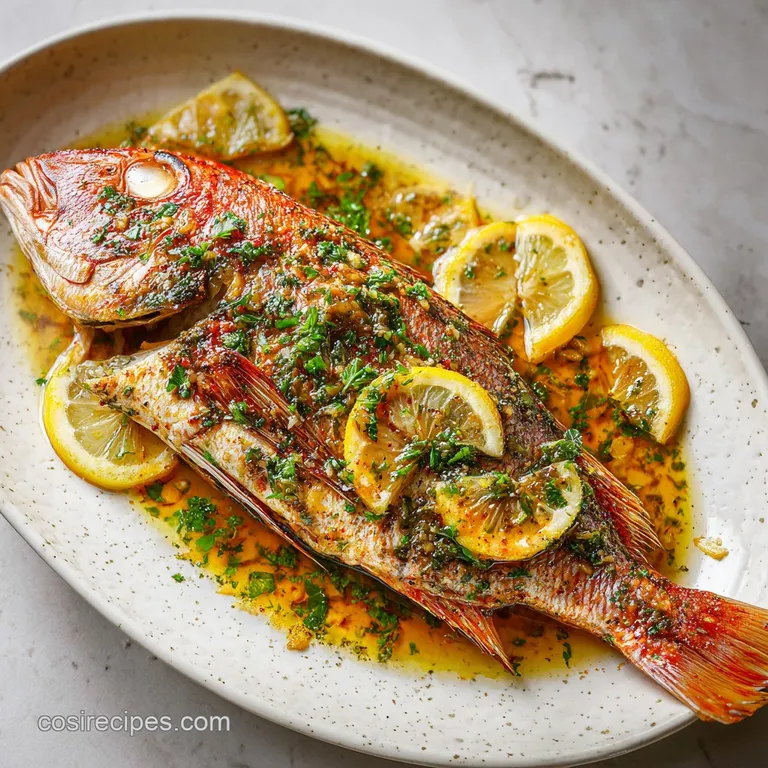
The biggest fear people have with baked red snapper whole is either undercooking it or ending up with a soggy mess. Usually, it's just a matter of prep work.
Why Your Snapper Skin Is Soft
If the skin isn't "shattering," it's almost always because the fish wasn't dry enough when it went in. If you see a lot of liquid on the pan halfway through, your oven might not be hot enough. Ensure you've preheated for at least 20 minutes before the fish goes in.
Why the Meat Is Dry
Overcooking is the culprit here. Fish goes from "perfect" to "overdone" in about 2 minutes. This is why I always suggest using a thermometer. If you don't have one, check the thickest part of the back; the meat should flake away with a fork but still look slightly glistening, not matte and chalky.
| Problem | Root Cause | Solution |
|---|---|---|
| Skin sticks to paper | Not enough oil | Ensure a generous coat of oil on the parchment and the fish skin. |
| Flesh is mushy | Oven temp too low | Roast at a minimum of 200°C (400°F) to set the protein quickly. |
| Garlic tastes bitter | Garlic burned | Ensure garlic is tucked inside the cavity or deep in the scores. |
Common Mistakes Checklist
- ✓ Never wash your fish in the sink; it just spreads bacteria and ruins the skin.
- ✓ Don't forget to season the inside of the fish; that's where the flavor starts.
- ✓ Avoid using a glass baking dish; metal conducts heat better for crispier results.
- ✓ Check the internal temp at the thickest part, right behind the head.
- ✓ Resist the urge to flip the fish; it's unnecessary and will likely break the skin.
Adjusting the Recipe for Different Needs
Whether you're cooking for a crowd or just yourself, this recipe is easy to scale as long as you watch your pan space.
Scaling Down (Cooking for 1-2): If you have a smaller fish (around 1 lb / 450g), reduce the cooking time to about 15-18 minutes. You can use a smaller toaster oven if it holds a consistent 200°C (400°F).
Still use a whole lemon, as you need that steam in the cavity regardless of fish size.
Scaling Up (Cooking for 6+): If you're roasting two large snappers at once, make sure there is at least 3 inches of space between them on the baking sheet. If they are too close, they will steam each other's sides and you'll lose the crunch.
You don't need to double the spices exactly; use about 1.5x the amount of salt and herbs and taste as you go.
If you want a different result, try these adjustments: If you want extra crispy skin, turn on the broiler for the last 2 minutes of cooking (watch it like a hawk!). If you want a faster cleanup, use a foil sling under the parchment paper to lift the whole thing off the tray easily.
If you want more richness, place a few cold pats of butter on top of the fish for the last 5 minutes of roasting.
Flavor Variations to Explore
Once you've mastered the basic baked red snapper whole, you can start playing with different flavor profiles based on what's in your pantry.
Achieving a Spicy Cajun Kick
Swap the dried oregano for a heavy dusting of Cajun seasoning or blackened fish rub. Rub it deep into the scores. Serve it with a side of dirty rice or the Charleston Red Rice recipe to complete the Southern vibe. The spice blend toasts in the oven, creating a dark, flavorful crust.
Exploring an Asian Inspired Steam Bake
Instead of oregano and lemon, stuff the cavity with sliced ginger, scallions, and a splash of soy sauce. Wrap the whole fish loosely in parchment paper (en papillote style) for the first 15 minutes, then open it up for the last 10 minutes to let the skin dry out.
It’s a completely different experience more delicate and aromatic.
Debunking Fish Cooking Myths
There’s a lot of "old wives' tales" about cooking seafood that actually make it harder to get a good result. Let's clear some of those up.
Myth: You have to flip the fish halfway through. Truth: Flipping a whole roasted fish is a recipe for disaster. The skin is delicate when hot and will almost certainly tear or stick.
If your oven is properly preheated, the heat will circulate around the fish, and the bottom will cook perfectly fine on the parchment paper.
Myth: "Fresh" fish shouldn't smell like anything. Truth: high-quality fish should smell like the ocean salty and clean. If it smells "fishy" or like ammonia, it's past its prime. But a mild, briny scent is actually a good sign of a fresh catch.
Myth: You must remove the head before cooking. Truth: Please keep the head on! It contains a lot of fat and collagen that baste the fish from the inside as it roasts. Plus, the cheek meat found just below the eye is widely considered the best, most tender part of the entire fish.
Handling Leftovers and Zero Waste
If you actually have leftovers (which is rare in my house), they can be just as good the next day if handled correctly.
Storage Guidelines: Store the cooked fish in an airtight container in the fridge for up to 2 days. I don't recommend freezing cooked snapper, as the texture of the delicate white meat becomes grainy once thawed.
Reheating Tips: Avoid the microwave! It will turn the fish into rubber. Instead, place it in a 150°C (300°F) oven for about 10 minutes until just warmed through. Or, better yet, flake the cold meat into a salad or use it to make fish tacos.
Zero Waste - Don't Throw Away the Scraps: The bones and head of a red snapper are gold. After you've eaten the meat, put the carcass in a pot with some water, an onion, and a stalk of celery. Simmer for 20 minutes to make a quick, incredible fish stock.
It's much better than anything you can buy in a carton and makes a great base for a seafood stew later in the week.
How to Serve and Enjoy
Presentation is half the fun with a whole fish. I like to bring the entire baking sheet to the table (on a trivet, of course) so everyone can see the golden skin before we start flaking it apart.
Serve the snapper with simple sides that don't compete with its flavor. A pile of roasted baby potatoes or a crisp green salad with a sharp vinaigrette is all you really need. If you're feeling a bit more adventurous, it pairs wonderfully with a side of buttery rice, perhaps something similar to what you'd find in a Dutch Baby Pancake recipe if you were leaning into a brunch theme though maybe stick to the savory sides for dinner!
When you're ready to eat, use a spoon and a fork to gently peel the skin back. Lift the top fillet off the bone, then grab the tail and lift the entire skeleton away in one piece to reveal the bottom fillet. It's a satisfying little ritual that makes the meal feel like a true event.
Enjoy that first bite of crispy skin and silky meat you earned it!
Very High in Sodium
1148 mg mg of sodium per serving (50% of daily value)
The American Heart Association recommends limiting sodium intake to about 2,300mg per day for overall cardiovascular health.
Sodium Reduction Tips for Red Snapper Recipe
-
Reduce Sea Salt-25%
Flaky sea salt is a significant source of sodium in this recipe. Reduce the amount of sea salt from 1.5 tsp to 0.75 tsp to significantly lower the sodium content while still providing flavor.
-
Embrace Lemon Power-15%
Enhance the flavor profile with more lemon juice and zest. The acidity will brighten the dish and reduce the need for as much salt for seasoning. Consider using a whole lemon juiced rather than half.
-
Spice it Up!-10%
Increase the amount of cracked black pepper, garlic, fresh parsley, and fresh oregano. These additions will add complexity and depth of flavor allowing you to reduce the salt.
-
Fresh vs. Dried-5%
Use fresh oregano in place of dried. Fresh herbs generally have less sodium than dried. If using dried oregano, reduce the amount to 0.5 tsp.
-
Experiment with Herbs & Spices
Explore other sodium free herbs and spices like smoked paprika, onion powder, or a dash of cayenne pepper. These alternatives can add layers of flavor without increasing sodium levels.
Recipe FAQs
How to bake whole snapper in the oven?
Pat the fish completely dry, score the skin 3-4 times on each side, and stuff the cavity with aromatics like lemon and oregano. Rub the exterior generously with olive oil and flaky salt, then roast at 200°C (400°F) for 20-30 minutes until the internal temperature reaches 63°C (145°F).
How do you bake a whole red snapper?
Use a high oven temperature (200°C/400°F) on a parchment lined baking sheet for 25 minutes. The key is thoroughly drying the skin before applying oil and salt, which encourages crispness rather than steaming.
What is the best method to cook red snapper?
Baking whole is one of the best, simplest methods for preserving moisture and flavor. Roasting the fish intact protects the delicate meat from drying out while allowing the bones to conduct internal heat evenly.
How do you cook red snapper in the oven without drying it out?
Stuff the cavity with acidic ingredients like lemon slices or herbs to create internal steam. Always pull the fish when the internal temperature hits exactly 63°C (145°F) and let it rest for 5 minutes before serving to redistribute juices.
Should I score the skin before baking whole snapper?
Yes, scoring the skin is highly recommended for even cooking and crispiness. Cutting diagonal slits about 1 cm deep allows the salt and heat to penetrate slightly, which helps render fat and prevents the skin from tightening too much.
What is the target internal temperature for baked whole snapper?
The target internal temperature is 63°C (145°F), measured at the thickest part of the back. If you are comfortable gauging doneness by feel, the dorsal fin should pull out easily with very little resistance.
Is it necessary to use parchment paper when baking whole fish?
No, it is not strictly necessary, but it is the best insurance against sticking. Placing the oiled fish directly onto a hot metal sheet will create a superior crisp bottom crust, similar to the technique used when mastering the pan searing technique for fillets.
Baked Red Snapper Whole
Ingredients:
Instructions:
Nutrition Facts:
| Calories | 278 calories |
|---|---|
| Protein | 39.2 g |
| Fat | 11.6 g |
| Carbs | 2.8 g |
| Fiber | 0.7 g |
| Sugar | 0.5 g |
| Sodium | 1148 mg |
