Easy Dutch Baby Pancake Recipe
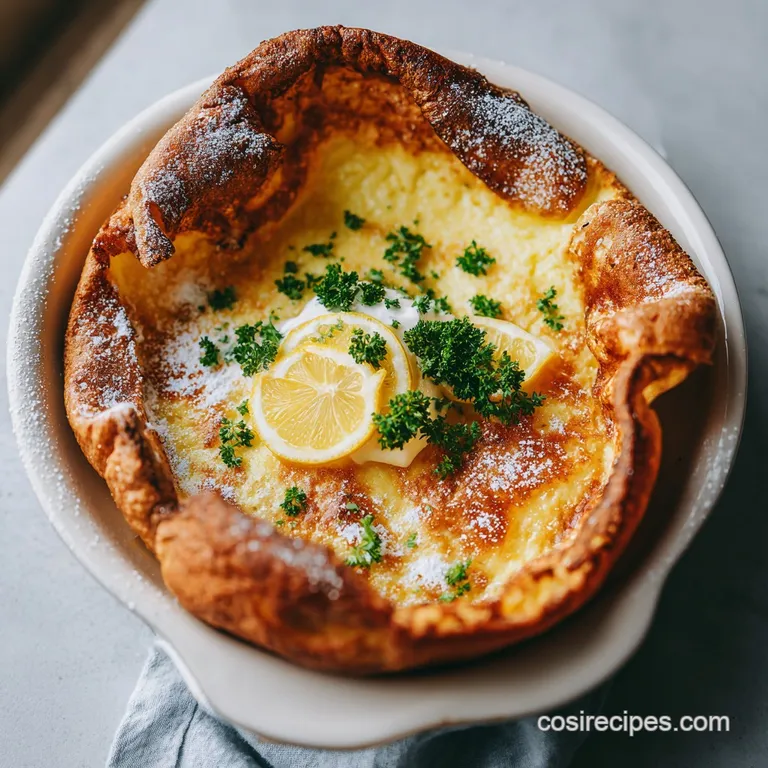
- Time: Active 5 minutes, Passive 20 minutes, Total 25 minutes
- Flavor/Texture Hook: Shatter crisp golden edges with a velvety lemon scented custard center.
- Perfect for: Lazy Sunday brunches or showing off for guests with minimal effort.
- The Science of That Fluffy Golden Rise
- Essential Numbers for Timing Success
- Component Analysis for Perfect Texture
- The Components for a Fluffy Custard Center
- Tools for a Spectacular Puffed Pancake
- Guide to Baking Your Breakfast Masterpiece
- Fixing Mistakes for a Golden Outcome
- Flavor Twists for Every Sweet Craving
- Keeping Leftovers Fresh and Reducing Waste
- Three Ways to Plate Your Beautiful Pancake
- Kitchen Myths Debunked
- Recipe FAQs
- 📝 Recipe Card
Imagine waking up to the smell of butter browning in a hot pan, that nutty and toasted aroma filling the kitchen before the coffee even finishes brewing. I still remember the first time I peeked through the oven glass and saw the batter climbing up the sides of the skillet like an overgrown souffle.
It looked like a kitchen disaster in the making, but instead, it settled into the most elegant, rustic breakfast I had ever seen. We call it a pancake, but it feels much more like a masterclass in textures.
The secret I discovered after many flat attempts is all about the temperature. You cannot rush the eggs or the milk. If they are cold, the steam won't build fast enough, and you’ll end up with a dense crepe instead of a cloud.
This easy dutch baby pancake is my go to when I want something that looks like it took hours but actually allows me to stay in my pajamas while it does all the hard work in the oven. It is pure kitchen magic.
The Science of That Fluffy Golden Rise
The Physics of the Steam Rise: Unlike traditional pancakes that rely on chemical leaveners like baking powder, this dish uses high intensity steam. When the thin, liquid batter hits the scorching buttered pan, the moisture in the eggs and milk evaporates instantly, trapped by the gluten structure of the flour to create giant air pockets.
- Protein Elasticity: The eggs provide the structure needed to hold the steam, acting like a balloon that expands as it heats.
- Starch Gelatinization: The flour absorbs the liquid and sets quickly against the hot pan walls, creating those iconic high ridges.
- Maillard Reaction: The combination of sugar and the proteins in the milk creates that deep, toasted brown color and complex flavor profile.
- Fat Emulsification: Blending the batter ensures the fat from the milk and eggs is perfectly distributed, resulting in a velvety crumb.
| Method | Time | Texture | Best For |
|---|---|---|---|
| Oven Bake | 20 minutes | Massive rise, airy edges, custard center | Traditional brunch presentation |
| Stovetop | 12 minutes | Flatter, denser, more like a thick crepe | Quick weekday breakfast without preheating |
| Air Fryer | 15 minutes | Very crispy, smaller rise, easy cleanup | Single servings or small batches |
Choosing the right method depends on your morning mood. While the oven provides that "wow" factor with the dramatic puff, a stovetop version works if you are in a rush and don't mind a slightly heartier texture. But honestly, for the true experience, the oven is the only way to go.
Essential Numbers for Timing Success
To ensure your easy dutch baby pancake reaches its full potential, precision is your best friend. I have tested this dozens of times, and these three checkpoints are the difference between a master level breakfast and a soggy disappointment.
First, ensure your oven is truly at 425°F (220°C); use an internal thermometer if you can, because most ovens lie.
Second, the batter must be blended for exactly 30 seconds. This isn't just a random number; it's the sweet spot where you've incorporated enough air without overworking the gluten, which would make the pancake tough. Finally, the "no peek" rule is absolute.
Opening the oven door in the first 15 minutes drops the temperature and causes the steam to collapse, resulting in a sad, flat pancake.
Component Analysis for Perfect Texture
| Ingredient | Science Role | Pro Secret |
|---|---|---|
| Large Eggs | Structure and Lift | Use room temperature eggs to maximize the volume of the steam rise. |
| Whole Milk | Moisture and Tenderness | The fat in whole milk creates a richer, more velvety custard center than skim. |
| All Purpose Flour | Binding and Strength | Sift the flour first to ensure there are zero lumps in your delicate batter. |
| Unsalted Butter | Flavor and Non stick | Brown the butter in the pan until it smells nutty before adding the batter. |
The quality of your ingredients dictates the elegance of the final dish. While you might be tempted to use whatever is in the fridge, the 1/2 cup of whole milk is non negotiable for that specific mouthfeel.
If you are looking for more breakfast options, our Fluffy dairy-free recipe is another weekend staple that handles ingredient swaps beautifully.
The Components for a Fluffy Custard Center
For this recipe, we are using a specific ratio that balances the liquid to the dry ingredients perfectly. Using the 1/2 cup of all purpose flour (65g) ensures the structure is light enough to rise but strong enough to hold its shape once removed from the heat.
- 3 large eggs: Why this? Provides the protein needed for the dramatic, towering walls.Substitute: 3/4 cup liquid egg substitute.
- 1/2 cup whole milk: Why this? Adds the necessary fat for a silky, rich interior texture.Substitute: Full fat oat milk for a nuttier flavor.
- 1/2 cup all purpose flour: Why this? The perfect middle ground protein content for structure.Substitute: gluten-free 1 to-1 baking flour (results in a slightly denser rise).
- 1 tbsp granulated sugar: Why this? Aids in browning and provides a subtle sweetness.Substitute: Maple syrup (add to liquid ingredients).
- 1 tsp vanilla extract: Why this? Rounds out the flavor and masks the "eggy" smell.Substitute: Almond extract for a cherry like aroma.
- 1/4 tsp kosher salt: Why this? Sharpens all the other flavors in the batter.Substitute: Sea salt.
- 3 tbsp unsalted butter: Why this? Creates the non stick barrier and browns for flavor.Substitute: Ghee for a higher smoke point.
- 1 pinch nutmeg: Why this? A classic bakery secret for depth of flavor.Substitute: Ground cinnamon.
- 1 tsp lemon zest: Why this? Cuts through the richness with a bright, citrusy note.Substitute: Orange zest.
The lemon zest addition reminds me of the brightness in our Baked Cod with recipe, where citrus acts as the perfect foil to rich, buttery fats. It might seem like a small detail, but don't skip it!
Tools for a Spectacular Puffed Pancake
While many people think an easy dutch baby pancake without cast iron skillet is impossible, that is simply a myth. You can use any heavy, oven safe pan. A 10 inch cast iron skillet is the gold standard because it holds heat so efficiently, but a stainless steel pan or even a glass pie dish will work in a pinch.
Chef's Tip: If you are using a glass dish, be careful not to overheat it empty for too long, as extreme temperature shifts can cause it to crack. I prefer a heavy bottomed metal pan for the best "shatter" on the crust.
You will also need a high speed blender. While you can whisk this by hand, a blender aerates the eggs and milk in a way that hand whisking just can't match. It breaks down every tiny clump of flour, ensuring the batter is as smooth as silk.
If you don't have a blender, an immersion blender or a very vigorous whisking session (at least 2 minutes of hard work) will be necessary.
Guide to Baking Your Breakfast Masterpiece
- Preheat the oven to 425°F (220°C). Note: A hot oven is the only way to get that initial steam burst.
- Place the skillet inside the oven while it preheats. Note: The pan must be screaming hot before the butter or batter touches it.
- Combine the eggs, milk, flour, sugar, vanilla, salt, nutmeg, and lemon zest in a blender.
- Whiz the batter for exactly 30 seconds until pale and slightly frothy.
- Remove the hot skillet carefully with an oven mitt and drop in the 3 tbsp of unsalted butter.
- Swirl the butteruntil completely melted and bubbling with a slight toasted aroma.
- Pour the batter immediately into the center of the pan. Note: Do not stir it; just let it hit the butter and spread naturally.
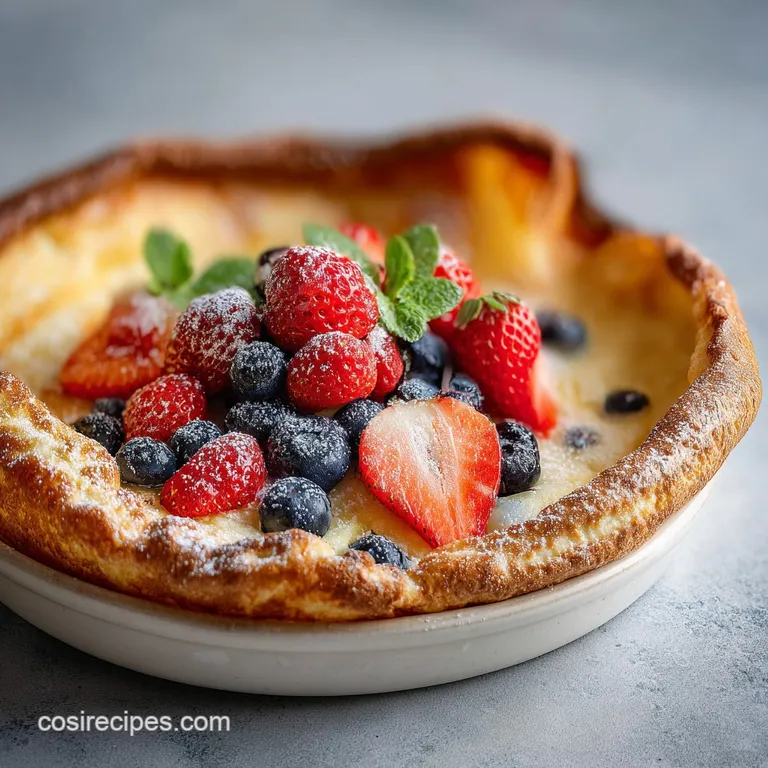
- Bake for 20 minutes until the edges are deeply golden and towering over the sides of the pan.
- Monitor through the window but do not open the door until the edges look dark and crisp.
- Remove and serve immediately while it is still puffed.
While this is a sweet treat, for a fast lunch on other days, try the Hibachi Fried Rice recipe. It uses the same philosophy of high heat and quick action to get a perfect result every single time.
Fixing Mistakes for a Golden Outcome
My Dutch baby is flat
This is almost always due to temperature. If your eggs or milk were cold, they "shock" the hot pan and don't create steam fast enough. Another culprit is opening the oven door too early. That puff is fragile! Once the cold air hits it, the structure collapses before it has a chance to set.
The center stayed wet and gummy
This happens if the oven wasn't hot enough or if the pancake was pulled out too early. The center should be soft and custard like, but not raw. Ensure you are using a 10 inch skillet; if the pan is too small, the batter will be too thick to cook through properly in 20 minutes.
| Problem | Root Cause | Solution |
|---|---|---|
| Batter didn't puff | Ingredients were too cold | Let eggs and milk sit in warm water for 5 mins before blending. |
| Burnt bottom | Pan was on the lowest rack | Move the oven rack to the middle position for even heat. |
| Rubbery texture | Over mixed the flour | Blend for only 30 seconds; stop as soon as it's smooth. |
Common Mistakes Checklist:
- ✓ Always use room temperature eggs and milk for maximum volume.
- ✓ Preheat your skillet for at least 10 minutes before adding butter.
- ✓ Don't skip the blender - it's the only way to get a perfectly smooth batter.
- ✓ Never open the oven door during the first 15 minutes of baking.
- ✓ Use a 10 inch pan; a 12 inch will result in a much thinner, crispier pancake.
Flavor Twists for Every Sweet Craving
For an Easy Apple Dutch Baby Pancake
Peel and slice one Granny Smith apple thinly. Sauté the slices in the skillet with an extra tablespoon of butter and a teaspoon of cinnamon before pouring the batter over the top. The apples will become tender and caramelized as the pancake rises around them.
For an Easy Blueberry Dutch Baby Pancake Recipe
Scatter 1/2 cup of fresh blueberries into the skillet immediately after pouring the batter. Do not stir them in. As the pancake puffs, the berries will burst and create little jammy pockets of purple throughout the golden crust.
For a Savory Twist
If you want to move away from the sweet side, omit the sugar, vanilla, and nutmeg. Add 1/4 cup of grated Gruyère cheese and a tablespoon of chopped fresh chives to the batter. This version is incredible served with a side of crispy bacon or smoked salmon.
If you want X, do Y: If you want a crispier crust, use a cast iron skillet and leave it in the oven for an extra 2 minutes. If you want a more custard like center, use an extra splash of whole milk (about 1 tablespoon).
If you want it extra sweet, sprinkle powdered sugar over the top immediately after taking it out of the oven.
Keeping Leftovers Fresh and Reducing Waste
This pancake is at its absolute best the moment it leaves the oven. However, if you find yourself with leftovers, you can store them in an airtight container in the fridge for up to 2 days. To reheat, avoid the microwave, as it will turn the delicate crust into a rubbery mess.
Instead, pop it back into a 350°F (180°C) oven or a toaster oven for about 5 minutes until it crisps back up.
For zero waste, save any leftover batter! It keeps perfectly in a jar in the fridge for 24 hours. Just give it a quick shake before pouring it into a hot, buttered pan for a solo breakfast the next day.
You can also use any citrus peels from the lemon zest to infuse a bottle of white vinegar for a natural kitchen cleaner.
Three Ways to Plate Your Beautiful Pancake
| Level | Plating Technique | The Result |
|---|---|---|
| Simple | Large wedges with a heavy dusting of powdered sugar. | Rustic, family style comfort that feels like home. |
| Polished | Topped with fresh raspberries and a side of maple syrup. | Vibrant colors and a perfect balance of tart and sweet. |
| Restaurant | A dollop of crème fraîche, lemon curd swirls, and mint leaves. | An elegant, high end look that is almost too pretty to eat. |
When you are ready to serve, remember that the "wow" factor happens in the first sixty seconds. Bring the skillet directly to the table so everyone can see the massive puff before it naturally begins to deflate.
Squeeze a fresh lemon wedge over the top just before serving; the acidity wakes up the butter and sugar in a way that is absolutely master level.
I love to serve this in the center of the table with a few different toppings in small bowls, allowing everyone to customize their own slice. Whether you go for the classic lemon and sugar or get creative with fresh fruit and whipped cream, the "shatter" of that first bite will make all twenty minutes of waiting entirely worth it.
It’s simple, it’s elegant, and it’s pure breakfast magic.
Kitchen Myths Debunked
Many people believe that the flour must be high protein bread flour to get a good rise. In reality, all purpose flour is ideal because it provides enough structure without making the pancake tough and chewy. The rise comes from steam, not gluten strength alone.
Another common myth is that you must have a cast iron skillet. While cast iron is fantastic for heat retention, I have made dozens of these in stainless steel and even ceramic dishes. As long as the vessel is preheated thoroughly, the steam will do its job.
Finally, the idea that the batter needs to "rest" like crepe batter is unnecessary here. Because we want that immediate explosive rise from the steam, using the batter right after blending (as long as the ingredients were room temperature) works perfectly fine.
Resting might actually reduce some of the aeration we worked so hard to get in the blender!
Recipe FAQs
What is the difference between Dutch baby and pancake?
The primary difference is the leavening agent and texture. A traditional pancake uses baking powder for a spongy, thick rise, while the Dutch baby relies entirely on superheated steam trapped by high egg content for a dramatic, puffy rise and a custard center.
What's the secret to a fluffy Dutch baby?
Use room temperature eggs and milk and preheat the pan thoroughly. Cold liquids will cool the butter too much upon contact, inhibiting the rapid steam creation needed for the massive puff.
Can I make a Dutch baby without a cast iron pan?
Yes, any heavy, oven safe pan will work. A heavy bottomed stainless steel skillet or even a glass pie dish will suffice, provided it is preheated sufficiently with the butter.
What's the secret to perfect baby pancakes?
Blend the batter for exactly 30 seconds to incorporate air without overdeveloping gluten. If you are mastering the texture control needed here, you'll find the same skill applies when balancing richness, like in our Taco Rice Bowls recipe where texture is key.
Why did my Dutch baby collapse immediately after removing it from the oven?
The structure hadn't fully set before being exposed to the cooler air. You need to ensure the edges are deeply golden brown, and resist the urge to peek during the initial 15 minutes of baking to keep that steam trapped.
Should I use melted butter or cold butter?
Use unsalted butter, fully melted and hot, right before pouring the batter in. You want the butter to be sizzling and slightly nutty to create the non-stick barrier and add immediate flavor.
How much does the high heat of 425°F matter for the final result?
The high heat is critical; it’s the entire mechanism for the rise. This intense heat instantly flashes the liquid in the batter into steam, and if the temperature is too low, you simply cook a thin crepe instead of building a puff.
Easy Dutch Baby Pancake
Ingredients:
Instructions:
Nutrition Facts:
| Calories | 223 kcal |
|---|---|
| Protein | 7.4 g |
| Fat | 13.6 g |
| Carbs | 17.2 g |
| Fiber | 0.5 g |
| Sugar | 4.8 g |
| Sodium | 178 mg |
