Fluffy Japanese Pancakes Recipe
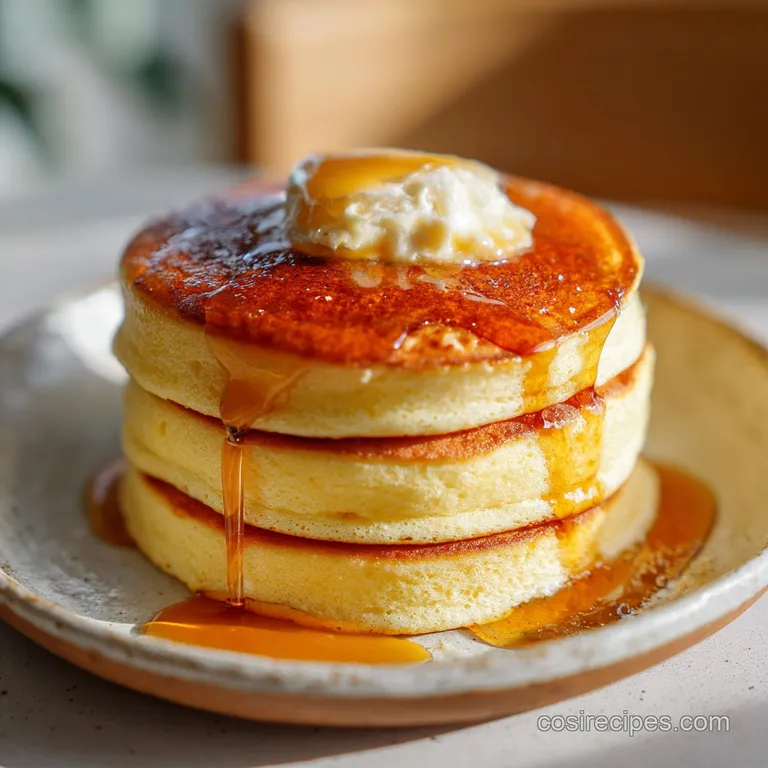
- Time: Active 15 minutes, Passive 20 minutes, Total 35 minutes
- Flavor/Texture Hook: Velvety, melt in-the mouth soufflé consistency with a golden, buttery exterior.
- Perfect for: Anniversary breakfasts, birthday brunches, or a cozy weekend treat.
- Creating Authentic Fluffy Japanese Pancakes
- The Magic of Rising Steam
- Key Recipe Measurements
- Essential Pantry Staples
- Necessary Kitchen Tools
- Step By Step Method
- Fixing Common Texture Issues
- Flavor and Diet Alternatives
- Freshness and Leftover Storage
- Occasion Ready Presentation Tips
- Recipe FAQs
- 📝 Recipe Card
Creating Authentic Fluffy Japanese Pancakes
The first time I saw a soufflé pancake jiggle, I thought it was magic. I remember standing in a tiny kitchen, holding my breath as I lifted the lid from the pan. The aroma of sweet vanilla and warm milk hit me first, followed by that soft, rhythmic sizzle of batter hitting hot metal.
It wasn't just a pancake, it was a cloud. My first few attempts were flat, sad puddles, but after learning the science of the "wobble," I finally cracked the code to that iconic height.
We aren't just making breakfast here, we're building a structural masterpiece. The goal is a center that feels like a marshmallow and a surface that's just barely toasted. If you've ever felt intimidated by the idea of a "soufflé," don't be.
I've made every mistake possible, from over beating the whites to pan frying them like regular flapjacks, and I've figured out the shortcuts that actually matter.
You'll need a bit of patience and a very low flame, but the payoff is incredible. Imagine cutting into a stack that's four centimeters thick, yet feels lighter than air. It’s the kind of dish that makes people stop talking and just start smiling.
Let's get into the details so you can recreate that cafe magic right in your own kitchen without the two hour wait.
The Magic of Rising Steam
Building the structure of these pancakes relies on three specific scientific pillars that differ from your average diner stack.
- Aerated Suspension: Cold egg whites create a tighter protein bond when whipped, allowing for smaller, more stable air bubbles that won't pop the moment they hit the heat.
- Vapor Pressure: Adding precise teaspoons of water to the pan creates a steam saturated environment, which keeps the pancake exterior supple so it can expand upward without cracking.
- Gluten Lattice: Using a minimal amount of sifted all purpose flour provides just enough "netting" to hold the air bubbles without making the texture chewy or bread like.
| Method | Time | Texture | Best For |
|---|---|---|---|
| Stovetop | 20 minutes | Super tall and wobbly | Classic cafe aesthetic |
| Oven (180°C) | 15 minutes | Evenly browned, denser | Cooking for a crowd |
| Air Fryer | 12 minutes | Crispy edges, soft core | Quick single servings |
The choice between stovetop and oven really comes down to how much you enjoy the "jiggle." While the stovetop method requires more attention, it produces that signature soufflé height that the oven often compresses. If you find yourself enjoying this style of cooking, you might also love the technique used in my Dutch Baby Pancake recipe.
Key Recipe Measurements
Success here lives and dies by precision, so I've broken down the roles of the heavy hitters in this batter.
| Ingredient | Science Role | Pro Secret |
|---|---|---|
| Egg Whites (Cold) | Structural Foundation | Keep them chilled until the very second you whip them for a stiffer peak. |
| Cream of Tartar | Foam Stabilizer | This acid prevents the protein strands in the whites from over stretching and collapsing. |
| Granulated Sugar | Moisture Retention | Sugar bonds with water, keeping the interior velvety even after 10 minutes of steaming. |
Mixing these elements requires a gentle hand and a bit of focus. If you're used to a more rustic breakfast, this will feel like a fun chemistry experiment that ends with butter and maple syrup.
Essential Pantry Staples
I’ve listed the exact quantities we need for two beautiful servings. Don't skip the sifting step for the flour; it's the difference between a grainy pancake and a silky one.
- 2 large egg yolks (must be chilled)
- 1 tbsp (15ml) whole milk Why this? Adds fat for a richer, more tender crumb.
- 1/2 tsp (2.5ml) pure vanilla extract
- 1/4 cup (32g) all purpose flour, sifted Why this? Provides the light structure needed for lift.
- 1/2 tsp (2g) baking powder
- 1 pinch fine sea salt
- 3 large egg whites (kept cold) Why this? The extra white provides the massive volume.
- 2.5 tbsp (35g) superfine granulated sugar
- 1/4 tsp (1g) cream of tartar
- 1 tsp (5ml) neutral oil (for the pan)
- 2 tsp (10ml) water (for steaming)
Necessary Kitchen Tools
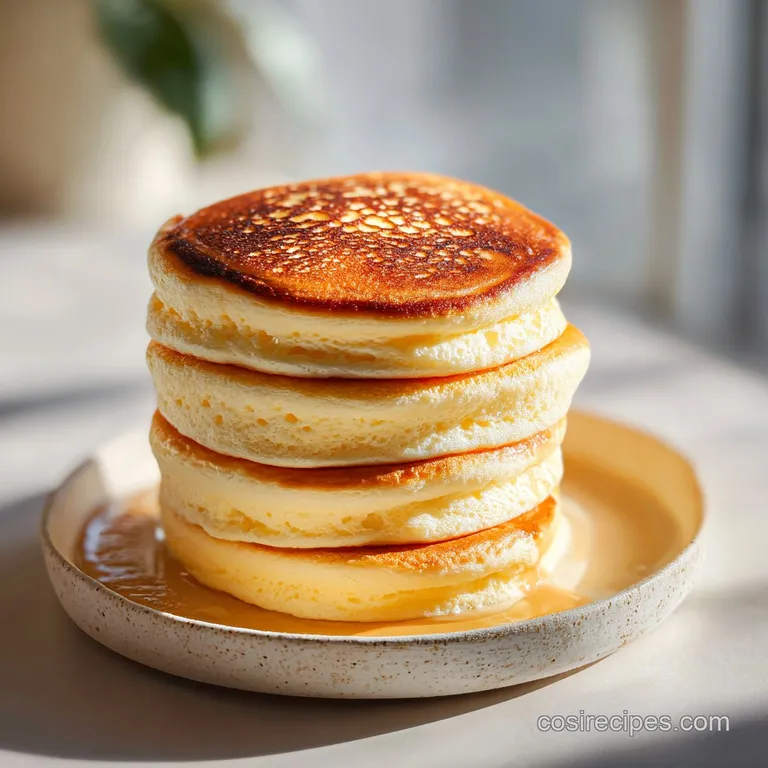
You don't need a high end laboratory, but a few specific tools make the process much smoother. A non stick pan is non negotiable here because we aren't using much oil.
A hand mixer or a stand mixer (such as a KitchenAid) is essential for the egg whites. Doing it by hand is a workout that usually ends in flat pancakes because you can't get the air in fast enough. You'll also need a fine mesh sieve for the flour and a silicone spatula for the delicate folding process.
Finally, make sure you have a lid that fits your pan tightly; without the lid, the steam escapes, and the top of your pancake will stay raw while the bottom burns.
step-by-step Method
Right then, let's get cooking. Focus on the temperature of your pan above all else. It should be warm, not screaming hot.
- Whisk the 2 egg yolks, 15ml whole milk, and 2.5ml vanilla in a small bowl until pale. Note: This creates the flavor base.
- Sift the 32g flour and 2g baking powder over the yolk mixture, adding the salt.
- Stir the dry ingredients into the yolks until just combined and smooth.
- Whip the 3 cold egg whites with 1g cream of tartar in a separate clean bowl until frothy.
- Add the 35g sugar in three stages, whipping until stiff, glossy peaks form. Note: If you lift the whisk, the peak should stand straight up.
- Fold one third of the meringue into the yolk base gently to lighten it up.
- Add the remaining meringue and fold using a "cut and roll" motion until no white streaks remain.
- Lightly grease a non stick pan with 5ml oil and set to the lowest heat setting.
- Scoop large mounds of batter into the pan, then add 10ml of water to the empty spaces.
- Cover and cook for 6-8 minutes until the bottom is golden and the top feels set.
- Flip carefully, add another teaspoon of water if needed, and cook for 5 more minutes until the sides are no longer tacky.
Fixing Common Texture Issues
Even the best bakers have "pancake panics" sometimes. Usually, it's a heat or a folding issue.
Why Your Pancakes Deflate
If your pancakes look like majestic towers in the pan but shrink into sad discs the moment you plate them, the meringue was likely unstable. This happens if you add the sugar too fast or stop whipping before you reach those stiff peaks.
Another culprit is undercooking; if the internal structure hasn't set, the air bubbles will collapse as they cool.
Why the Center Is Raw
This is almost always a heat issue. If the pan is too hot, the bottom browns before the middle can steam through. You want the lowest heat possible. If you smell burning before the 5 minute mark, your burner is too high.
| Problem | Root Cause | Solution |
|---|---|---|
| Gaping holes in batter | Over mixed meringue | Fold gently, stop once colors are uniform. |
| Pancake won't flip | Not enough steam | Ensure the lid is tight and add more water. |
| Rubber like texture | Too much flour | Weigh your flour carefully; don't scoop with a cup. |
Common Mistakes Checklist
- ✓ Use cold eggs directly from the fridge (cold whites hold air better).
- ✓ Ensure your whisk and bowl are 100% grease free before whipping whites.
- ✓ Don't skip the lid; the steam is what actually cooks the top half.
- ✓ Work quickly once the meringue is folded so the air doesn't escape.
- ✓ Resist the urge to press down on the pancakes with your spatula.
Flavor and Diet Alternatives
You can easily tweak this recipe to suit your mood or dietary needs. Just keep the ratios the same so the structure doesn't fail.
- Matcha Variation: Add 1 tsp of high-quality matcha powder to the flour sift.
- Chocolate Center: Drop a small piece of dark chocolate into the middle of the batter mound before covering.
- Citrus Zing: Add 1/2 tsp of lemon zest to the yolk mixture for a bright, fresh aroma.
If you are looking for a version without animal products, check out my Fluffy dairy-free recipe which uses alternative fats to achieve a similar lift.
Freshness and Leftover Storage
These are best eaten the millisecond they leave the pan. However, if you have leftovers, you can store them in an airtight container in the fridge for up to 2 days. To reheat, don't use the microwave; it will turn them into sponges.
Instead, pop them back into a dry non stick pan over low heat with a teaspoon of water and a lid for 2 minutes.
For zero waste, if you have extra batter that you can't fit in the pan, don't throw it out! You can bake the remaining batter in greased ramekins at 180°C for 10-12 minutes to make mini soufflé cakes.
Any leftover egg yolks from other recipes can also be used to thicken custards or sauces to serve alongside your stack.
Occasion Ready Presentation Tips
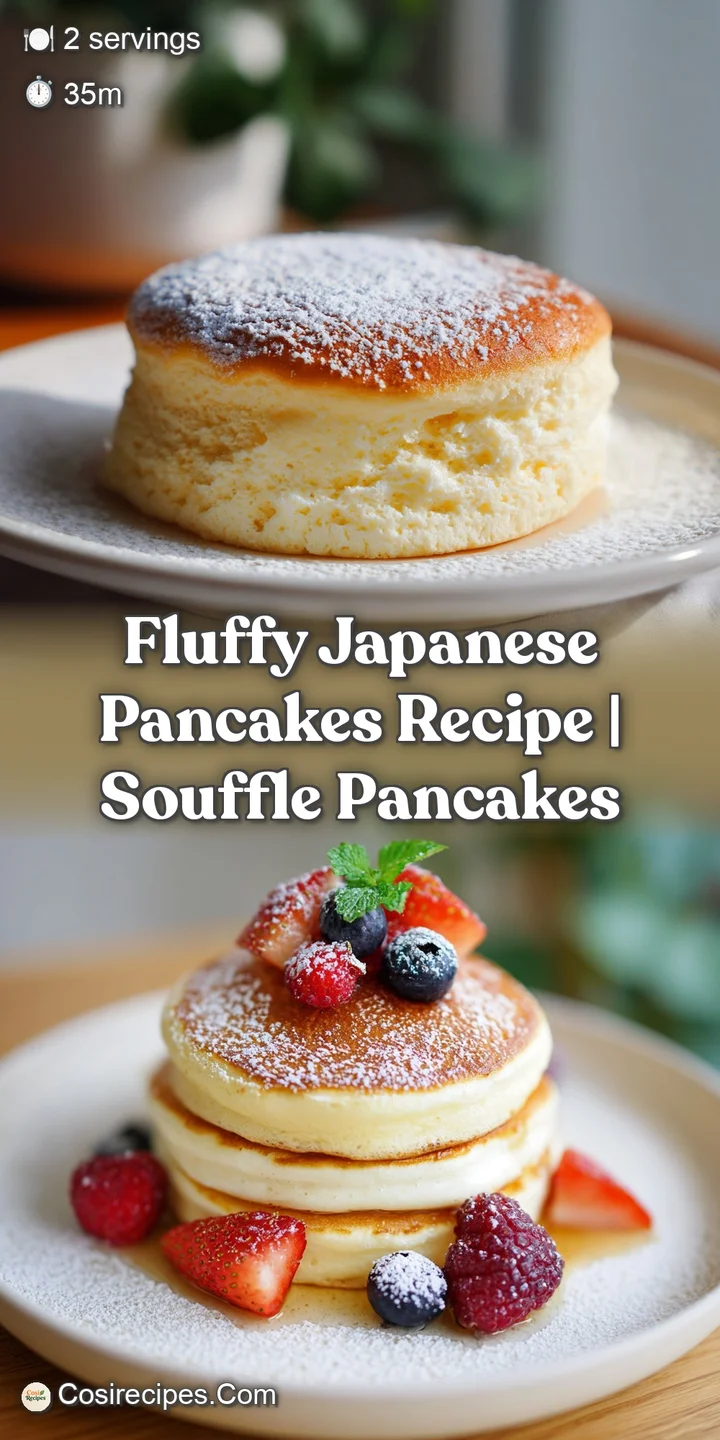
To truly master the cafe look, presentation is everything. I love to dust mine with a heavy layer of powdered sugar right before serving. It catches in the nooks and crannies and looks like fallen snow.
A small knob of salted butter and a generous pour of high-quality maple syrup are the classics, but don't be afraid to get elegant. Fresh raspberries or sliced strawberries add a necessary tartness that cuts through the rich egginess.
If you're serving these for a brunch, place them on a warm plate so they don't lose their temperature too quickly. Trust me, the sight of a three tier stack of Fluffy Japanese Pancakes arriving at the table is enough to make anyone feel like they're at a five star resort. Enjoy the magic!
Recipe FAQs
What makes Japanese pancakes fluffy?
Whipping egg whites into a stiff meringue and steaming them slowly is the key difference. The stiff meringue traps a massive amount of air, which is then suspended in a delicate batter base, giving them their signature height and melt-in-your mouth texture.
What are Japanese fluffy pancakes called?
They are commonly called Soufflé Pancakes or Hottokēki. The "soufflé" name directly references the light, airy structure created by incorporating beaten egg whites, much like a French savory soufflé.
How to cook that fluffy Japanese pancakes?
Cook over very low heat (setting 2 or 3) using a tight fitting lid to create steam. Gently spoon the batter onto the pan, add a teaspoon of water beside the mounds, cover immediately, and cook for 6-8 minutes per side until cooked through without browning too quickly.
What is the trick to making pancakes fluffy?
The trick is stabilizing and maintaining the meringue structure during the folding process. You must achieve stiff, glossy peaks in your whites, and then fold them into the yolk batter very delicately to avoid deflating the trapped air bubbles.
Can I use regular milk instead of whole milk in this recipe?
Yes, but whole milk is recommended for better tenderness. The fat content in whole milk coats the flour particles, inhibiting gluten formation and resulting in a more velvety crumb, similar to the richness you achieve when making a sauce like our Lemon Butter Sauce for Fish.
Is it true I must use superfine sugar for the meringue?
No, this is a common misconception, but superfine sugar is much better. While you can use standard granulated sugar, the finer crystals dissolve more easily into the egg whites, creating a smoother, more stable foam that resists breaking down under heat.
What can I use if I don't have cream of tartar?
Use an equal amount of white vinegar or fresh lemon juice. Cream of tartar is an acid used as a stabilizer for the egg whites, and acid is necessary to prevent the peaks from deflating during whipping.
Fluffy Japanese Pancakes
Ingredients:
Instructions:
Nutrition Facts:
| Calories | 233 kcal |
|---|---|
| Protein | 9.8 g |
| Fat | 7.3 g |
| Carbs | 31.2 g |
| Fiber | 0.5 g |
| Sugar | 18.4 g |
| Sodium | 245 mg |
