French Onion Chicken Bake: Caramelized and Golden
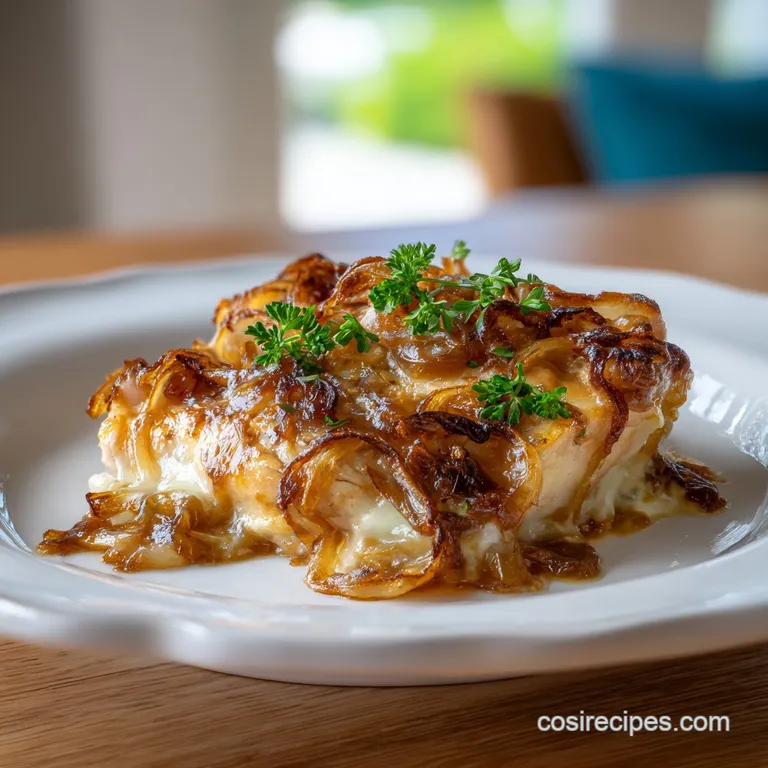
- Time: Active 25 minutes, Passive 35 minutes, Total 60 minutes
- Flavor/Texture Hook: Savory mahogany onions paired with a molten, bubbly Gruyère crust and a satisfying baguette crunch.
- Perfect for: High end Sunday dinners, impressive date nights, or anyone craving restaurant quality comfort food on a budget.
- Decoding the Savory Layers of French Onion Chicken Bake
- Essential Specs for the Ultimate Savory Chicken Dinner
- Component Analysis for Deep Flavor Development
- Finding the Best Ingredients for Deep Umami Flavor
- The Tools You Need for One Skillet Success
- Managing the Heat for a Velvety Onion Sauce
- How to Avoid the Most Common Cooking Blunders
- Smart Swaps and Budget Friendly Recipe Variations
- Storing Leftovers and Reducing Your Kitchen Waste
- Making Your Skillet Look Like a Restaurant Star
- Debunking Kitchen Folklore
- CRITICAL: Very High in Sodium
- Recipe FAQs
- 📝 Recipe Card
Decoding the Savory Layers of French Onion Chicken Bake
Have you ever wondered why we all collectively lose our minds over a bowl of French onion soup, yet we rarely think to turn those same flavors into a proper main course? There is something truly addictive about the way a simple yellow onion, when pushed to its absolute limit with butter and heat, transforms from a sharp, crunchy bulb into a jammy, sweet, and deeply savory treasure.
I remember the first time I tried to marry these flavors with chicken; I was worried the meat would dry out before the onions got dark enough, but I quickly learned that the secret lies in the order of operations.
This French Onion Chicken Bake is designed to give you that exact "restaurant favorite" experience without the $30 price tag. We are talking about 900g of onions which looks like a literal mountain on your cutting board melting down into a rich, concentrated base for juicy chicken thighs.
It is a dish that feels incredibly fancy when you pull it out of the oven, all bubbling cheese and golden bread, but the actual technique is remarkably practical once you decode the steps.
We are going to focus on building what I call "flavor insurance." Every step, from the initial sear of the chicken to the way we nestle the baguette slices into the sauce, is designed to maximize umami.
You don't need expensive wine or a culinary degree; you just need a bit of patience for the onions and a heavy skillet that can handle the transition from stovetop to oven. Let’s get into why this method produces such a superior, addictive result.
Essential Specs for the Ultimate Savory Chicken Dinner
To get this dish right, we need to respect the process of caramelization. Most recipes tell you to cook onions for five minutes, but we know better; we want that deep mahogany color that only comes from steady heat and time.
The Fond Connection: By searing the chicken first, we leave behind browned bits (the fond) that act as a flavor base for the onions. As the onions release their moisture, they scrape up that concentrated chicken essence, merging the two flavors from the very start.
Acidic Balance: The balsamic vinegar isn't just for color; it provides a necessary sharp edge to cut through the heavy fat of the butter and Gruyère cheese. Without it, the dish can feel one dimensional and overly rich.
Starch Integration: Using a French baguette instead of standard sandwich bread is vital because the crusty exterior holds its shape while the soft interior soaks up the beef broth like a sponge. It creates a "lid" that keeps the chicken moist while it finishes cooking in the oven.
Thermal Momentum: We use an oven proof skillet to ensure the pan stays screaming hot throughout the transition. This keeps the sauce simmering even as the cheese melts, preventing the chicken from sitting in lukewarm liquid which would make the texture rubbery.
| Thickness of Thigh | Internal Temp | Rest Time | Visual Cue |
|---|---|---|---|
| Small (approx 150g) | 74°C (165°F) | 5 minutes | Juices run clear when pierced |
| Medium (approx 200g) | 74°C (165°F) | 5 minutes | Meat is firm but gives slightly |
| Large (approx 250g) | 74°C (165°F) | 8 minutes | Cheese is deeply browned and crispy |
While the oven does its thing, you could prep a Southern Yellow Squash Casserole to round out the meal with some bright, garden fresh flavors that contrast the rich onions.
Component Analysis for Deep Flavor Development
| Ingredient | Science Role | Pro Secret |
|---|---|---|
| Yellow Onions (900g) | Sugar Source | Slice them "north to south" (pole to pole) so they hold their shape during the long cook instead of turning into mush. |
| Gruyère Cheese | Fat & Emulsification | This cheese has a high oil content and a low melting point, creating that "cheese pull" without breaking into a greasy mess. |
| Beef Broth | Liquid Medium | Use low sodium broth so you can control the salt levels as the sauce reduces and concentrates in the oven. |
| Balsamic Vinegar | Chemical Brightener | The sugars in the vinegar help speed up the browning of the onions while the acetic acid balances the richness. |
Finding the Best Ingredients for Deep Umami Flavor
When you’re shopping for this French Onion Chicken Bake, remember that since there are so few components, the quality of each one really matters. We’re using 1.5 lbs (680g) of boneless, skinless chicken thighs because they are nearly impossible to overcook.
Unlike breasts, thighs have enough connective tissue to stay velvety and succulent even after a sear and a bake.
- Chicken Thighs (1.5 lbs): Boneless and skinless is best for even cooking and easy eating. Why this? Higher fat content ensures the meat stays juicy under the over high heat cheese crust.
- Substitute: Chicken breasts (reduce oven time by 5-7 minutes to avoid drying out).
- Yellow Onions (3 large, approx. 900g): These have a higher sugar content than white onions. Why this? They provide the classic sweetness found in traditional French onion soup.
- Substitute: Red onions (will result in a darker, slightly more peppery sauce).
- Gruyère Cheese (1.5 cups): The king of melting cheeses. Why this? It offers a nutty, salty profile that defines the "French Onion" experience.
- Substitute: Swiss cheese or a mild Provolone if Gruyère is too pricey.
- Unsalted Butter (3 tbsp): This is our fat base for the onions. Why this? Butter adds a dairy richness that oil alone cannot provide.
- Substitute: Ghee or a high-quality margarine.
- French Baguette (1/2 loaf): Crucial for that structural crunch. Why this? The dense crumb absorbs the broth without disintegrating.
- Substitute: Sourdough slices or thick cut ciabatta.
- Beef Broth (1/2 cup): Low sodium is preferred. Why this? It provides the savory depth that bridges the onions and the chicken.
- Substitute: Chicken broth or even a dry white wine for a lighter profile.
The Tools You Need for One Skillet Success
To make this recipe work correctly, you really need an oven proof skillet. I personally swear by a 12 inch cast iron skillet (like a Lodge) or a heavy duty stainless steel pan. The reason is simple: we are moving from a over high heat sear to a over medium heat caramelization and finally to a over high heat broil.
A flimsy pan won't hold the heat properly, and your onions will steam rather than brown.
Beyond the skillet, a good chef's knife is non negotiable. You are slicing 900g of onions, which is a lot of blade work. If your knife is dull, you’ll end up crushing the onion cells, which releases more of the gas that makes you cry. A sharp knife gives you clean slices and a much happier kitchen experience.
You’ll also want a sturdy wooden spoon or a flat edged spatula. This is essential for scraping the bottom of the pan that "fond" we talked about is flavor gold, and you want every bit of it incorporated into your sauce.
Finally,, have a meat thermometer handy. While thighs are forgiving, we want to hit that 165°F (74°C) mark exactly. Pulling the chicken at the right time is the difference between "good" and "addictive."
Managing the Heat for a Velvety Onion Sauce
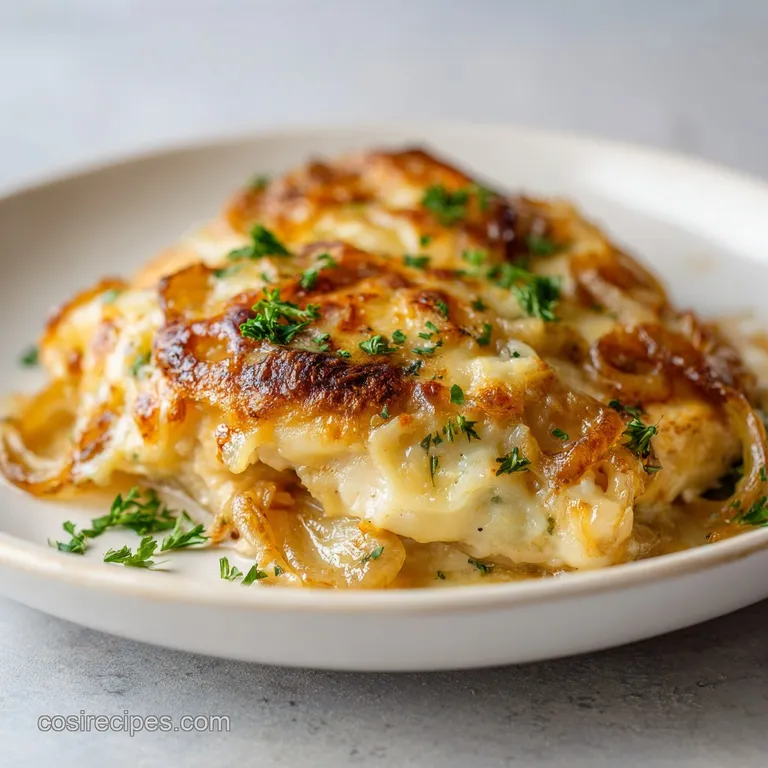
- Season the meat. Rub the kosher salt and cracked black pepper into the 1.5 lbs of chicken thighs, ensuring all sides are coated. Note: Seasoning early helps the salt penetrate the meat.
- Sear the protein. Heat 2 tbsp olive oil in your skillet over medium high heat. Place the chicken in the pan and sear for 3–4 minutes per side until a deep golden crust forms. Note: Don't crowd the pan; work in batches if necessary.
- Remove and rest. Take the chicken out of the skillet and set it on a plate. The meat isn't cooked through yet, but we’ve built the flavor base.
- Melt the butter. Drop the 3 tbsp of unsalted butter into the same hot skillet. It will sizzle and foam this is good.
- The slow onion melt. Add the 900g of sliced onions and a pinch of salt. Cook over medium heat for 15–20 minutes, stirring occasionally, until the onions are a rich mahogany brown.Note: If they start to burn, add a tablespoon of water to slow things down.
- Add aromatics. Stir in the minced garlic and fresh thyme leaves during the last 2 minutes of onion cooking until fragrant and softened.
- Deglaze the pan. Pour in 1 tbsp balsamic vinegar and 1/2 cup beef broth. Use your spoon to scrape the bottom of the pan to release the fond.
- Nestle the chicken. Place the seared chicken thighs back into the skillet, pushing them down into the bed of onions.
- Layer the toppings. Top each piece of chicken with a 1 inch slice of French baguette.
- The final bake. Cover the bread and chicken with 1.5 cups Gruyère and 1/2 cup Parmesan. Transfer to the oven and bake until the cheese is bubbling and golden and the chicken reaches 165°F (74°C).
Chef's Tip: If you want an extra shatter crisp topping, turn the broiler on for the last 60 seconds of cooking. Just watch it like a hawk cheese goes from golden to burnt in a heartbeat.
How to Avoid the Most Common Cooking Blunders
The most common mistake people make with this Onion Chicken Bake is rushing the onions. Caramelization is a chemical reaction, not just a heating process. If you try to do it in five minutes over high heat, you’ll get burnt edges and raw centers.
You want a consistent, medium heat that coaxes the sugars out slowly.
Why Your Onions Are Pale and Watery
If your onions look grey or limp rather than brown and jammy, you likely overcrowded the pan or had the heat too low. Onions release a massive amount of water. If the heat isn't high enough to evaporate that water quickly, the onions will boil in their own juice.
Why the Chicken is Dry
Even though we use thighs, they can still dry out if they sit in the oven too long. This usually happens if the onions weren't finished on the stovetop. Ensure your onions are fully "mahogany" before the chicken goes back in.
The oven time should only be about 10–15 minutes just enough to melt the cheese and finish the chicken.
| Problem | Root Cause | Solution |
|---|---|---|
| Soggy Bread | Bread was submerged | Place baguette slices on top of the chicken so they sit above the liquid. |
| Bitter Sauce | Burnt garlic | Always add garlic at the very end of the onion sauté (last 2 minutes). |
| Greasy Finish | Low quality cheese | Use aged Gruyère or Parmesan; pre shredded cheeses often have cornstarch that messes with the melt. |
Common Mistakes Checklist:
- ✓ Did you pat the chicken dry before searing? (Wet chicken steams instead of browning).
- ✓ Are the onions sliced to a uniform thickness? (Uneven slices cook at different rates).
- ✓ Did you scrape the "brown bits" off the bottom? (That's where all the umami lives).
- ✓ Is the skillet actually oven safe? (Check the handle material before sliding it in).
- ✓ Did you use low sodium broth? (Regular broth can become salt concentrated as it reduces).
Smart Swaps and Budget Friendly Recipe Variations
If you're looking to save a few dollars, Gruyère is often the most expensive item on the list. You can easily swap it for a sharp Swiss or even a Jarlsberg. While the flavor profile changes slightly, you’ll still get that incredible melt. For another budget friendly comfort meal, you might enjoy my Chicken Enchilada Casserole, which uses similar "one pan" logic to build massive flavor.
If you want a lighter version: Use chicken breasts and swap the butter for a light olive oil. Just be sure to reduce the oven time to ensure the leaner meat stays tender.
If you want a "White Wine" version: Swap the beef broth for a dry Sauvignon Blanc or Pinot Grigio. This creates a brighter, more French bistro style flavor that pairs beautifully with the thyme.
Scaling for a Crowd:Down (2 servings): Use a smaller 8 inch skillet. Use 3/4 lb chicken and 450g onions. Cook times remain mostly the same, but watch the onions as they may brown faster in a smaller pan. Up (8 servings): Do not try to fit this in one skillet.
Use two pans for the stovetop portion, then transfer everything to a large 9x13 baking dish. Increase the beef broth by 10% to ensure the larger surface area doesn't result in a dry bake.
| Premium Ingredient | Budget Alternative | Flavor Impact | Savings |
|---|---|---|---|
| Gruyère Cheese | Swiss Cheese | Slightly less nutty, still great melt | Save $5-7 |
| Fresh Thyme | Dried Thyme | Less "bright" herbal notes | Save $2-3 |
| French Baguette | Toasted Sourdough | More tang, slightly tougher crust | Save $1-2 |
Storing Leftovers and Reducing Your Kitchen Waste
One of the best things about this recipe is that the onions actually taste better the next day. The flavors continue to meld in the fridge, making the leftovers something to actually look forward to.
- Storage: Store in an airtight container in the fridge for up to 4 days.
- Freezing: I don't recommend freezing this dish with the bread topping, as the baguette will turn to mush upon thawing. However, you can freeze the chicken and onion mixture for up to 3 months. Add fresh bread and cheese when you're ready to bake.
- Reheating: To maintain the texture, reheat in a 350°F (180°C) oven for 10–12 minutes. Microwaving will make the bread soggy and the chicken rubbery.
Zero Waste Tip: Don't throw away those onion ends or peels! Keep a "stock bag" in your freezer for vegetable scraps. Those onion skins are what give homemade beef or vegetable stock that deep, golden brown color.
Also, if you have half a baguette left over, slice it up and make croutons or freeze it for your next batch of French onion soup.
Making Your Skillet Look Like a Restaurant Star
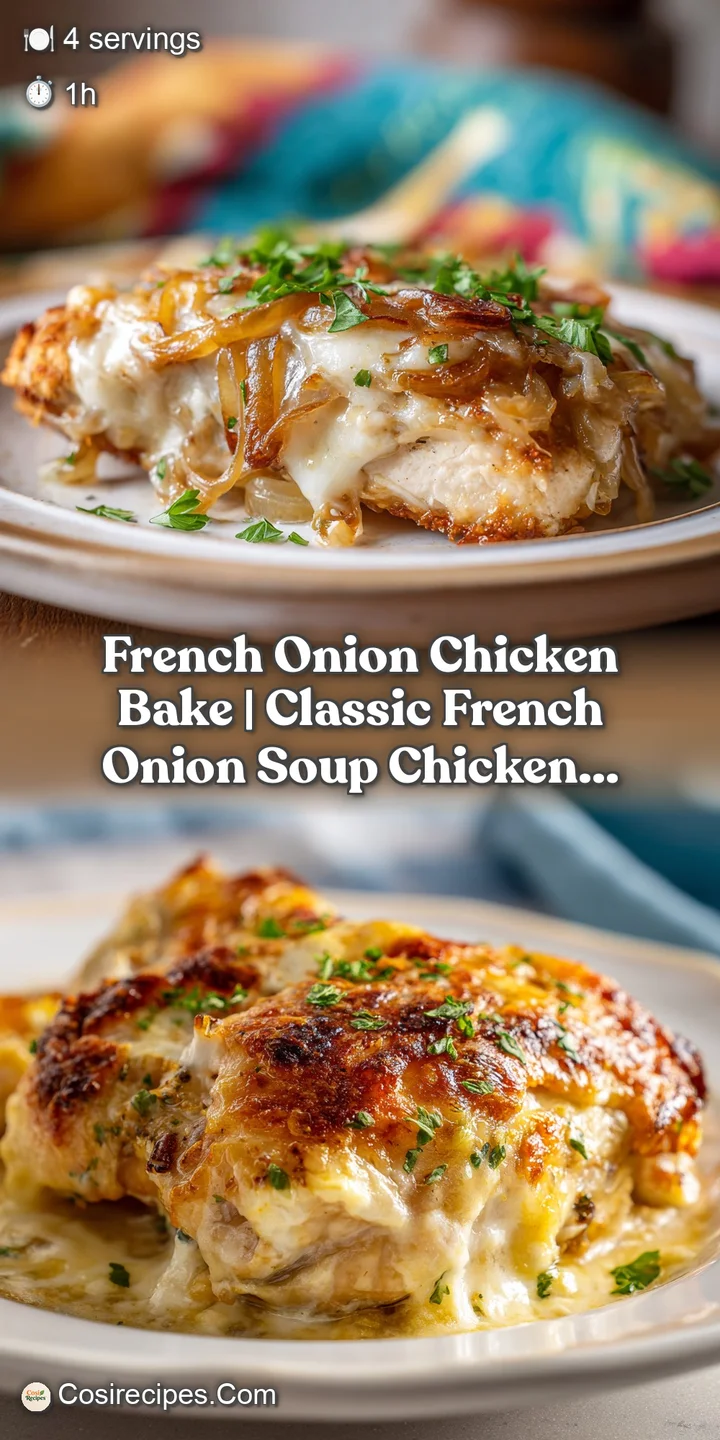
Presentation matters, especially with a dish that can look a bit "brown" overall. The key to a beautiful French Onion Chicken Bake is the contrast between the dark onions and the golden white cheese.
When you layer the cheese, don't just dump it in the center. Make sure it spills over the edges of the baguette slices and touches the onions in the skillet. This creates those "crispy cheese edges" (known as frico) that everyone fights over.
A final sprinkle of fresh thyme leaves or even some chopped parsley adds a pop of green that makes the whole dish sing.
Serve it right in the skillet. There is something incredibly rustic and inviting about placing a heavy, bubbling cast iron pan in the center of the table. It signals to your guests that this meal is warm, comforting, and made with heart. Just don't forget the trivet that pan stays hot for a long time!
Debunking Kitchen Folklore
The "Sugar Myth": You do not need to add white sugar to onions to make them caramelize. Onions have plenty of natural sugars. Adding granulated sugar often leads to a "false caramelization" where the outside burns before the inside breaks down.
Patience and a pinch of salt (which draws out moisture) are all you actually need.
The "Searing Myth": Searing the chicken does not "seal in the juices." Science has proven that moisture is lost during the searing process. However, we sear for the Maillard reaction that deep brown crust that provides the savory, complex flavors that define this dish.
Without the sear, the chicken will taste "boiled."
The "Wine Myth": You don't need expensive wine to cook. In fact, for this recipe, the balsamic vinegar and beef broth provide a more consistent, robust flavor profile for home cooks than a cheap bottle of cooking wine. If you wouldn't drink the wine, don't put it in your chicken.
CRITICAL: Very High in Sodium
1220 mg 1220 mg of sodium per serving (53% 53% of daily value)
The American Heart Association recommends limiting sodium intake to no more than 2,300mg per day, with an ideal limit of 1,500mg for most adults.
Tips to Reduce Sodium
-
Swap Beef Broth-30%
Replace the 1/2 cup low sodium beef broth with low-sodium or no-salt added vegetable broth. This is a significant source of hidden sodium.
-
Halve the Salt-25%
Reduce the 1 tsp kosher salt to 1/2 tsp. You can also consider using salt substitutes like potassium chloride for flavor.
-
Mindful Cheese Use-15%
Reduce the 1.5 cups Gruyère cheese and 1/2 cup Parmesan cheese. Try using half the amount of each or opt for lower sodium cheese varieties if available.
-
Boost with Herbs & Spices
Emphasize natural flavors by increasing the use of fresh thyme and other aromatics like garlic. Consider adding other fresh herbs like rosemary or sage, or spices like paprika or onion powder.
-
Sweetness from Onions-5%
Slowly caramelize the 3 large yellow onions to bring out their natural sweetness, which can help compensate for reduced salt.
Recipe FAQs
Is it better to bake chicken at 350 or 400 for how long?
Use 400°F for the best texture. Sear the chicken first for 3 4 minutes per side, then bake until the cheese is bubbling and the chicken reaches an internal temperature of 165°F, which typically takes about 45 minutes total.
Can a diabetic eat baked chicken?
Yes, with careful portion control. This dish relies on protein from chicken thighs and healthy fats from cheese, though the baguette topping contains carbohydrates that should be accounted for in your daily meal plan.
What is the best cut of chicken for French onion bake?
Boneless, skinless chicken thighs are the ideal choice. They remain juicy during the long baking process and hold up significantly better than breasts, which can easily dry out.
Is it true that freezing this dish is impossible?
No, this is a common misconception. While the baguette will turn to mush if frozen, you can easily freeze the chicken and onion base for up to 3 months and add fresh bread and cheese just before baking.
How to ensure the onions reach a deep mahogany brown?
Cook the onions low and slow for 15 20 minutes. Stir them occasionally over medium heat to develop that rich, caramelized depth, which is the secret to building the foundation of this dish.
How to prevent the chicken from drying out in the oven?
Nestle the chicken into the onion and broth mixture. Keeping the meat surrounded by liquid ensures it stays succulent, a technique that also provides excellent results in our Slow Cooker Chicken and Gravy.
What is the most delicious chicken dish in the world?
Taste is subjective, but many consider this bake a top contender. The combination of savory caramelized onions, salty Gruyère, and tender chicken creates a balance of flavors that is hard to beat.
French Onion Chicken Bake
Ingredients:
Instructions:
Nutrition Facts:
| Calories | 878 kcal |
|---|---|
| Protein | 53g |
| Fat | 56g |
| Carbs | 38g |
| Fiber | 4g |
| Sugar | 10g |
| Sodium | 1220mg |
