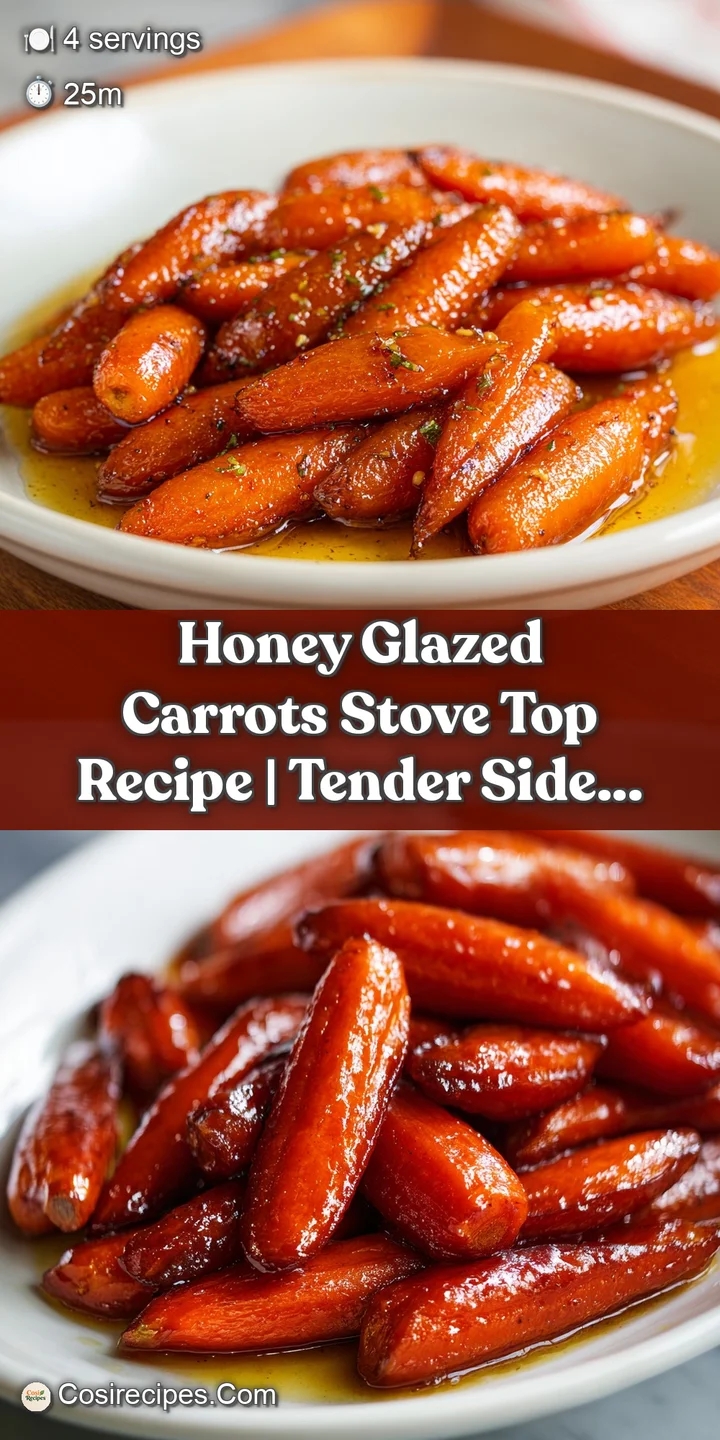
Honey Glazed Carrots Stove: Tender and Glossy
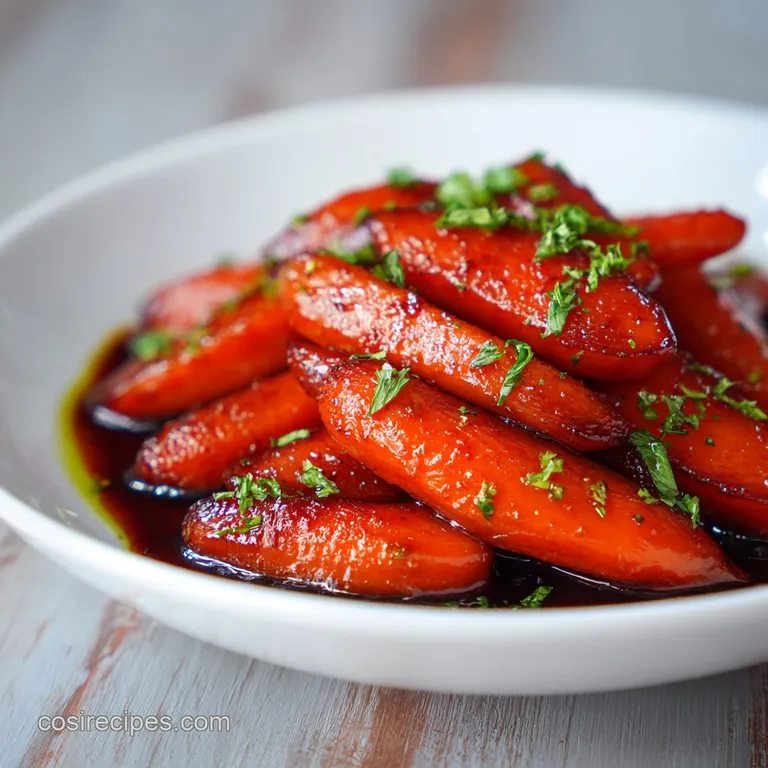
- Time: Active 10 minutes, Passive 15 minutes, Total 25 minutes
- Flavor/Texture Hook: Velvety, honey kissed glaze with a tender crisp snap
- Perfect for: Weeknight side dish or holiday dinner prep
Mastering honey glazed carrots stove
I remember the first time I tried to recreate those glossy, addictive carrots from my favorite downtown steakhouse. My first attempt at home was, frankly, a puddle of orange mush. The honey burnt to the bottom of the pan before the carrots were even soft enough to poke with a fork.
It was frustrating because such a simple side dish shouldn't be that hard to decode, right?
After a few more failed attempts, I realized the mistake most home cooks make is trying to cook the carrots and the glaze at the same time from the very start. That is a recipe for scorched sugar and raw vegetables. Once I figured out the "water first" method, everything changed.
Now, I can get that velvety, mahogany finish every single time without the stress of a burnt pan.
We're going to use exactly 1 lb fresh carrots, and I'll show you how a tiny splash of apple cider vinegar actually makes the honey taste more like honey. It's about balancing the sweetness so it doesn't feel cloying.
This is one of those favorites that will disappear from the table faster than the main course, trust me on this.
Why This Works
- The Steam Sauté Hybrid: Starting with 1/4 cup filtered water allows the carrots to soften through steaming before the sugars in the honey begin to caramelize, preventing burning.
- Pectin Management: Cooking the carrots at a simmer helps break down the rigid pectin walls just enough to make them tender without losing their structural integrity.
- Emulsion Stability: Adding 3 tbsp unsalted butter creates a fat in-water emulsion that coats the carrot rounds in a thick, silky layer rather than a greasy one.
- Acid Balance: The 1 tsp apple cider vinegar cuts through the 2 tbsp raw honey and 1 tbsp light brown sugar, highlighting the natural earthy sweetness of the carrots.
Stovetop vs Oven Roasting
| Method | Time | Texture | Best For |
|---|---|---|---|
| Stovetop | 15 minutes | Velvety and soft | Quick weeknight meals |
| Roasting | 35 minutes | Charred and chewy | Deep caramelized flavor |
| Steaming | 10 minutes | Crisp and plain | Low calorie prep |
Choosing the stovetop method is the ultimate shortcut for busy cooks. While roasting provides a deep char, the honey glazed carrots stove method gives you more control over the glaze thickness.
You can watch the bubbles change from watery to thick and syrupy right before your eyes, ensuring you never overcook the honey.
Recipe Specs and Timing
This dish is all about precision in the pan. We are working with a 25 minute window from the moment you pick up your peeler to the moment you hit the table. If you're looking for another quick side to round out the meal, my Sweet Corn Relish recipe is a fantastic pantry staple companion that adds a nice vinegary pop to the plate.
The Surface Tension Secret
By reducing the liquid at the very end, we increase the viscosity of the honey and butter mixture. This allows the glaze to overcome the surface tension of the carrot, sticking to the vegetable instead of sliding off into a pool at the bottom of the dish.
| Component | Science Role | Pro Secret |
|---|---|---|
| 1 lb Carrots | Structural base | Cut on a bias to increase surface area for glaze |
| 2 tbsp Raw Honey | Hygroscopic sweetener | Draws moisture out of the carrot for better snap |
| 1 tsp ACV | pH Adjuster | Prevents the glaze from tasting one dimensionally sweet |
| 3 tbsp Butter | Emulsifier | Use cold butter at the end for a glossier finish |
The interaction between the honey and the butter is what creates that "addictive" quality we all love. When the water evaporates, the sugars and fats bind together, creating a coating that actually stays put. It's a simple bit of physics that turns a boring vegetable into a restaurant favorite.
Essential Ingredients and Science
To get this right, you need the proper ratios. We are using 1 lb fresh carrots, peeled and sliced into 1/2 inch rounds. Don't go thinner, or they will turn to mush before the glaze is ready.
I prefer standard large carrots over baby carrots because they have a much more flavorful, "carroty" core that stands up to the sweetness of the honey.
- 1 lb fresh carrots: The star of the show.
- Substitute: 1 lb parsnips. Why this? Parsnips have a similar starch content but add a spicy, nutty undertone.
- 1/4 cup filtered water: For the initial steam.
- Substitute: Chicken or vegetable stock. Why this? Adds a savory depth to the base of the glaze.
- 3 tbsp unsalted butter: Provides the velvety mouthfeel.
- Substitute: Vegan butter or olive oil. Why this? Olive oil changes the flavor profile but keeps the fat ratio correct.
- 2 tbsp raw honey: The primary sweetener and thickener.
- Substitute: Maple syrup. Why this? Maple syrup offers a woodsy sweetness that pairs well with the thyme.
- 1 tbsp light brown sugar: Adds molasses notes and helps caramelization.
- Substitute: Coconut sugar. Why this? Lower glycemic index but still provides that deep caramel color.
- 1/2 tsp sea salt: To balance the sugars.
- 1/4 tsp cracked black pepper: For a subtle back end heat.
- 1 tsp fresh thyme leaves: Finely chopped for an aromatic finish.
- 1 tsp apple cider vinegar: The secret weapon for brightness.
Necessary Stovetop Tools
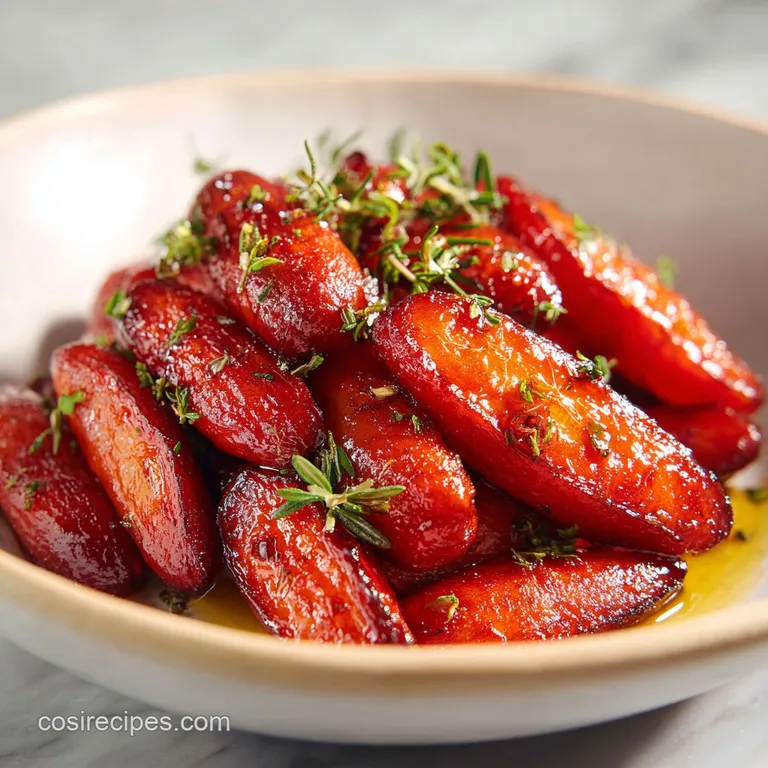
You don't need a kitchen full of gadgets for glazed carrots stove top success. A heavy bottomed skillet is your best friend here. I personally use a 10 inch stainless steel pan or a cast iron skillet. The heavy base distributes heat evenly, which is vital when you are working with honey.
Thin aluminum pans tend to have "hot spots" that will burn the sugar in seconds.
You'll also need a lid that fits your skillet tightly. Since we start by steaming the carrots in 1/4 cup water, keeping that steam trapped is how we ensure the carrots cook through without needing a gallon of water.
A simple vegetable peeler and a sharp chef's knife for those 1/2 inch rounds are the only other essentials. If you're feeling fancy, a microplane is great if you decide to add a little orange zest at the end.
Cooking Steps and Instructions
- Prep the carrots. Peel 1 lb fresh carrots and slice them into 1/2 inch rounds. Note: Cutting them at a slight angle (on the bias) increases the surface area for the glaze to cling to.
- Start the steam. Place the carrot rounds and 1/4 cup filtered water in your skillet over medium high heat.
- Cover and simmer. Place the lid on the pan and cook for 5 to 7 minutes until the carrots are fork tender but still hold their shape.
- Evaporate excess water. Remove the lid. If there is more than a tablespoon of water left, turn the heat up for 1 minute to let it sizzle away.
- Add the fats and sugars. Drop in 3 tbsp unsalted butter, 2 tbsp raw honey, and 1 tbsp light brown sugar.
- Glaze the carrots. Stir constantly for 3 to 5 minutes until the liquid bubbles and transforms into a thick, mahogany syrup.
- Season the pan. Sprinkle in 1/2 tsp sea salt, 1/4 tsp cracked black pepper, and 1 tsp finely chopped fresh thyme.
- The Brightness Blast. Stir in 1 tsp apple cider vinegar. Note: Adding the vinegar at the very end preserves its bright acidity, which balances the heavy sugars.
- The Final Toss. Kill the heat and give the carrots one last toss to ensure every round is coated in that velvety glaze.
- Rest and Serve. Let them sit in the pan for 2 minutes. The glaze will thicken further as it cools slightly, adhering to the carrots like a second skin.
Troubleshooting and Common Errors
Why Your Carrots Turned Mushy
This usually happens if the lid stays on too long or if the 1/2 inch rounds were sliced too thin. If you notice the carrots are getting soft before the water is gone, pull the lid off immediately and crank the heat. You want to stop the internal cooking and start the external glazing process as fast as possible.
The Problem of the Broken Glaze
If your glaze looks greasy or separated, it means the emulsion broke. This often happens if the heat is too high once the butter and honey are added. To fix this, add one teaspoon of water and whisk vigorously. The water helps re emulsify the fat and sugar into a silky sauce.
| Problem | Root Cause | Solution |
|---|---|---|
| Burnt Honey | Heat too high/No stirring | Add a splash of water, scrape the bottom, and lower heat. |
| Crunchy Carrots | Not enough steam time | Add 2 tbsp water, cover, and steam for 3 more mins. |
| Thin Glaze | Too much residual water | Remove carrots and boil down the liquid until syrupy. |
Common Mistakes Checklist
- ✓ Always peel your carrots; the skin can be bitter and prevents the glaze from soaking in.
- ✓ Use room temperature honey so it incorporates into the butter faster.
- ✓ Don't skip the apple cider vinegar; it's the difference between "cloying" and "flavorful."
- ✓ Stir constantly once the sugar goes in - honey has a very low smoke point.
- ✓ Let the dish rest for 2 minutes before serving to let the glaze set.
Swaps and Scaling Rules
If you need to feed a crowd, carrots stove top are very easy to scale, but you can't just double everything blindly. For a 2x batch (2 lbs of carrots), use a larger 12 inch skillet so you don't overcrowd the pan.
If the carrots are piled too deep, they will steam unevenly, and the ones on the bottom will turn to mush while the ones on top stay raw.
For a 2x batch, scale the honey and sugar to 1.5x only. Carrots have a natural sweetness that intensifies as they cook, and doubling the sugar often makes the dish overwhelming. You can always add a drizzle more honey at the end if you feel it needs it.
For the liquids, keep the water at 1/3 cup rather than a full 1/2 cup; the extra carrots will release their own moisture, and too much water will prolong the cooking time, risking mushy vegetables.
If you are looking for a different flavor profile, you can swap the thyme for rosemary or even a pinch of cumin for an earthier vibe. If you are serving this alongside something spicy like my Mustard Dipping Sauce recipe, the sweetness of the carrots provides a perfect cooling contrast.
Quick Decision Guide
- If you want a deeper flavor: Use dark brown sugar instead of light to introduce more molasses.
- If you want it dairy-free: Use 2 tbsp of high-quality extra virgin olive oil instead of butter.
- If you want it spicy: Add a pinch of red pepper flakes during the glazing phase.
Storage and Waste Tips
Storage: These honey glazed carrots keep surprisingly well. Store them in an airtight container in the fridge for up to 4 days. When reheating, don't use the microwave if you can avoid it; it tends to make the butter separate and the carrots rubbery.
Instead, toss them back into a small skillet with a teaspoon of water over medium heat. The water will loosen the glaze and bring back that velvety texture.
Freezing: I don't recommend freezing cooked glazed carrots. The cellular structure of the carrot breaks down when frozen, and upon thawing, they will be quite watery and limp.
Zero Waste: Don't throw away those carrot peels! If they are organic, you can wash them well and roast them with a bit of salt and oil for "carrot skin chips." Alternatively, toss the peels and the carrot ends into a freezer bag with other veggie scraps like onion skins and celery butts.
Once the bag is full, boil them all down to make a flavorful, homemade vegetable stock.
Serving and Pairing Ideas
These carrots are the ultimate "bridge" side dish. They work just as well next to a formal holiday turkey as they do with a casual weeknight grilled chicken breast. Because of the honey and butter, they pair beautifully with proteins that have a bit of a salty or smoky crust.
These carrots go beautifully with Grilled Shrimp Skewers recipe. The sweetness of the honey glaze complements the charred pineapple and savory shrimp perfectly. I also love serving them alongside a heavy starch, like mashed potatoes or a wild rice pilaf, where the extra glaze can soak into the grains.
Kitchen Myths Debunked
One common myth is that baby carrots are "easier" for this recipe. While they save you 2 minutes of peeling, they are actually whole carrots that have been whittled down and washed in a chlorine solution to preserve them. They hold a lot of excess water, which can often lead to a diluted glaze.
Stick to whole, fresh carrots for the best flavor and texture.
Another myth is that you need to boil the carrots in a huge pot of water first. This actually leaches out all the nutrients and flavor. The steam sauté hybrid we used here keeps all that "carrot" flavor inside the vegetable where it belongs.
By using only 1/4 cup of water, we are essentially braising them in their own juices.
Finally, some people think honey is a direct 1:1 swap for sugar. Science tells us honey is actually sweeter and more acidic than granulated sugar. That is why we use a combination of honey and brown sugar; the sugar provides the crystalline structure for the glaze, while the honey provides the floral aroma and gooey texture.
It's a team effort in that skillet!
Recipe FAQs
How do you cook honey carrots on the stove?
Steam first, then glaze. Place sliced carrots and 1/4 cup water in a skillet, cover, and simmer until fork tender (about 5-7 minutes). Remove the lid, let excess water evaporate, then add honey, butter, and sugar, stirring until the liquid thickens into a syrup.
Do you put honey on carrots before or after cooking?
After initial cooking. Applying honey before the carrots are steamed will cause the sugar to burn instantly due to its low smoke point. Cook the carrots until tender, then add the honey mixture to create the glaze.
What's the secret to perfectly glazed carrots?
Use a steam sauté hybrid technique. Steaming the carrots first prevents scorching the honey, while reducing the liquid at the end creates a high viscosity glaze that clings tightly to the vegetable surface rather than pooling beneath it.
How do you cook carrots on the stove without burning the honey?
Start them off with steam. Begin by simmering the carrots in a small amount of water until they are almost done; this softens the carrot before you introduce the sugars. Only add the honey once most of the water has boiled off, and stir constantly at this stage.
Can I use baby carrots instead of fresh, whole carrots?
No, whole carrots are superior for glazing. Baby carrots are often pre-washed in chlorine and contain more water, which can dilute your final glaze and lead to a less flavorful, limp result.
Is it true I must use high heat the entire time for stove top carrots?
No, this is a common misconception. Use medium high heat initially to generate steam, but reduce to medium or medium low once the honey and butter are added to prevent scorching the sugars.
How do I keep my honey glaze from separating or becoming greasy?
Ensure proper emulsion at the end. The glaze can break if the heat is too high when the butter is added. If separation occurs, kill the heat, add one teaspoon of water, and whisk vigorously until the fat and sugar rebind into a silky sauce.
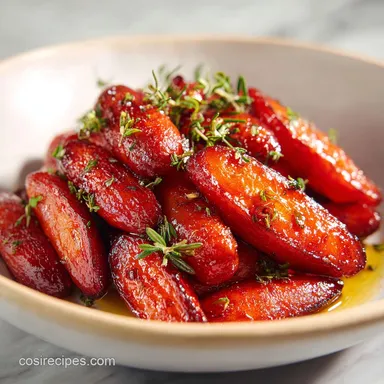
Stove Top Honey Glazed Carrots
Ingredients:
Instructions:
Nutrition Facts:
| Calories | 165 calories |
|---|---|
| Protein | 1.1 g |
| Fat | 8.7 g |
| Carbs | 22.3 g |
| Fiber | 3.2 g |
| Sugar | 16.8 g |
| Sodium | 305 mg |
