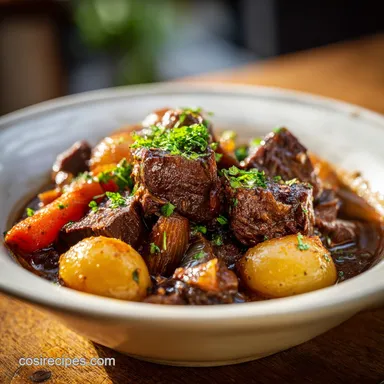
Traditional Belgian Beef Stew

- Time: 20 min active + 3 hours 45 min cooking
- Flavor & Texture: Savory, amber glaze with tender beef
- Perfect for: Cold weather dinners or meal prep
Belgian Beef Stew
Most home stews end up with a thin, watery sauce that tastes like beef-flavored water. The beef often stays chewy despite hours of bubbling, leaving you with a dish that feels unfinished and bland.
This approach fixes that by using a low-temperature oven braise and a mustard-bread binder. Instead of a flour roux that can taste pasty, the bread melts into the liquid. It creates a rich, glossy finish that clings to the meat.
You can expect a hearty, deep-brown stew with beef that pulls apart with a fork. This Belgian beef stew is designed to be straightforward, relying on time and temperature rather than complex techniques.
Why the Bread Matters
- Low Temp Braising: Cooking at 300°F (150°C) slowly melts the tough collagen in beef chuck. This turns it into gelatin, which naturally thickens the sauce.
- The Bread Binder: Mustard-slathered bread dissolves completely during the final simmer. It adds a slight tang and binds the sauce into a cohesive glaze.
| Cut Choice | Texture | Best For | Impact |
|---|---|---|---|
| Beef Chuck | Balanced, tender | Standard Stew | Reliable and classic |
| Beef Cheeks | Extremely soft | Gourmet feel | Richer, more gelatinous |
| Bottom Round | Leaner, firmer | Healthier option | Can be drier if overcooked |
Essential Gear
You will need a heavy-bottomed Dutch oven with a tight lid. This is necessary because it holds heat evenly in the oven and prevents the liquid from evaporating too quickly. A wooden spoon is also helpful for deglazing the pan.
Gathering Your Essentials
| Ingredient | Role | If You Don't Have It |
|---|---|---|
| Beef Chuck | Main protein and structure | Beef cheeks (richer) |
| Yellow Onions | Sweetness and body | White onions (sharper) |
| Dijon Mustard | Tang and binding agent | Whole grain mustard (textured) |
| Beef Broth | Flavor base and braising liquid | Low-sodium beef stock |
The Meat and Aromatics
- 3 lbs beef chuck, cut into 2-inch cubes
- 3 tbsp vegetable oil
- 2 tsp salt
- 1 tsp black pepper
- 3 large yellow onions, sliced into half-moons
- 4 cloves garlic, minced
The Braising Liquid
- 4 cups beef broth
- 2 tbsp apple cider vinegar
- 2 tbsp brown sugar
- 2 bay leaves
- 3 sprigs fresh thyme
The Thickener
- 2 slices sourdough or white bread, crusts removed Why this? Starch binds the sauce without a floury taste
- 2 tbsp Dijon mustard Why this? Adds sharp acidity to balance the rich beef
Recipe Specs
- Prep time: 20 minutes
- Cook time: 3 hours 45 minutes
- Total time: 4 hours 5 minutes
- Yield: 6 portions
Bringing It Together
Searing the Meat
Pat the beef cubes dry with paper towels. Season the beef with 2 tsp salt and 1 tsp black pepper. Heat 3 tbsp vegetable oil in a Dutch oven over medium-high heat. Brown the beef in batches of 6 to 8 pieces to avoid overcrowding until a deep golden brown crust forms, then remove to an oven-safe plate.
Note: Dry meat browns faster and deeper.

Building the Flavor Base
Lower the heat to medium. Add the sliced onions to the remaining fat and cook, stirring occasionally, until soft and golden brown (about 10-12 minutes). Stir in the minced garlic and cook for 1 minute until fragrant.
Pour in a small amount of the 4 cups beef broth and scrape the bottom of the pot with a wooden spoon to release the browned bits.
Simmering to Perfection
Return the browned beef and any accumulated juices to the pot. Pour in the remaining beef broth until the liquid just covers the beef. Stir in 2 tbsp brown sugar, 2 tbsp apple cider vinegar, 2 bay leaves, and 3 sprigs fresh thyme. Bring the liquid to a gentle simmer on the stove.
Preheat the oven to 300°F (150°C). Cover the pot with a tight lid and transfer to the oven. Simmer undisturbed for 3 hours until the beef is fork-tender and reaches an internal temperature of 160°F (71°C).

Finishing the Sauce
Remove the pot from the oven. Spread 2 tbsp Dijon mustard on one side of each of the 2 bread slices. Place the bread mustard-side up on the surface of the stew, pushing them slightly under the liquid.
Simmer on the stovetop over low heat for another 15 minutes until the bread dissolves and the sauce thickens into a velvety consistency.

Problems and Solutions
When the sauce doesn't thicken, it usually means the bread didn't fully integrate or the liquid volume was too high. If the meat is still firm after the timed braise, it simply needs more time. Every piece of beef is different, and collagen breaks down at its own pace.
Fixing a Thin Sauce
If the sauce is still too runny after the bread step, simmer it uncovered on the stove over medium heat for 10-15 minutes. This reduces the liquid and concentrates the flavor.
Managing Tough Meat
If the beef doesn't pull apart with a fork, put it back in the oven for another 30-45 minutes. Check the internal temperature again; it must hit 160°F (71°C) to be safe and tender.
Preventing Burnt Bottoms
If you see dark spots sticking to the bottom during the onion phase, add a splash of broth immediately to loosen them.
| Problem | Fix |
|---|---|
| Sauce too thin | Simmer uncovered for 15 mins |
| Meat still chewy | Braise for another 45 mins |
| Sauce too salty | Stir in a teaspoon of brown sugar |
Storage and Freshness

Keep this Belgian beef stew in a sealed container within the refrigerator. Per USDA food safety guidelines, it remains fresh for 3 to 4 days. You may find the taste is even better the next day as the seasonings blend.
The stew is also freezer-friendly. Use freezer-safe storage for up to 3 months. To prepare, let it defrost in the fridge overnight. Warm it slowly in a saucepan on low heat, ensuring the leftovers reach 165°F (74°C) for safety.
Should the sauce thicken too much, stir in a bit of beef broth to reach your desired consistency.
Flavor Twists and Swaps
You can adapt this recipe based on what's in your pantry. If you prefer a different cooking vessel, you can try a Slow Cooker Beef Stew recipe for a more hands-off approach, though the searing step is still vital for flavor.
Gingerbread Spice Twist
For a traditional Flemish touch, add a pinch of ground cloves and ginger to the beef during the searing process. This mimics the flavor of gingerbread, which is often paired with this stew.
Garden Harvest Version
Add sliced carrots and parsnips during the last 90 minutes of the oven braise. Adding them too early will turn the vegetables into mush.
| Original Ingredient | Substitute | Why It Works |
|---|---|---|
| Sourdough Bread | White Bread | Similar starch content; less tang |
| Apple Cider Vinegar | Red Wine Vinegar | Similar acidity; slightly deeper fruit notes |
| Brown Sugar | Honey | Same sweetness; adds a floral note |
Presentation Tips
Serve this in wide, shallow bowls to show off the deep color of the sauce. In Belgium, this is traditionally served with thick-cut fries. The fries soak up the glossy gravy, making it a very filling meal.
For a cleaner look, remove the bay leaves and thyme sprigs before serving. A sprinkle of fresh parsley on top adds a pop of color that cuts through the rich, dark tones of the beef.
Very High in Sodium
1378 mg of sodium per serving (60% of daily value)
American Heart Association recommendation: no more than 2,300 mg of sodium per day
Tips to Reduce Sodium
-
Reduce Added Salt
Significantly reduce or omit the 2 teaspoons of salt, as the beef broth and mustard already contribute significant sodium.
-
Swap the Broth
Use low-sodium or unsalted beef broth instead of regular beef broth to lower the overall salt content of the sauce.
-
Modify the Mustard
Use a low-sodium mustard alternative or reduce the quantity of Dijon mustard used in the recipe.
-
Bread Alternative
Opt for a low-sodium bread or a homemade loaf to avoid the hidden salt found in processed white or sourdough breads.
-
Enhance with Aromatics
Increase the amount of fresh thyme and garlic to provide a deeper flavor profile without relying on salt.
Before You Start Cooking
What bread can I use if I cannot find the wholemeal or brown bread in the recipe?
Use sourdough or white bread. These are the recommended options in this recipe to ensure the sauce thickens correctly and the bread dissolves completely.
Can I use a cheaper or different cut of beef, such as beef cheeks?
Yes, beef cheeks are an excellent alternative. They are rich in collagen and break down beautifully during the 3-hour oven simmer, similar to beef chuck.
How do I reheat leftovers without toughening the meat?
Warm gently in a saucepan over low heat. Heat the stew until it reaches 165°F (74°C) to ensure food safety without overcooking the beef. When reheating cooked leftovers, check with a food thermometer that the center reaches 165°F (74°C); the appliance temperature and time alone do not confirm this.
Why is bread added to the stew?
It acts as the primary thickening agent. The bread melts into the sauce during the final simmer, providing a rich texture and adding depth from the Dijon mustard.
Slow-Cooked Belgian Beef Stew