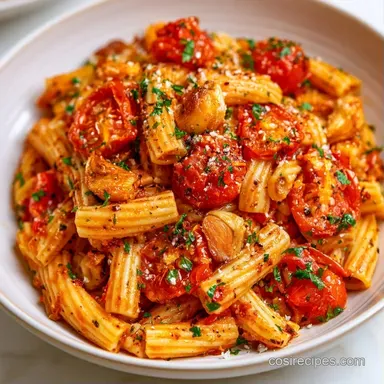
Cozy Roasted Fall Tomato Pasta
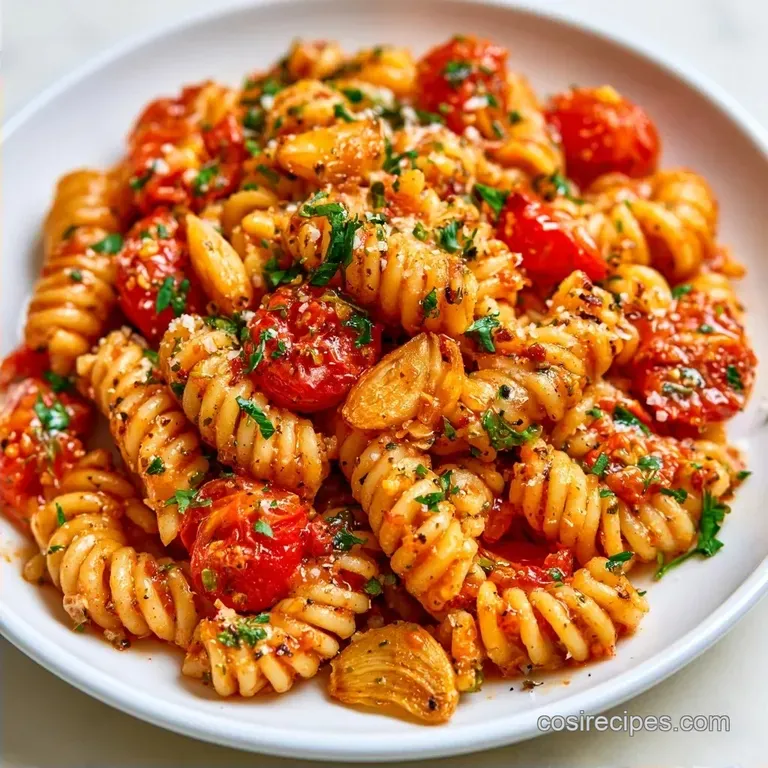
- Duration: 10 min prep + 30 min roasting
- Sensory Highlight: Charred, jammy tomatoes with a lustrous sheen
- Best for: Quick weekday meals or a romantic evening in
The aroma arrives first the sugary, slightly scorched scent of cherry tomatoes popping in the oven. It’s a far cry from the metallic aftertaste of a pre-made sauce. I once attempted a classic red sauce by simmering it for three hours, but the result was surprisingly flat and acidic.
That's when I discovered roasting. Everything changed when I saw how high heat handles the hard work for you. You end up with bursts of intense flavor that seem like they required hours of labor, yet they only spent 25 minutes on a baking sheet.
This Fall Tomato Pasta is centered on contrast. The zest of fresh basil balances the deep, caramelized notes of roasted garlic. It’s an easy victory for anyone craving a comforting dish without staying tied to the stove all night.
Simple and Savory Fall Tomato Pasta
The logic here is simple. When you roast cherry tomatoes at 400°F, the water evaporates and the natural sugars brown. This removes the harsh acidity and leaves you with a thick, jammy sauce. If you like other seasonal flavors, you might also enjoy butternut squash pasta for a similar warming vibe.
High Heat Roast: Roasting concentrates the fruit and browns the garlic, creating a smoky depth. Starch Binding: Using the cloudy water from the pot helps the butter and cheese cling to the noodles.
| Method | Time | Texture | Best For |
|---|---|---|---|
| Roasted | 40 min | Chunky and Jammy | Deep, concentrated flavor |
| Simmered | 90 min | Smooth and Liquid | Classic Italian style |
| Raw/Fresh | 15 min | Light and Watery | Summer lunches |
It is a different experience than a slow cooked sauce. The roasting method keeps the tomatoes from breaking down into a uniform puree, so you still get those little bursts of flavor in every bite.
The Building Blocks
The beauty of this dish is in the quality of the oil and the ripeness of the tomatoes. I prefer using a high-quality extra virgin olive oil because it basically acts as a seasoning here.
For the noodles, Rigatoni or Penne are the best choices. Their ridges and hollow centers act like little scoops for the roasted garlic and tomato bits. If you use a thin noodle like spaghetti, the chunky sauce just slides off.
- 2 pints (500g) cherry tomatoes Why this? High sugar content makes them jammy when roasted (Swap: Roma tomatoes, halved)
- 8 cloves (40g) garlic, peeled and whole Why this? Roasting whole cloves prevents burning (Swap: 2 tsp garlic powder)
- 3 tbsp (45ml) extra virgin olive oil Why this? Carries the heat and adds richness (Swap: Avocado oil)
- 1 tsp (2g) dried oregano Why this? Adds an earthy, herbal base (Swap: Dried basil)
- ½ tsp (1g) red pepper flakes Why this? Subtle heat to balance the sweetness (Swap: Black pepper)
- 1 tsp (6g) kosher salt Why this? Draws moisture out of the tomatoes (Swap: Sea salt)
- ½ tsp (3g) black pepper Why this? Basic seasoning for depth (Swap: White pepper)
- 1 lb (450g) Rigatoni or Penne Why this? Holds the heavy sauce well (Swap: Fusilli)
- ½ cup (50g) freshly grated Parmesan cheese Why this? Adds salt and creamy body (Swap: Pecorino Romano)
- ¼ cup (60ml) reserved pasta water Why this? Emulsifies the butter and cheese (Swap: None)
- 2 tbsp (30g) unsalted butter Why this? Creates a glossy, rich finish (Swap: Olive oil)
- ¼ cup (15g) fresh basil or sage leaves, torn Why this? Fresh contrast to the roasted notes (Swap: Fresh parsley)
Required Kitchen Gear
You do not need a fancy setup. A standard rimmed baking sheet is the most important part. If you use a pan with high sides, the tomatoes might steam instead of roasting, and you will lose that charred edge.
A large pot for the water and a potato masher or a sturdy fork are the only other essentials. The masher is great for crushing the garlic cloves quickly right on the pan.
The Cooking Process
Phase 1: High Heat Roasting
Set your oven to 400°F (200°C). On a baking sheet, combine the cherry tomatoes and whole garlic cloves with olive oil, oregano, red pepper flakes, salt, and pepper. Arrange them in a single layer.
Roast for 20-25 minutes until the tomato skins are blistered and starting to brown, and the garlic is golden.
Phase 2: Boiling the Pasta
While the tomatoes roast, boil a large pot of water seasoned generously with salt. Cook the noodles according to the package directions, but pull them out 1 minute before they reach "al dente." Save about a cup of the starchy water before draining.
Phase 3: Combining Everything
Take the pan out of the oven. Use a potato masher or fork to gently crush the roasted tomatoes and garlic directly on the sheet until they form a chunky, jammy sauce.
Toss the cooked noodles into the pan (or transfer the sauce to the pot). Stir in the butter, Parmesan cheese, and the reserved pasta water. Mix over low heat for 60 seconds until the sauce is silky and clings to the noodles. Fold in fresh herbs just before serving.
Chef's Note: Avoid over mashing the tomatoes. You want a mix of whole and crushed pieces to give the Fall Tomato Pasta its rustic, chunky character.
Fixing Common Issues
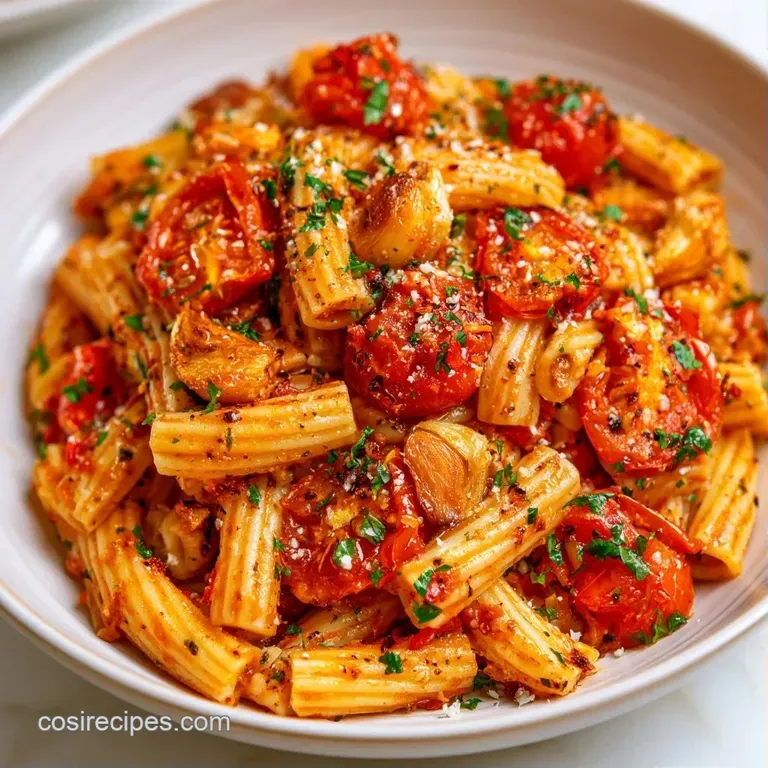
Sometimes things go sideways in the kitchen. The most common issue is the sauce consistency. If it feels like the sauce is just sitting at the bottom of the bowl, you probably didn't use enough pasta water. The starch is what glues the sauce to the noodle.
Another thing to watch is the garlic. Because the cloves are whole, they usually stay sweet, but if your oven has a hot spot, they can turn bitter. If you see any black, charred cloves, just pick them out before mashing.
Dry Sauce Fix
If the sauce seems too thick or doesn't coat the noodles, add more reserved water one tablespoon at a time.
Acidic Sauce Fix
If the tomatoes are too tart, a small pinch of sugar or an extra knob of butter will mellow it out.
Burnt Garlic Fix
Discard any cloves that are black rather than golden to avoid a bitter taste.
| Problem | Fix |
|---|---|
| Sauce is too dry | Add more reserved pasta water |
| Taste is too acidic | Add extra butter or a pinch of sugar |
| Garlic is bitter | Remove burnt cloves before mashing |
Once the sauce is glossy, you know it is ready. If it looks matte or separated, keep tossing it over low heat for another 30 seconds.
Saving and Storing
This Fall Tomato Pasta stays fresh for 3 days when stored in a sealed container in the refrigerator. Since the noodles tend to absorb the sauce, it may thicken over time. Stir in a splash of water or a small knob of butter before microwaving to restore that glossy finish.
I advise against freezing the completed dish, as the butter can separate and the fresh herbs lose their intensity. You can, however, freeze the roasted tomato and garlic base for up to 2 months. Just thaw the mixture and combine it with fresh noodles.
To minimize waste, save your tomato stems and papery garlic skins. I collect mine in a freezer bag for vegetable stock. Once the bag is full, I simmer those scraps with carrot peels and onion ends for a complimentary, homemade broth.
Serving Your Dish
This meal is hearty on its own, but a side of crusty sourdough is a must for mopping up the leftover jammy bits on the plate. A simple arugula salad with lemon and olive oil provides a peppery contrast to the richness of the Parmesan.
For a more formal presentation, serve it in wide bowls and top with a few whole roasted tomatoes and a sprig of fresh basil. The red and green colors look great against a white plate, especially during the autumn months.
Fresh Twist Ideas
This recipe is quite adaptable if you're looking for variety. To make it a complete meal, simply incorporate a protein like sliced chicken breast or grilled shrimp. For those craving something even more decadent, I recommend my cheesy chicken pasta bake for a different take on comfort food.
To make it vegan, use a plant based butter substitute and swap the Parmesan for vegan cashew cheese or nutritional yeast. Since the roasted tomato base is already vegan, you're almost there.
An Autumn Inspired Variation
Stir in some fresh baby spinach right before serving. The remaining heat will wilt the leaves in roughly 30 seconds, keeping them bright and tender.
Adding Protein
Toss 1 cup of canned cannellini beans into the roasting pan. They'll become creamy and slightly crisp, adding a lovely texture to this Fall Tomato Pasta.
For Extra Richness
Mix in 2 tablespoons of mascarpone or heavy cream along with the butter to create a luxurious, orange colored sauce.
| Original Ingredient | Substitute | Why It Works |
|---|---|---|
| Cherry Tomatoes | Roma Tomatoes | Similar flavor. Note: Must dice them first |
| Rigatoni | Penne | Similar shape. Note: Holds sauce equally well |
| Parmesan | Pecorino | Sheep's milk cheese. Note: Saltier and sharper |
Before you dive in, here are a few quick tips for tweaking the taste as you go: - Need more brightness? -> stir in 1 tsp lemon zest - Want more spice? -> add 1/2 tsp extra red pepper flakes - Desire a richer taste? -> add 1 tbsp extra butter
Kitchen Myths
Some say you must add sugar to tomato sauce to balance out the acidity. With this Fall Tomato Pasta, that's rarely necessary. Roasting the tomatoes naturally intensifies their sweetness, so it's already there. Adding extra sugar often makes the dish taste like a preserve rather than a dinner.
Another frequent myth is that noodles should be rinsed after draining. Never do this. Rinsing removes the starch that allows the sauce to adhere to the pasta. Keep that cloudy water and let the noodles stay starchy.
This recipe relies on the oven to do the hard work. By focusing on the roasting process and utilizing the pasta starch, you get a meal that tastes like it's from a bistro but involves minimal effort. Once you stop simmering and start roasting, you'll never go back.
Very High in Sodium
1150 mg 1,150 mg of sodium per serving (50% 50% of daily value)
The American Heart Association recommends a limit of 2,300 mg of sodium per day for most adults to maintain heart health.
Tips to Reduce Sodium
-
Slash the Added Salt-25%
Reduce or eliminate the kosher salt used during roasting; the Parmesan cheese provides significant saltiness already.
-
Modify the Cheese-15%
Reduce the amount of Parmesan cheese or substitute a portion of it with nutritional yeast for a similar nutty flavor.
-
Low-Sodium Pasta Water-10%
Use less salt when boiling the pasta, as the reserved pasta water carries that sodium directly into the final sauce.
-
Add Brightness with Acid-10%
Squeeze fresh lemon juice over the finished dish to provide a 'zing' that mimics the taste of salt.
-
Boost Fresh Aromatics
Increase the amount of fresh basil or sage to enhance the overall flavor profile without adding any sodium.
Recipe FAQs
How to reduce acidity in this tomato pasta?
Roast the tomatoes at 400°F. High heat evaporates excess water and caramelizes the natural sugars, which removes the harsh metallic tang common in raw or simmered sauces.
Is it true that rich tomato sauces must simmer for hours?
That's a myth. Roasting cherry tomatoes for 20 25 minutes concentrates the flavor rapidly, delivering a deep, jammy consistency without the all-day cook time.
Which pasta shapes work best with jammy sauces?
Choose Rigatoni or Penne. These tubular shapes are ideal because they capture the roasted garlic cloves and chunky tomato pieces inside the noodle.
Can I make this as a baked dish?
Yes, just transfer the combined pasta and sauce to a baking dish and broil. If you prefer a fully oven baked meal, our baked ravioli uses a similar savory meat sauce for a heartier result.
Why does the sauce not cling to the pasta?
Stir in the reserved cloudy pasta water. The starch in the water emulsifies the butter and Parmesan, creating a glossy glaze that binds the sauce to the noodles.
Fall Tomato Pasta