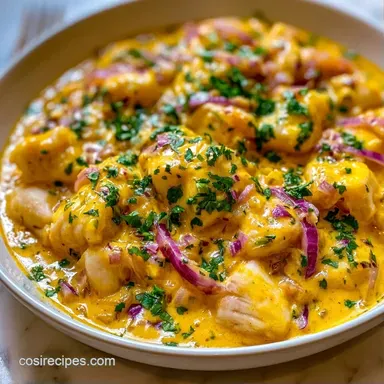
Peruvian Ceviche with Aji Amarillo
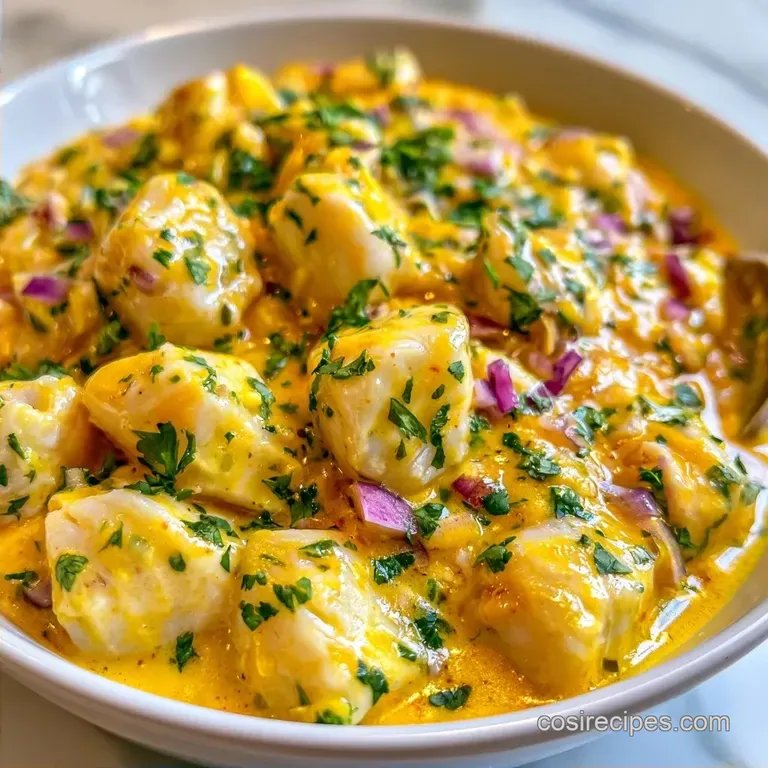
- Time: 20 min active + 15 min curing
- Flavor/Texture Hook: Zesty, bright, and snappy
- Perfect for: A refreshing summer lunch or a light appetizer
- Quick Recipe Specs
- Deep Dive Into Ingredients
- The Necessary Kitchen Gear
- The Cooking Process
- How the Cure Works
- Fixing Texture and Taste
- Storage and Waste Tips
- Fresh Twists and Swaps
- How to Serve and Enjoy
- Debunking Common Seafood Myths
- Adjusting the Portion Size
- Very High in Sodium
- Recipe FAQs
- 📝 Recipe Card
Right then, imagine walking along the coast of Lima. The air smells like salt and citrus, and every corner has a spot selling this dish. It's not just a meal, it's a cultural obsession in Peru. They treat the "leche de tigre" (tiger's milk) as a tonic, something that wakes up your entire system.
I used to think any lime soaked fish was the same, but the authentic version is all about the balance. You need that punch of Aji Amarillo and the cooling effect of the sweet potato to stop the acid from overwhelming your palate.
This recipe for Peruvian Ceviche is about layers. We start with ice cold fish, add a vibrant marinade, and finish with textures that crack and crunch. It's a high protein dish that feels light but satisfies a real craving.
Quick Recipe Specs
This dish is all about speed and temperature. Because we aren't using a stove for the fish, the "cooking" happens through a chemical reaction.
The total time is 35 minutes, but most of that is just letting the fish sit. It's a great way to get a restaurant quality plate without spending hours in the kitchen.
| Goal? | Exact Change |
|---|---|
| Extra tang? | Fold in 1 tsp lime zest |
| Milder heat? | Use 1 tbsp Aji Amarillo instead of 2 |
| Sweeter finish? | Add 1/4 tsp sugar to marinade |
Deep Dive Into Ingredients
The fish is the centerpiece. Opt for a firm, white variety. Sea bass is an ideal choice as it maintains its integrity and avoids getting mushy. Using a fish that is too delicate will compromise the structure of the Peruvian Ceviche.
The soul of the dish comes from the Aji Amarillo. This Peruvian yellow chili offers a bright, fruity profile rather than just heat. If it's unavailable, combining habanero with a bit of turmeric can approximate the hue, though the taste will differ.
Balance is essential. The creamy sweetness of boiled Peruvian sweet potato and the texture of choclo (giant corn) serve as a counterpoint, refreshing your palate between acidic bites of fish.
The Ingredient List:
- 1 lb fresh firm white fish (Sea Bass, Flounder, or Halibut), cut into 3/4 inch cubesWhy this? Firm flesh resists turning mushy during the cure
- 1/2 cup fresh lime juiceWhy this? High acidity is required to denature the protein
- 2 tbsp Aji Amarillo pasteWhy this? Provides the signature fruity heat of Peru
- 1 medium red onion, juliennedWhy this? Adds a sharp, crisp contrast
- 1/4 cup fresh cilantro, finely choppedWhy this? Adds an earthy, fresh top note
- 1 tsp sea saltWhy this? Draws out moisture and enhances lime flavor
- 1 clove garlic, mincedWhy this? Adds a subtle pungent depth
- 1 large Peruvian sweet potato, boiled and slicedWhy this? Traditional creamy sweetness to balance acid
- 1 cup choclo (Peruvian giant corn), boiled kernelsWhy this? Large kernels provide a satisfying chew
Substitutions:
- Sea Bass → Halibut (Similar firmness, slightly sweeter)
- Aji Amarillo → Yellow chili paste (Adds heat but loses some fruitiness)
- Choclo → Large kernel sweet corn (Less starch, more sweetness)
The Necessary Kitchen Gear
You don't need professional equipment, but stick with a glass or stainless steel bowl. Plastic tends to retain odors and doesn't hold a chill as well.
Ensure your knife is very sharp to achieve precise 3/4 inch cubes. If the fish shreds during cutting, the marinade won't penetrate uniformly, resulting in some pieces being over cured while others remain raw.
Lastly, keep some paper towels on hand. While often overlooked, patting the fish dry ensures the marinade adheres to the surface rather than sliding away.
The Cooking Process
Phase 1: The Cold Prep
Place your mixing bowl in the freezer for 10 minutes. If you're in a rush, just fill it with ice cubes for a few minutes and then dump them out. This keeps the fish at a safe, snappy temperature.
Put your julienned red onions in a bowl of ice water for 5 minutes. This removes the harsh sulfuric bite, leaving them crisp and mild. Drain them well before using.
Phase 2: Building the Leche de Tigre
In your chilled bowl, whisk the fresh lime juice, Aji Amarillo paste, minced garlic, and sea salt. Whisk until the mixture is smooth and opaque. It should look like a vibrant, yellow orange cream.
Phase 3: The Rapid Cure
Pat the cubed fish completely dry with paper towels. Gently fold the fish into the marinade using a spatula. Don't overmix or you'll break the cubes.
Allow the fish to cure for 10 to 15 minutes. You'll see the fish turn from translucent to a matte white. This is the Peruvian Ceviche "cooking" in the acid.
Fold in the drained red onions and chopped cilantro. Give it one last gentle toss to distribute the greens.
Serve immediately. Place a few slices of boiled sweet potato and a scoop of choclo on the side of the plate.
How the Cure Works
The acid in the lime juice denatures the proteins in the fish. This causes the fibers to tighten and clump, creating a velvety white texture without any heat.
Keeping everything cold slows this process down. A chilled bowl ensures the fish doesn't warm up, which prevents the proteins from breaking down too quickly and becoming mushy.
| Method | Time | Texture | Best For |
|---|---|---|---|
| Fresh Cold Cure | 15 mins | Snappy & Firm | Authentic Experience |
| Pre Marinated | 1 hour+ | Soft & Opaque | Those who dislike raw centers |
Fixing Texture and Taste
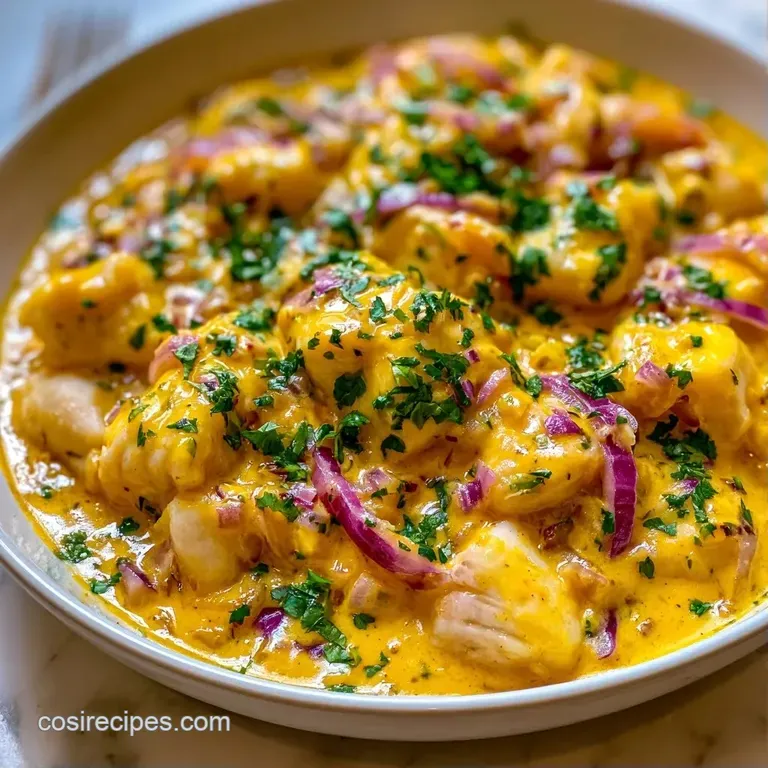
If the fish feels too soft, you've likely let it sit too long. Once the fish hits that matte white color, the window for a snappy texture is small.
If the flavor is too sharp, don't add more fish. Instead, add a tiny pinch of salt or a bit more Aji Amarillo to round out the acidity.
Fish is too mushy
This happens when the acid breaks down the fibers too much. To fix this, reduce the curing time to 10 minutes next time and keep the fish colder.
Flavor is too acidic
Too much lime can drown out the fish. You can balance this by adding a tiny bit of olive oil or serving it with extra sweet potato.
Onions are too pungent
If the onions still bite, you didn't soak them long enough. Always use ice water to tame the red onion.
| Problem | Root Cause | Solution |
|---|---|---|
| Rubbery Fish | Over curing (30+ mins) | Serve within 15 mins |
| Watery Marinade | Fish wasn't patted dry | Use paper towels first |
| Dull Flavor | Old lime juice | Use freshly squeezed limes |
Storage and Waste Tips
Peruvian Ceviche does not keep well. Because the acid continues to "cook" the fish, it will turn rubbery if left in the fridge. Eat it immediately.
If you have leftover lime juice, freeze it in ice cube trays. These cubes are great for adding a burst of acid to seafood soups or grilled fish later.
For the sweet potato skins, don't toss them. If you scrub them clean, you can roast them with a bit of oil and salt for a crispy snack.
Fresh Twists and Swaps
For a "Mariscos" mix, add cooked shrimp or diced scallops to the white fish. Just remember that shrimp cures faster than halibut, so keep an eye on the texture.
If you want something plant based, try using hearts of palm or king oyster mushrooms. They have a similar bite and soak up the leche de tigre beautifully.
If you're planning a full Peruvian feast, this pairs great with some Green Sauce for 4 recipe as a main course. The acidity of the ceviche cuts through the richness of the chicken.
How to Serve and Enjoy
The traditional plating is all about contrast. Use a chilled plate to keep the fish cold. Place the Peruvian Ceviche in the center, then lean the sweet potato slices against the side.
Scatter the choclo kernels around the edge. The visual of the bright yellow corn against the white fish and purple onions makes the dish pop.
For a more modern appetizer, serve small portions in shot glasses. Put a bit of the leche de tigre at the bottom, a cube of fish on top, and a single cilantro leaf for garnish.
If you find this too light for a full dinner, you might prefer something heavier like Peruvian Charcoal Chicken, which offers a smoky contrast to the zesty flavors here.
Debunking Common Seafood Myths
Some people believe that "cooking" fish in lime juice kills parasites. This is not true. The acid denatures the protein, but it doesn't sterilize the fish like heat does. This is why using sushi grade, high-quality fish is a requirement for Peruvian Ceviche.
Another myth is that you should marinate the fish for hours to make it safe. Actually, doing this ruins the texture. A short, 15 minute cure is the standard for a reason.
Adjusting the Portion Size
For a smaller portion suited for two, reduce the fish to 1/2 lb and use 1/4 cup of lime juice with 1 tbsp of Aji Amarillo. Be mindful of the marinating time, as smaller pieces tend to cure more quickly.
When scaling up for a crowd, avoid simply quadrupling the lime and salt. Instead, increase the spices and salt by roughly 3x, then taste and adjust. To ensure the Peruvian Ceviche maintains its crispness, work in small batches; crowding a single large bowl can raise the temperature and ruin the texture.
Now you're all set. Just remember to keep everything chilled, work quickly, and definitely don't forget the sweet potato. This Peruvian Ceviche is easily the most refreshing dish you'll serve this year. Trust me on that.
Very High in Sodium
1650 mg 1,650 mg of sodium per serving (72% 72% of daily value)
The American Heart Association recommends a daily sodium limit of no more than 2,300 mg, with an ideal limit of 1,500 mg for most adults to reduce cardiovascular risk.
Tips to Reduce Sodium
-
Reduce Added Salt-25%
Cut the sea salt in half or eliminate it entirely; the lime juice and Aji Amarillo already provide significant flavor.
-
Swap the Paste-20%
Look for a low-sodium Aji Amarillo paste or make your own by blending fresh peppers to avoid processed preservatives.
-
Enhance Acidity-10%
Increase the fresh lime juice slightly; the tartness mimics the perception of salt, allowing you to reduce sodium without losing zest.
-
Boost Fresh Aromatics
Double the amount of fresh cilantro and add a pinch of ground cumin to create a complex flavor profile without adding salt.
Recipe FAQs
What are the basic ingredients of a classic Peruvian ceviche?
Firm white fish, fresh lime juice, and Aji Amarillo paste. These are combined with red onion, cilantro, garlic, sea salt, and served with boiled sweet potato and choclo.
How do I prepare a basic ceviche?
Whisk lime juice, Aji Amarillo paste, minced garlic, and sea salt in a chilled bowl. Fold in patted dry cubed fish, cure for 10 to 15 minutes, then mix in drained red onions and cilantro.
What makes Peruvian ceviche different?
The addition of Aji Amarillo paste and the rapid curing time. This style uses a specific Peruvian chili and is traditionally paired with choclo and sweet potato.
How long to marinate Peruvian ceviche?
Cure the fish for 10 to 15 minutes. This short duration ensures the seafood stays tender rather than becoming rubbery from the acidity.
Is it true that the fish is cooked with heat?
No, this is a common misconception. The citric acid in the lime juice denatures the proteins, which "cooks" the fish without any heat.
Can I store leftovers in the fridge?
No, eat it immediately. The acid continues to break down the fish over time, which eventually results in a rubbery texture.
Which fish works best for this recipe?
Use a firm white fish like Sea Bass, Flounder, or Halibut. These varieties maintain their shape and texture during the quick curing process.
Peruvian Ceviche Recipe