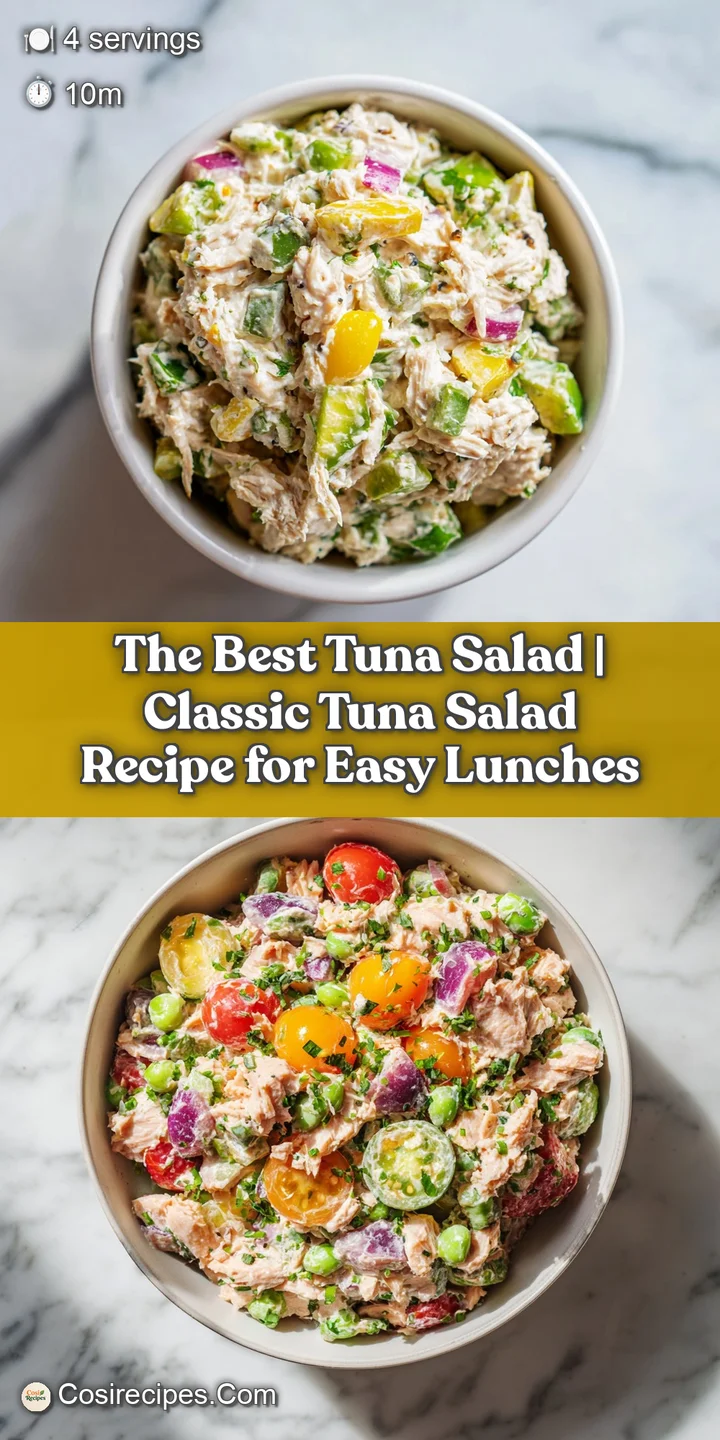
The Best Tuna Salad: Creamy and Fresh
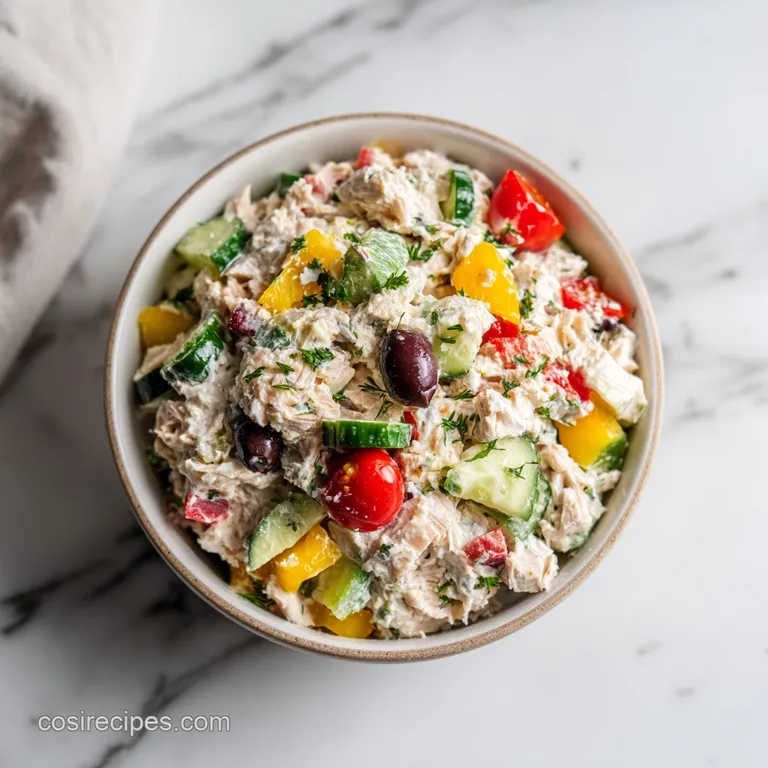
- Time: Active 10 minutes, Passive 0 minutes, Total 10 minutes
- Flavor/Texture Hook: A velvety, creamy base paired with a crisp, herbaceous crunch.
- Perfect for: Quick weekday lunches, high protein meal prep, or simple weekend sandwiches.
- Creating the best tuna salad with fresh ingredients
- Essential recipe specifications and metrics
- Selecting premium core components
- Tools for a professional finish
- Step by step assembly guide
- Avoiding common kitchen disasters
- Adapting for specific dietary needs
- Preservation and zero waste methods
- Presentation and serving suggestions
- Debunking common preparation myths
- Recipe FAQs
- 📝 Recipe Card
Creating the best tuna salad with fresh ingredients
The moment you crack open a can of solid white albacore, you’re greeted with that clean, briny scent of the sea. It is the blank canvas for everything that follows. I remember a lunch years ago where I served a bowl that was, quite frankly, a soggy mess.
I hadn't drained the fish properly, and the beautiful dressing I made just slipped right off, pooling at the bottom of the bowl. It was a lesson in texture that I’ve never forgotten. Now, I approach this dish with a focus on structural integrity and brightness.
We are leaning heavily into Mediterranean inspired aromatics here. The sharp, clean scent of freshly squeezed lemon juice and the earthy, grassy notes of hand chopped dill transform the tuna from a boring shelf item into something vibrant.
It is all about the contrast between the tender, flaky fish and the snap of finely diced celery. This isn't just a mix and go meal; it is a thoughtful assembly of textures that makes every bite feel intentional and fresh.
The hero of this show is undoubtedly the solid white albacore. While skipjack or light tuna has its place, the firm, meaty chunks of albacore provide a "steak like" quality that stands up to the creamy avocado oil mayo. It doesn't disintegrate into mush.
Instead, it holds its shape, allowing the Dijon mustard and pickle brine to find every nook and cranny. You'll notice the aroma changes from purely oceanic to a complex, zesty fragrance the second that lemon hits the bowl.
Essential recipe specifications and metrics
Understanding the balance of fats and acids is what separates a mediocre bowl from one that feels truly professional. We want a dressing that coats the ingredients without drowning them.
By keeping the prep time to exactly 10 minutes, we ensure the vegetables stay crispy and the herbs don't begin to wilt before you even take your first bite.
- Protein Structural Integrity: Using a fine mesh strainer ensures the tuna fibers remain tight and absorbent.
- Acidity Balancing: The combination of lemon juice and pickle brine provides a dual layered tang that cuts through the fat of the mayo.
- Aromatic Infusion: Fresh dill releases its oils better when folded in at the very end, keeping the scent sharp and inviting.
- Emulsification Stability: Whisking the dressing separately before adding the solids ensures a smooth, consistent flavor in every spoonful.
| Preparation Step | Exact Metric | Visual or Sensory Cue |
|---|---|---|
| Tuna Draining | 3 cans (5 oz) | Fiber appears matte and bone dry |
| Vegetable Dice | 1/8 inch pieces | Uniform crunch in every single bite |
| Dressing Whisk | 45 seconds | Silky, pale yellow, and fully combined |
This specific combination of timing and technique ensures that the final result is never heavy. You want that fresh, light feeling that comes with high-quality seafood. By diced the eggs to a similar size as the celery, you create a cohesive texture that feels velvety on the tongue but still offers a satisfying resistance when you chew.
Selecting premium core components
Choosing the right ingredients is the most important step for this particular dish. If you start with oily or mushy tuna, no amount of seasoning can save the texture. Solid white albacore is non negotiable for that premium feel.
It has a milder flavor and a much firmer flake than other varieties, which allows it to absorb the dressing without losing its identity.
| Component | Science Role | Pro Secret |
|---|---|---|
| Avocado Oil Mayo | Lipid Emulsification | Provides a cleaner, less heavy mouthfeel than soybean based options. |
| Dijon Mustard | Piquant Stabilizer | The vinegar and mustard seeds help bind the oil and water based liquids. |
| Fresh Dill | Volatile Oil Source | Use the fronds and tender stems for maximum herbal aroma. |
| Hard Boiled Eggs | Protein Texture | The yolks add a natural creaminess that supplements the mayonnaise. |
Using avocado oil mayonnaise is a simple swap that makes a massive difference. It has a slightly nutty undertone and a much silkier finish. When combined with the sharp bite of red onion and the salty snap of dill pickles, it creates a flavor profile that is both healthy and deeply satisfying. If you are looking for a different spin on this creamy base, you might enjoy the Avocado Tuna Salad Blend which uses the fruit itself for texture.
The pickle juice is the secret weapon here. It isn't just about salt; it’s about the infused spices from the pickling liquid garlic, peppercorns, and mustard seeds that add a layer of complexity you can't get from plain vinegar.
It acts as a bridge between the creamy fats and the bright lemon zest.
Tools for a professional finish
You don't need a high end kitchen to make this, but a few specific tools will make the process much smoother and the results more consistent. A fine mesh strainer is perhaps the most critical.
Using the lid of the can to squeeze out liquid is a classic mistake that leaves behind far too much moisture, leading to a watery salad after an hour in the fridge.
Chef Tip: Freeze your red onion for 5 minutes before mincing. This prevents the volatile sulfur compounds from turning into gas as quickly, which means fewer tears and a much cleaner, sharper dice.
A heavy bottomed glass mixing bowl is better than plastic because it stays cold, keeping the mayo and tuna at a food safe temperature while you work. For the eggs, a simple wire egg slicer can be used twice (rotating 90 degrees) to get perfectly uniform cubes in seconds.
Finally, a silicone spatula is the best tool for folding, as it scrapes the sides clean without crushing the delicate albacore flakes.
step-by-step assembly guide
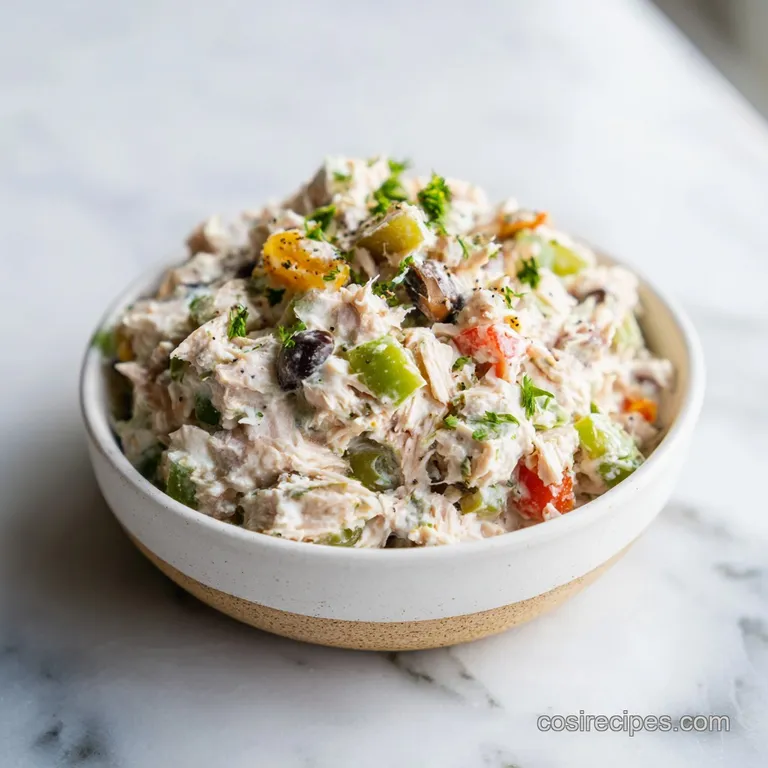
- Place the drained tuna in a fine mesh strainer and press firmly with a fork to remove every drop of excess canning liquid. Note: This prevents the dressing from breaking and becoming thin.
- In a large mixing bowl, whisk together the 1/2 cup avocado oil mayonnaise, 1 tbsp Dijon mustard, 1 tbsp lemon juice, and 1 tsp pickle brine until the dressing is emulsified and smooth.
- Add the bone dry tuna to the dressing bowl. Use a fork to gently flake the tuna, folding it into the dressing until every piece is coated and shimmering.
- Fold in the 2 diced hard boiled eggs, 1/2 cup finely diced celery, and 1/4 cup minced red onion.
- Add the 2 tbsp chopped fresh dill and 1/4 cup diced kosher dill pickles. The aroma should be sharp, herbaceous, and bright.
- Season with 1/4 tsp salt and 1/4 tsp cracked black pepper. Note: The pickle juice and tuna already contain sodium, so taste before adding more.
- Give the mixture one final gentle fold until the textures look uniform and colorful.
- Serve immediately on toasted sourdough or crisp lettuce cups.
The first smell based checkpoint happens when you whisk the lemon juice into the mayo and mustard. You should catch a sharp, citrusy tang that immediately makes your mouth water. The second comes when the fresh dill hits the bowl; the scent should be grassy and cooling.
If it doesn't smell fresh, your herbs might be past their prime.
Avoiding common kitchen disasters
The most frequent issue people face is a salad that "weeps" or releases liquid after being stored. This is almost always caused by the celery or onions releasing water due to the salt in the dressing.
To mitigate this, ensure your vegetables are bone dry after washing and keep the dice small so the moisture loss is minimal.
Managing excess moisture and sogginess
When vegetables sit in salt, osmosis draws out their internal water. If your salad looks perfect at 10 minutes but watery at two hours, your tuna wasn't drained well enough, or your vegetables were too wet. Always pat your celery and onions dry with a paper towel after chopping but before mixing.
| Problem | Root Cause | Solution |
|---|---|---|
| Greasy Texture | Too much mayo or low quality oil | Stick to 1/2 cup and use avocado oil based mayo. |
| Overpowering Onion | Pieces are too large or onion is too old | Mince very finely and soak in cold water for 5 mins first. |
| Bland Flavor | Lack of acidity or salt | Increase the lemon juice or add an extra teaspoon of pickle brine. |
Soaking the minced red onion in ice cold water for 5 minutes is a brilliant trick. It removes the "bite" that can sometimes linger on your breath for hours, leaving behind only the sweetness and the crunch. This is particularly helpful if you are making this for a work lunch.
Common Mistakes Checklist:
- ✓ Skipping the fine mesh strainer (the can lid method is not sufficient).
- ✓ Using dried dill instead of fresh (dried dill lacks the bright aromatic oils needed).
- ✓ Over mixing the tuna into a paste (you want distinct, meaty flakes).
- ✓ Adding salt before tasting (the tuna and pickles are already quite salty).
- ✓ Using "light" tuna which is often too soft and mushy for this style of salad.
Adapting for specific dietary needs
This recipe is naturally quite flexible. Because we are using avocado oil mayo and eggs, it fits well into a paleo or keto lifestyle without any modifications. However, if you want to lighten the caloric load, you can swap half of the mayonnaise for plain Greek yogurt.
This adds a nice lactic tang and boosts the protein content, though it does make the salad slightly more acidic.
For those avoiding eggs, simply omit the hard boiled eggs and add an extra 1/4 cup of diced celery or even some diced cucumber for added bulk. If you want a completely different flavor profile, you can swap the dill and lemon for cilantro and lime, then add a pinch of cumin and some diced jalapeño for a Southwestern kick.
| Original Ingredient | Substitute | Why It Works |
|---|---|---|
| Avocado Oil Mayo | Greek Yogurt | Higher protein and lower fat. Note: Adds a sharper, sour flavor profile. |
| Red Onion | Shallots | A milder, more delicate onion flavor that isn't as pungent. |
| Sourdough Bread | Romaine Lettuce | Lower carb and adds a massive fresh crunch to the meal. |
If you are following a very strict Mediterranean diet, you might want to serve this alongside some Healthy Sauteed Vegetables to round out the meal with more fiber and antioxidants. The combination of warm veggies and cold tuna salad is a fantastic contrast.
Preservation and zero waste methods
This salad keeps remarkably well in the fridge for up to 3 days when stored in an airtight glass container. I don't recommend freezing it; the mayonnaise will break and the celery will lose its cellular structure, resulting in a spongy, unappealing texture once thawed.
If you find the salad has dried out slightly after a day in the fridge, a small squeeze of fresh lemon juice or a teaspoon of mayo will revive the creamy texture instantly.
To reduce waste, don't throw away the celery leaves! Chop them up right along with the stalks. They have an intense celery flavor that is actually more potent than the ribs themselves.
If you have leftover red onion, store it in a small jar covered with a bit of vinegar and sugar to make quick pickled onions for your next sandwich. The tuna cans themselves are highly recyclable, just give them a quick rinse to remove any lingering fish scent before tossing them in the bin.
Presentation and serving suggestions
The way you serve this dish can change the entire experience. While a classic sandwich is hard to beat, I love serving this in "boats" made from endive leaves or butter lettuce. It makes the meal feel lighter and highlights the freshness of the fish.
If you are going the sandwich route, a thick slice of toasted sourdough provides the perfect "shatter" when you bite into it, contrasting beautifully with the velvety tuna.
For a beautiful presentation, garnish the top with a few extra sprigs of fresh dill and a light dusting of smoked paprika. The red of the paprika against the green of the dill makes the dish pop visually.
If you're hosting a brunch, try serving small scoops on top of thick cucumber slices for a high protein appetizer that looks elegant but takes almost zero effort.
The aroma of the toasted bread, combined with the zesty, herbal scent of the tuna, creates a sensory experience that feels much more sophisticated than a standard 10 minute meal. It is proof that simple, healthy ingredients, when treated with the right techniques, can create something truly special.
Debunking common preparation myths
There is a persistent myth that you should never mix fish and eggs. In reality, the hard boiled egg provides a structural creaminess and a boost of fat that helps the tuna feel more substantial and satisfying.
It is a classic French technique seen in dishes like Salade Niçoise for a reason it works perfectly.
Another misconception is that "more mayo equals better flavor." In truth, too much mayonnaise masks the delicate flavor of the albacore and makes the salad feel heavy and greasy. The goal is to use just enough to bind the ingredients together.
The acidity from the lemon and pickle brine actually does more for the flavor profile than the fat of the mayo ever could. Searing or cooking the tuna further is also unnecessary and often ruins the texture of canned fish, which is already fully cooked during the canning process.
Finally, some people believe that canned tuna is "unhealthy" or low quality. When you choose "solid white albacore in water," you are getting a lean, high protein ingredient that is incredibly versatile.
It is a shelf stable powerhouse that, when paired with fresh vegetables and healthy fats like avocado oil, becomes the foundation of a truly nutritious and simple lunch.
Recipe FAQs
What is the secret to a good tuna salad?
The secret is removing all moisture from the canned tuna before mixing. Pressing the tuna in a fine mesh strainer ensures your dressing stays thick and creamy instead of becoming watery or thin. If you enjoyed mastering the emulsification of this dressing, you can apply that same whisking technique to create stable sauces for other dishes.
Is it true Matthew McConaughey has a famous tuna salad recipe?
No, this is a common misconception. There is no verified recipe attributed to him, but this version relies on high-quality tuna, avocado oil mayonnaise, and fresh dill for a superior flavor profile.
Can a diabetic person eat tuna salad?
Yes, it can be a suitable choice. Tuna is a lean protein, and serving this recipe in lettuce cups instead of bread significantly lowers the carbohydrate content for a blood sugar-friendly meal.
Is a tuna sandwich high in potassium?
Yes, it provides a moderate amount of potassium. Tuna, celery, and red onion all contribute to the potassium content, though the exact level depends on the specific portion size consumed.
How to keep the salad from becoming runny?
Drain the tuna thoroughly in a fine mesh strainer before adding it to the bowl. Compressing the tuna with a fork to extract all excess liquid ensures your ingredients bind perfectly with the mayonnaise based dressing.
How to achieve the best texture for tuna salad?
Use a fork to gently flake the tuna only after the dressing is fully emulsified. By folding the tuna into the whisked mixture of mayonnaise, Dijon mustard, and pickle brine, you ensure every flake is evenly coated without turning the salad into a paste.
How to store leftovers properly?
Keep it in an airtight container in the refrigerator for up to two days. Because it contains eggs and mayonnaise, it is best to consume it quickly to maintain both food safety and fresh flavor.
The Best Tuna Salad
Ingredients:
Instructions:
Nutrition Facts:
| Calories | 376 calories |
|---|---|
| Protein | 30.3g |
| Fat | 25.9g |
| Carbs | 2.1g |
| Fiber | 0.6g |
| Sugar | 0.9g |
| Sodium | 725mg |
