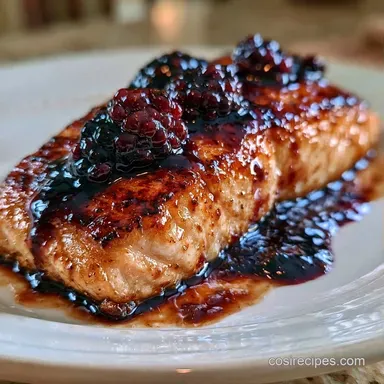
Blackberry Balsamic Salmon in 30 Minutes
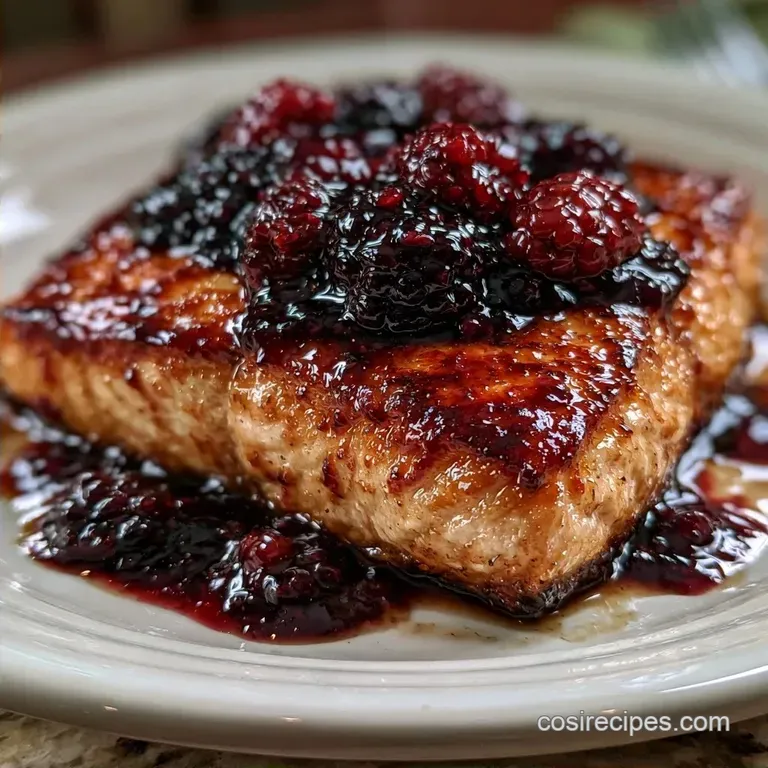
- Time: 10 min active + 20 min cooking
- Flavor/Texture Hook: Tangy, concentrated berry glaze with flaky fish
- Perfect for: A healthy weeknight dinner that feels fancy
The smell of fresh blackberries popping in a hot pan is one of my favorite kitchen scents. It starts as a bright, fruity aroma and quickly turns deep and jammy as the sugars caramelize. It's a scent that feels like late summer, even when you're cooking in the middle of winter.
In the Pacific Northwest, pairing wild berries with savory proteins is a long standing tradition. The tartness of the berries cuts right through the richness of the fish, creating a balance that doesn't need a lot of heavy seasoning.
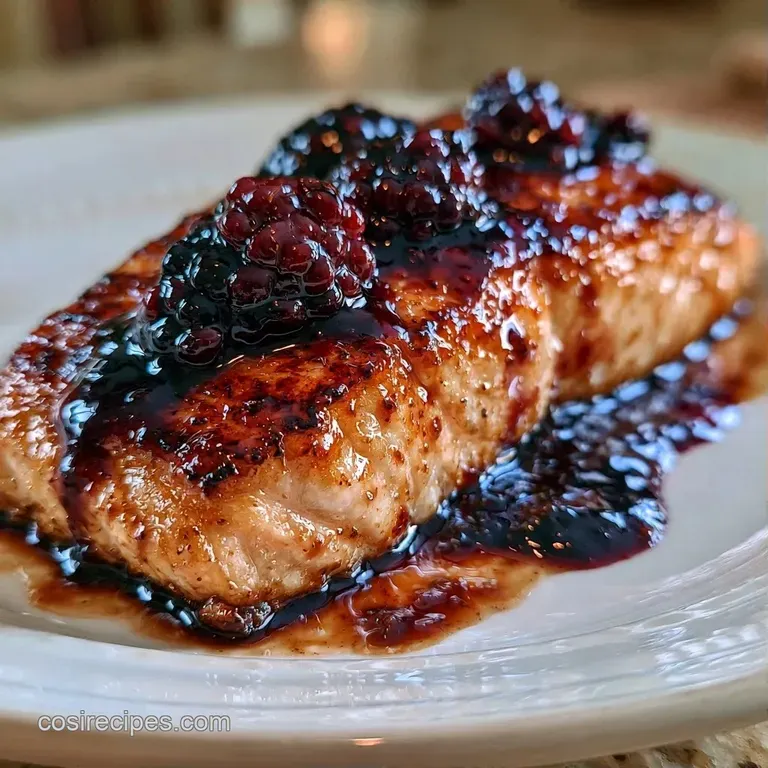
You can expect a dish that looks stunning on the plate with a deep mahogany glaze. This Blackberry Balsamic Salmon is healthy, simple, and doesn't require you to spend all night at the stove.
Blackberry Balsamic Salmon: Simple and Fresh
Concentrated Sugars: Simmering the berries and vinegar evaporates the water, leaving a thick syrup that sticks to the salmon instead of puddling on the plate.
Acid Balance: The balsamic vinegar and lemon juice break down the heavy fats in the fish, making the whole meal feel lighter.
If you're curious about other ways to use these flavors, my savory blackberry sauce is a great starting point for other proteins.
Tools You'll Need
Simple equipment will do. Just use a standard baking sheet with parchment paper to prevent the glaze from sticking the fish to the metal.
A small saucepan is ideal for the reduction, and a whisk or sturdy fork is perfect for mashing the berries. To avoid overcooking the fillets, a digital meat thermometer is essential.
The Flavor Building Blocks
The berries provide the bulk of the flavor, while the honey ensures the glaze has a glossy finish. Trust me on the thyme, it adds a woody note that stops the sauce from tasting like dessert.
| Ingredient | What It Does | Best Swap |
|---|---|---|
| Fresh Blackberries | Provides tartness and body | Raspberries (slightly sweeter) |
| Balsamic Vinegar | Adds acidity and depth | Red wine vinegar + pinch of brown sugar |
| Salmon Fillets | The rich, fatty protein base | Steelhead trout (leaner) |
| Honey | Thickens the glaze and adds shine | Maple syrup (adds woodsy flavor) |
The combination of garlic powder on the fish and minced garlic in the sauce creates two different layers of savory flavor.
Quick Recipe Details
This recipe is designed for efficiency. By roasting the fish while the sauce simmers, you're using the oven and stove simultaneously to cut down the total time.
The target internal temperature for the first bake is 135°F (57°C). Then, after the glaze sets, we aim for 145°F (63°C). This two stage process keeps the Blackberry Balsamic Salmon from becoming dry.
Putting It All Together
Step 1: Prep and Season
Warm your oven to 400°F (200°C) and prepare a baking sheet with parchment paper. Pat the salmon fillets dry. Drizzle them with olive oil and season with sea salt, cracked black pepper, and garlic powder.
Step 2: The Rapid Bake
Arrange the fillets skin side down on the sheet. Bake for 12–15 minutes until the sides look opaque and the internal temperature reaches approximately 135°F (57°C).
Step 3: Simmer the Blackberry Balsamic Glaze
While the fish cooks, place the blackberries, balsamic vinegar, honey, minced garlic, and thyme in a small saucepan over medium heat.
Step 4: Mash and Reduce
As the berries soften, mash them using a fork or whisk. Simmer for 8–10 minutes until the liquid reduces by half and reaches a thick, jam-like consistency.
Step 5: Add Brightness
Stir in the lemon juice to balance the sweetness of the honey and the richness of the berries.
Step 6: Glaze the Salmon
Generously brush the balsamic reduction over the fillets, ensuring the top and sides are well coated.
Step 7: The Final Set
Return the baking sheet to the oven for 2–3 minutes until the glaze bubbles and sets. The final internal temperature should be 145°F (63°C).
Fixing Common Salmon Issues
Sauce Too Thin
If the glaze doesn't coat the back of a spoon, it hasn't reduced enough. Put it back on medium low heat for another 3–5 minutes. It should be a velvety consistency before it hits the fish.
Fish Sticking
If your salmon is glued to the pan, you likely skipped the parchment paper or didn't use enough olive oil. Use a thin metal spatula to gently lift from the edges.
Glaze Too Tart
Some balsamic vinegars are more acidic than others. If the sauce tastes too sharp, whisk in a tiny bit more honey or a pinch of salt to balance the acidity.
Overcooked Fish
If the salmon flakes apart too easily or looks chalky, it's overdone. Next time, pull the fish out of the oven 5 degrees early, as carryover heat will finish the job.
Saving and Reusing Leftovers
Keep the leftover fillets in a sealed glass container in the cooler for 3 days. For the best results, reheat the fish gently in a pan over low heat with a splash of water or butter to keep it moist.
If you have leftover glaze, don't toss it. It's great as a topping for goat cheese crostini or drizzled over a fresh arugula salad.
To avoid waste, save any leftover berry stems or slightly bruised berries by freezing them for future smoothies.
Different Ways to Cook It
If you prefer a crispier skin, you can try a pan fried salmon method. Sear the fish in a skillet first, then brush on the glaze and finish it under the broiler for 2 minutes.
For those who want a lower carb version, swap the honey for a monk fruit sweetener. The texture will be slightly thinner, but the flavor remains mostly the same.
You can also use an air fryer. Cook the seasoned fillets at 400°F (200°C) for 8–10 minutes, glaze them, and air fry for another 2 minutes.
Right then, let's look at how the cooking method changes the outcome.
| Method | Texture | Effort |
|---|---|---|
| Oven Baked | Evenly cooked, tender | Low |
| Stovetop Sear | Crispy skin, moist center | Medium |
| Air Fryer | Fast, slightly firmer | Very Low |
Depending on what you're aiming for, you might want to tweak the process.
| Goal | What to change |
|---|---|
| More Tang | Add 1 tsp extra lemon juice |
| Thicker Glaze | Simmer for 3 mins longer |
| Spicier Kick | Add 1/4 tsp red pepper flakes |
Best Sides for Salmon
To cut through the intensity of the Blackberry Balsamic Salmon, pair it with a fresh, green side. Roasted Brussels sprouts or sautéed asparagus work perfectly, as their subtle bitterness balances the sweet berry notes.
Nutty grains like wild rice or quinoa make an ideal base for soaking up the remaining glaze. If you prefer something lighter, a crisp cucumber salad with a light vinaigrette is a wonderful choice.
Since this meal is meant to be healthy and straightforward, I usually serve it alongside steamed broccolini. The bright green hue looks striking against the rich purple sauce.
When plating, drizzle a bit of extra reduction over the fillet and garnish with fresh thyme leaves. It’s an easy way to make a standard weeknight dinner feel like a bistro creation.
Recipe FAQs
How to prevent the glaze from burning?
Simmer the blackberries and balsamic vinegar for only 8 10 minutes until the liquid reduces by half.
Tip: Keep the heat on medium to ensure the honey doesn't scorch.
Is it true that the fish will be overcooked if returned to the oven for the glaze?
False. The final 2 3 minute roast is only intended to set the glaze and reach the final internal temperature of 145°F.
Tip: Use a meat thermometer to verify the fish reaches the target temperature without drying out.
Can frozen berries be used as a substitute?
Substitute fresh berries with frozen ones by thawing them slightly beforehand.
Tip: Drain any excess liquid so the glaze doesn't become too watery.
Which side dishes complement this flavor profile?
Pair the fillets with a roasted vegetable medley to balance the sweetness of the fruit glaze.
Tip: Use a neutral grain like quinoa to let the blackberry reduction shine.
Blackberry Balsamic Salmon