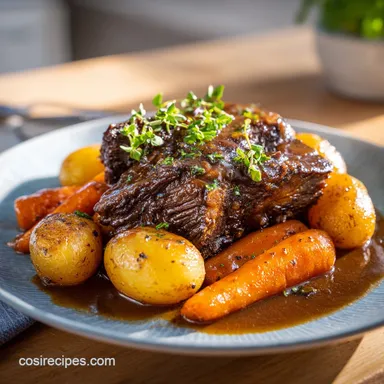
Dutch Oven Recipe with Pot Roast: Tender and Savory
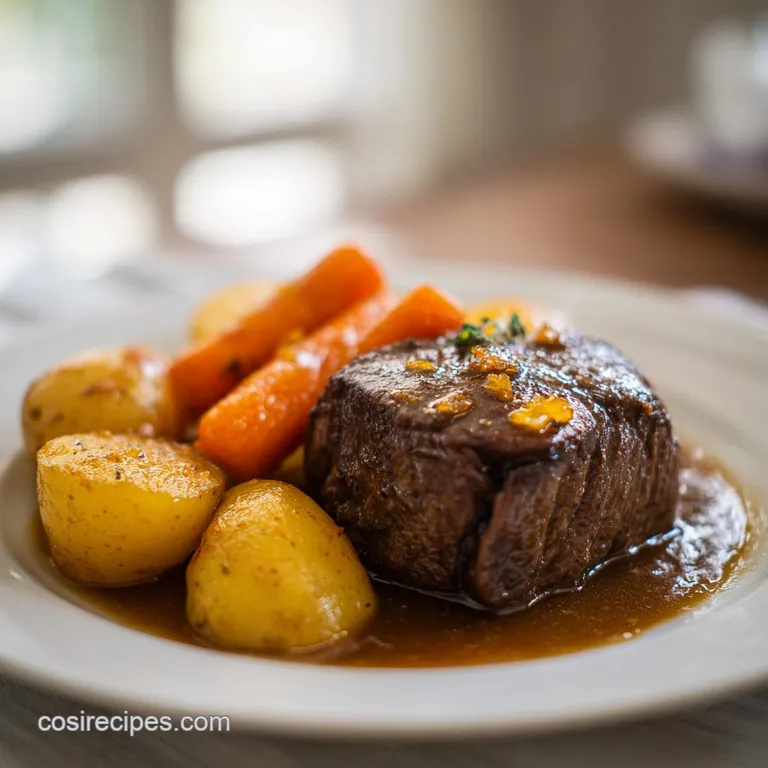
- Time: 20 min active + 180 min oven = Total 200 min
- Flavor/Texture Hook: Savory, mahogany crusted beef with silky root vegetables
- Perfect for: Hearty Sunday dinners or cold weather meal prep
- Dutch Oven Recipe with Pot Roast
- The Secret to Tender Beef
- The Component Breakdown
- What You'll Need
- Your Essential Kitchen Tools
- Step by Step Cooking Guide
- Fixing Common Roast Problems
- Troubleshooting Common Issues
- Adapting the Serving Size
- Busting Common Beef Myths
- Keeping and Saving Leftovers
- Best Ways to Serve it
- Recipe FAQs
- 📝 Recipe Card
Dutch Oven Recipe with Pot Roast
That first loud sizzle when the beef hits the hot oil is where the magic starts. I remember the first time I tried to rush this dish by cranking the heat to 400°F, thinking I could cheat the clock.
I ended up with a piece of meat that felt like a rubber tire and carrots that had basically disintegrated into mush. It was a disaster, and my kitchen smelled like burnt fat for three days.
The secret is the chuck roast. I chose this specific cut because it's loaded with collagen and marbled fat. If you use a leaner cut, like eye of round, you'll lose that rich, savory depth that makes a pot roast feel like a hug in a bowl.
You need that fat to render down and baste the meat from the inside out during the long wait in the oven.
When you follow this Dutch Oven Recipe with Pot Roast, you're not just cooking meat, you're building layers of flavor. We start with a hard sear, move into a fragrant aromatic base, and finish with a slow bath of wine and broth.
By the time the timer goes off, the house smells like a cozy country kitchen, and the beef just gives up and falls apart at the touch of a fork.
The Secret to Tender Beef
Collagen Breakdown: Low heat slowly turns tough connective tissue into gelatin, which creates that velvety mouthfeel.
Acidic Tenderizing: The red wine breaks down tough muscle fibers, allowing the liquid to penetrate deeper into the roast.
Consistent Heat: A heavy pot distributes heat evenly, preventing the bottom from scorching while the top stays moist.
Moisture Trapping: A tight lid keeps the steam inside, essentially poaching the meat in its own concentrated juices.
| Method | Time | Texture | Best For |
|---|---|---|---|
| Stovetop | 4-5 hrs | Softer, less crust | Constant monitoring |
| Oven | 3 hrs | Richer, more uniform | Set it and forget it |
The Component Breakdown
| Ingredient | Science Role | Pro Secret |
|---|---|---|
| Beef Chuck | Structural Base | Look for heavy white marbling |
| Red Wine | Flavor/Tenderizer | Use a wine you'd actually drink |
| Yukon Gold | Starch Stabilizer | Holds shape better than Russets |
| Beef Broth | Moisture Medium | Low sodium lets you control salt |
What You'll Need
For the meat and seasoning, you'll need: - 3 lbs beef chuck roast, trimmed of excess outer fat Why this? High collagen content ensures tenderness - 1 tbsp olive oil Why this? High smoke point for searing - 1 tsp kosher salt Why
This? Coarser grains for better control - ½ tsp cracked black pepper Why this? Freshly cracked adds more punch
For the aromatics and veg: - 1 lb carrots, peeled and cut into 2 inch chunks Why this? Thick cuts prevent mushiness - 1.5 lbs Yukon Gold potatoes, halved Why this? Creamy texture that doesn't dissolve - 1 large yellow onion, quartered Why
This? Balanced sweetness and depth - 4 cloves garlic, smashed Why this? Smashed releases more oils
For the braising liquid: - 2 cups low sodium beef broth Why this? Base for the savory gravy - 1 cup dry red wine Why this? Cuts through the rich beef fat - 2 tbsp Worcestershire sauce Why this? Adds umami and saltiness - 2
Sprigs fresh rosemary Why this? Earthy, piney aroma - 3 sprigs fresh thyme Why this? Subtle lemon like notes - 2 bay leaves Why this? Adds a floral, herbal depth
| Original Ingredient | Substitute | Why It Works |
|---|---|---|
| Red Wine (1 cup) | Beef Broth + 1 tbsp Balsamic | Similar acidity. Note: Lacks the complex tannins of wine |
| Yukon Gold Potatoes | Parsnips or Turnips | Earthy root veg. Note: More peppery flavor, less creamy |
| Fresh Rosemary/Thyme | Dried Herbs (1 tsp each) | Concentrated flavor. Note: Less aromatic than fresh |
Right then, before we get into the heat, make sure your beef is actually dry. If there's moisture on the surface, it'll steam instead of sear, and you'll miss out on that mahogany crust. Trust me on this, the paper towel step is non negotiable.
Your Essential Kitchen Tools
You'll need a 5 to-7 quart enameled cast iron Dutch oven. I usually use one from Le Creuset or Lodge because they hold heat like a champ. If you don't have one, a heavy oven safe pot with a lid will work, but the enamel helps prevent the wine from sticking to the sides.
You'll also want a sturdy wooden spoon or a silicone spatula. You're going to be scraping the bottom of the pot to get all those brown bits (the fond) into the sauce. A pair of tongs is essential for flipping the roast without burning your fingers or piercing the meat.
Finally, a meat thermometer is your best friend here. While the time is a good guide, checking the internal temp ensures you don't overcook it into a dry block. According to the USDA FoodData, beef cuts vary in fat content, so monitoring the temperature is the only way to be 100% sure.
Step by step Cooking Guide
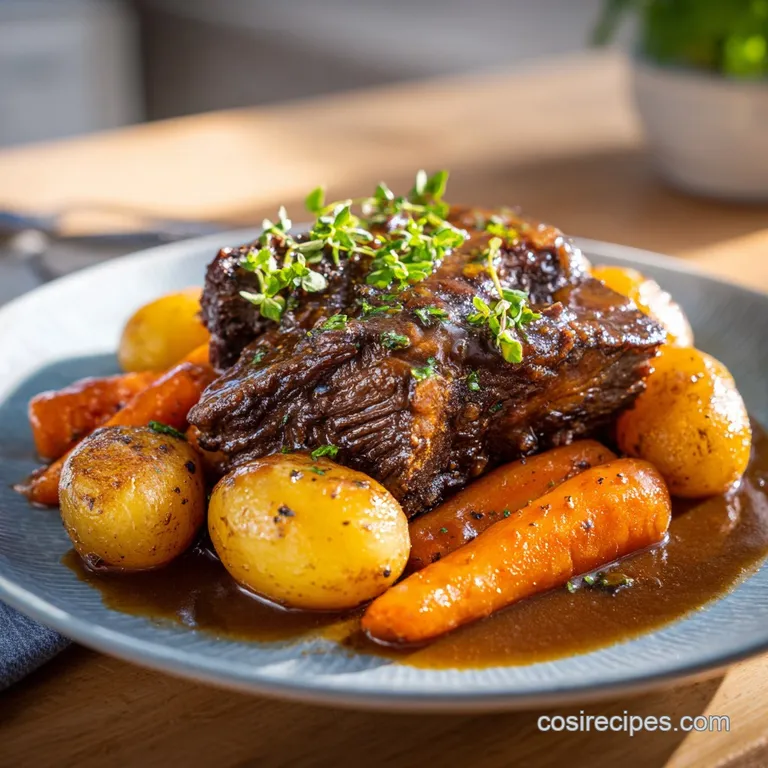
Phase 1: The over High heat Sear
- Pat the beef completely dry with paper towels to ensure a better sear. Season generously with salt and pepper. Note: Salt draws out moisture, so do this right before searing.
- Heat olive oil in the Dutch oven over medium high heat until shimmering.
- Sear the meat for 5–7 minutes per side until a deep brown, mahogany crust forms. Remove the meat and set it aside on a plate. Note: Don't crowd the pan or the temperature will drop.
Phase 2: Building the Flavor Base
- Reduce heat to medium. Toss in the quartered onions and smashed garlic and sauté for 3–5 minutes until the onions are translucent and fragrant.
- Pour in the red wine, scraping the bottom of the pot with a wooden spoon to release the fond. Note: This is where the deep color of the sauce comes from.
Phase 3: The Low and Slow Braise
- Return the seared beef to the pot. Pour in the beef broth and Worcestershire sauce.
- Tuck the rosemary, thyme, and bay leaves around the meat.
- Cover with a tight fitting lid and transfer to a preheated oven at 300°F (150°C) to braise for 180 minutes. until the meat yields easily to a fork.
Chef's Note: For an even deeper flavor, try adding a tablespoon of tomato paste during the onion sauté. It adds a concentrated sweetness that balances the acidity of the wine.
Fixing Common Roast Problems
Troubleshooting Common Issues
| Issue | Solution |
|---|---|
| Why Your Beef is Tough | If the meat is still chewing like a rubber band, it usually means it hasn't spent enough time in the "collagen breakdown" window. Collagen doesn't just vanish; it melts. If it's tough, put the lid bac |
| Why Your Veggies are Mushy | This happens when you add the carrots and potatoes too early. If you want them to hold their shape, wait until the last 60-90 minutes of cooking to tuck them around the beef. |
| Why the Sauce is Too Thin | Sometimes the braising liquid stays watery. You can easily fix this by removing the meat and veg, then simmering the liquid on the stovetop for 10 minutes to reduce it, or whisking in a small cornstar |
Adapting the Serving Size
If you're cooking for a smaller crowd, you can scale this Dutch Oven Recipe with Pot Roast down to a 1.5 lb roast. Use a smaller pot to ensure the liquid doesn't evaporate too quickly. Reduce the cooking time by about 20%, but still rely on the fork tender test rather than the clock.
For a massive party, you can double the recipe, but be careful with the salt. I recommend only increasing the salt and spices to 1.5x the original amount, as the reduction of the liquid concentrates the seasoning. You'll likely need to work in batches for the searing phase so you don't steam the meat.
If you're doubling the roast in a larger oven, keep the temp at 300°F, but expect it to take an extra 30-60 minutes to reach the center. Always ensure there's enough liquid to come halfway up the side of the meat.
| Premium Ingredient | Budget Alternative | Impact | Savings |
|---|---|---|---|
| Dry Red Wine | Red Wine Vinegar + Water | Less depth, more zing | $5-10 |
| Fresh Thyme/Rosemary | Dried Mixed Herbs | Less aromatic | $3-5 |
| Beef Chuck Roast | Bottom Round | Tougher meat, more fat trimming | $4-8 |
Busting Common Beef Myths
One big lie people tell is that searing the meat "seals in the juices." It doesn't. In fact, searing actually causes a tiny bit of moisture loss on the surface. The reason we do it is for the flavor. That brown crust is a concentration of savory notes that makes the final sauce velvety and rich.
Another myth is that you need to brown the meat on all sides to get it tender. While browning adds flavor, the tenderness comes entirely from the low and slow braise. If you miss a spot on the side of the roast, it'll still be tender, just slightly less flavorful in that one spot.
Some folks say you should add the vegetables at the start. While this makes for a very soft, almost porridge like carrot, it's not ideal if you want distinct bites of veg. Adding them later preserves the texture and keeps the colors bright.
Keeping and Saving Leftovers
This Dutch Oven Recipe with Pot Roast actually tastes better the next day because the flavors have more time to meld. Store the beef and vegetables in an airtight container in the refrigerator for up to 4 days. Keep the gravy in a separate jar to prevent the potatoes from soaking up all the liquid and becoming mushy.
For long term storage, you can freeze the roast and the sauce for up to 3 months. I recommend freezing the sauce in ice cube trays so you can pop out just enough to make a quick pan sauce for other meals.
To reheat without drying out the meat, don't use the microwave on high. Instead, place a portion of the roast and some gravy in a small oven safe dish, cover it with foil, and heat at 300°F for about 20 minutes. This gently warms the fats without tightening the muscle fibers.
If you have leftover bones or the remaining braising liquid, don't toss them. You can simmer the leftover liquid with some fresh water and veg scraps to make a rich beef stock. This is a great way to ensure zero waste in your kitchen.
Best Ways to Serve it
The classic pairing for this roast is a creamy mash or a crusty piece of sourdough bread to soak up every drop of that red wine gravy. If you want something a bit more vibrant, I love serving this with Authentic Greek Potatoes for a zesty contrast to the rich beef.
For a more traditional Southern feel, pair it with a side of Southern Yellow Squash Casserole. The brightness of the squash cuts through the heavy, savory nature of the pot roast.
If you're looking for another way to use a Dutch oven for a hearty meat dish, you might enjoy my Belgian Slow Cooked Beef Stew, which uses a similar low and slow philosophy but with a different flavor profile.
To finish the plate, add a sprinkle of fresh parsley or a squeeze of lemon juice over the carrots. That hit of acidity wakes up the dish and prevents it from feeling too "heavy." This Dutch Oven Recipe with Pot Roast is a labor of love, but the result is a meal that feels truly special.
Right then, get your pot heating up and let's get to it!
Recipe FAQs
Are Dutch ovens good for pot roast?
Yes, they are ideal. The heavy walls distribute heat evenly and the tight fitting lid traps moisture, which is essential for tenderizing tough cuts of beef.
How long does pot roast take in a Dutch oven?
Braise for 180 minutes at 300°F. Including prep and searing, the total process takes approximately 200 minutes.
What shouldn't I cook in a Dutch oven?
Avoid high acid sauces for extended periods in enamel pots. Very acidic liquids can etch the enamel coating over time, though they are perfect for most other slow cooking tasks.
Why is my pot roast tough in the Dutch oven?
The meat hasn't reached the collagen breakdown window. If it feels rubbery, return it to the oven with the lid on until the connective tissue fully melts.
How to get a mahogany crust on the meat?
Pat the beef completely dry with paper towels and sear in shimmering olive oil for 5 7 minutes per side before adding other ingredients.
Can I use this method for other tough cuts of meat?
Yes, braising is the best technique for collagen rich meats. If you enjoyed mastering the braise here, see how the same principle works in our Jamaican oxtail recipe.
Is it true I should skip searing to keep the meat tender?
No, this is a common misconception. Searing does not toughen the meat; instead, it creates a deep flavor profile and a rich mahogany crust that improves the final sauce.
Dutch Oven Pot Roast